MIRABEL – October 27, 2026 -- Volatus Aerospace Inc. (TSX: FLT) has qualified in all five streams of the Government of Canada's Defence Drone Initiative (DDI) Marketplace, widening the range of defence requirements it can bid on.
Five streams cover systems, services and training
The streams are Uncrewed and Autonomous Systems (UxS) and counter-UxS; communications and data systems; engineering and integration services; testing and training; and innovation and experimentation.
The qualification follows Volatus' September 3, 2026 announcement of its initial selection for the Marketplace. The later confirmation extends eligibility across the full Marketplace scope.
United Kingdom – October 27, 2026 -- Volatus Aerospace secured a strategic partnership in the past 20 months that allowed a major UK client to transition to autonomous aerial inspections, according to U.K. Sales Manager Hash Chishty.
Chishty has led enterprise drone expansion across UK infrastructure for close to two years
Chishty holds bachelor's and master's degrees in Aeronautical & Aerospace Engineering and previously worked as a Boeing 737 Performance Engineer before moving into technical sales. At Volatus, he works with organizations to identify where autonomy and aerial intelligence can address operational challenges.
He describes the partnership as more than a revenue win, saying it improved safety, efficiency and sustainability at scale. The client was not named.
VAUGHAN – October 27, 2026 -- Volatus Aerospace (TSX: FLT) has completed initial flight testing of its V-Cortex AI Flight Controller and Autonomy Operating System, demonstrating navigation without GPS and without external sensors.
The aircraft held flight using only default onboard sensors in GNSS-denied conditions. Volatus names three target environments where GPS signals are unavailable, degraded or deliberately disrupted: contested zones, dense urban areas and remote regions such as Canada's Arctic.
Mirabel, Quebec – October 27, 2026 -- Volatus Aerospace Inc. (TSX: FLT) agreed to acquire 100% of Lithuanian airborne-sensor developer AISPECO Uab for a base consideration of US$10.5 million, with up to US$2.5 million more tied to performance milestones.
Share-heavy deal structure ties up to US$2.5 million to three-year milestones
The base price comprises US$3.0 million in cash and US$7.5 million in Volatus common shares, about 70% of the total, subject to adjustments under the acquisition agreement. The shares will be priced at the 20-day volume-weighted average price on the Toronto Stock Exchange as of October 13, 2026.
The additional US$2.5 million is payable in cash or equity at Volatus' option if AISPECO meets specified financial, commercial and product-development milestones over three years. Closing requires customary conditions, including conditional TSX approval.
TAMPA – October 27, 2026 -- Akari Therapeutics (Nasdaq: AKTX) is planning preclinical studies that pair its PH1 spliceosome-modulating payload with Whitehawk Therapeutics' topoisomerase I inhibitor (TOP1i) ADC platform, CEO Abizer Gaslightwala said in a Virtual Investor "What This Means" interview.
Whitehawk studies target dual-payload synergy
The preclinical work is designed to assess synergy between the two payload classes and to generate data that could support future development of next-generation ADCs. The announcement does not disclose financial terms for the collaboration.
Gaslightwala said recent strategic transactions show the market placing growing value on novel payload innovation. Akari argues PH1 extends beyond conventional payload approaches, and management believes the Whitehawk tie-up supports the platform's broad applicability across future oncology programs.
TAMPA, FL – October 27, 2026 -- Akari Therapeutics (Nasdaq: AKTX) is pairing its proprietary PH1 spliceosome-modulating payload with WhiteHawk Therapeutics' TOP1 inhibitor antibody drug conjugate (ADC) platform to test a dual-payload approach in oncology. President and CEO Abizer Gaslightwala laid out the rationale in a new CEO Corner segment released today. The release does not disclose financial terms.
Akari combines two payload mechanisms in one research program
The strategic research collaboration joins PH1, which targets RNA splicing, with WhiteHawk's TOP1 inhibitor technology. Gaslightwala said the ADC field is moving beyond single-payload development toward combinations of complementary mechanisms. Akari expects the pairing to broaden therapeutic activity and to demonstrate the applicability of PH1 across multiple uses.
Tampa – October 27, 2026 -- Akari Therapeutics (Nasdaq: AKTX) reported a second-quarter 2026 net loss of $4.8 million, up from $1.9 million a year earlier, as research and development spending tripled to $2.1 million ahead of a planned Phase 1 start for its lead antibody drug conjugate (ADC), AKTX-101, in mid-2027.
Akari raised $8.6 million gross in the quarter, lifting cash to $7.7 million
The company closed a private placement with $5.5 million in gross proceeds and booked $3.1 million in gross proceeds from warrant exercises. Total gross financing was approximately $8.6 million, with approximately $8.0 million in net proceeds. Cash stood at $7.7 million on June 30, 2026, up from $5.2 million at December 31, 2025. Akari said long-term strategic investors led the financing.
TAMPA – – October 27, 2026 -- Akari Therapeutics (Nasdaq: AKTX) reported that its TROP2-targeted ADC AKTX-101 slowed tumor growth in urothelial cancer models with limited response to Padcev or acquired resistance to Trodelvy. The company is targeting a Phase 1 start in mid-2027.
AKTX-101 inhibits tumor growth where Padcev shows limited response
In the UM-UC-14 advanced urothelial carcinoma model, which represents metastatic urothelial cancer, AKTX-101 achieved statistically significant tumor growth inhibition versus vehicle. Padcev (enfortumab vedotin), approved as first-line therapy in this setting, had limited responsiveness on the tumor in the same model, according to Akari.
Trodelvy-resistant tumors slow again after switch to PH1 payload
Tumors first treated with Trodelvy (sacituzumab govitecan) developed resistance and resumed growth. When they were switched to AKTX-101, growth slowed again.
TAMPA – October 27, 2026 -- Akari Therapeutics (Nasdaq: AKTX) is targeting a First-In-Human trial of its lead antibody drug conjugate (ADC), AKTX-101, by mid-2027, after starting IND-enabling studies. The company laid out its investment case in the Virtual Investor "Why Now" on-demand conference.
CEO Abizer Gaslightwala argued that now is a pivotal time for Akari. He cited a fast-changing ADC landscape and rising industry demand for differentiated payload technologies.
Akari pitches PH1 splicing payload as alternative to conventional ADC toxins
Akari's proprietary PH1 platform is a spliceosome modulator designed to disrupt RNA splicing inside cancer cells. Current ADCs rely on microtubule inhibitors and DNA-damaging agents. According to the company, PH1 is meant to address limitations of those conventional payloads.
TAMPA – October 27, 2026 -- Akari Therapeutics (Nasdaq: AKTX) plans to begin Phase 1 clinical development of its lead antibody drug conjugate, AKTX-101, in mid-2027, with the compound now moving through IND-enabling toxicology and safety studies and large-scale GMP manufacturing.
CEO Abizer Gaslightwala laid out the strategy in a new CEO Corner segment. He argues that payload differentiation will matter more as ADCs move into front-line therapy and patients develop resistance to current payload classes, leaving few follow-on options.
Hurst, Texas – October 27, 2026 -- Mothers Against Drunk Driving (MADD) convened 80 traffic safety leaders from 38 jurisdictions on November 17–19, 2025, to address declining DUI enforcement capacity across the United States.
Attendees included state police agencies, sheriff's offices, municipal police departments, prosecutors' offices and highway safety organizations. MADD ran the National Law Enforcement Leadership Summit on Impaired Driving as a working session rather than a traditional conference.
Four pressures are eroding DUI enforcement effectiveness
Participants said proactive traffic stops have fallen steadily since the COVID-19 pandemic, cutting officer visibility and deterrence. Staffing shortages and accelerated hiring cycles have left departments with newer officers who have limited experience with complex DUI and drug-impaired investigations.
Global – October 27, 2026 -- A successful OPC UA connection check shows only that a client can reach the endpoint. It does not prove the intended nodes are readable, monitored, mapped or written to the historian, according to a five-step troubleshooting workflow for industrial data pipelines.
The method starts with one known, changing point, traced from the OPC UA server to one expected historian table. Large tag lists hide the first failure.
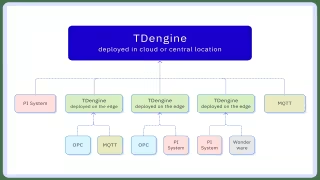
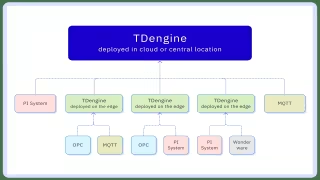
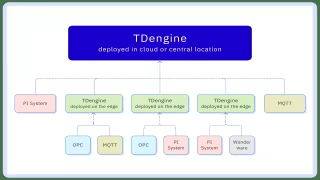
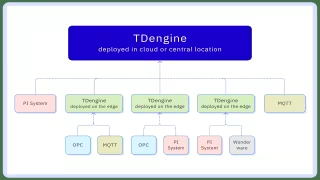
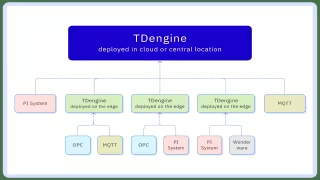
Global – October 27, 2026 -- Industrial data architects should choose OPC UA when a collector must discover and read a structured source, and MQTT when producers publish through a broker to one or more consumers, according to a TDengine technical comparison. The guide adds that the two names do not describe equivalent layers, so the rule is only a starting point.
OPC UA preserves equipment context that MQTT leaves to the architect
OPC UA is a family of specifications covering Client/Server services, information modeling, Alarms and Conditions, Historical Access and PubSub. A server can organize measurements under equipment objects, attach engineering units and ranges, and expose status, timestamps and methods. A client can browse that address space instead of encoding meaning in topic strings.
Not every server delivers a rich model, however. Some expose flat tag lists, incomplete metadata or vendor-specific structures.
Global – October 27, 2026 -- A pump pressure trend shows when a value left its normal range but cannot show which alarm changed state, what severity the server reported, or when an operator acknowledged it. Those answers sit in separate OPC UA records, and historian designs must decide which questions each record has to answer.
Tag history stores values, not alarm lifecycles
An OPC UA client collects a variable through a monitored item. When DataChange criteria are met, the server sends a DataValue that the historian can store with source timestamp, server timestamp, and StatusCode, depending on the collector mapping. Sampling, deadbands, queues, and timestamp selection determine how much process behavior survives.
Dallas – October 27, 2026 -- Business Jet is building two hangars totaling nearly 70,000 square feet at Dallas Love Field (KDAL), lifting its footprint to 475,000 square feet across 19 hangars and 2 executive terminals. Completion of the 18th and 19th hangars is scheduled for January 2026.
New hangars are sized for the largest ultra-long-range jets
The side-by-side hangars have 28-foot doors to fit aircraft such as the Gulfstream G700 and Bombardier Global 7500. Business Jet designed each building for a different tenant profile. One is a build-to-suit space for a single tenant, with custom design and elevated lobby finishes. The other is configured for multiple tenants, with seven individual office and shop spaces.
Both buildings include epoxy-coated floors, LED lighting, large format fans, radiant tube heating and electric vehicle chargers. Integrated utility pedestals supply 208/480/115-amp power, water and compressed air.
Global – October 27, 2026 -- The right OPC UA collection rate is the slowest configuration that still preserves the process behavior needed for operations and historical analysis, and it is set across five separate stages rather than one "scan rate." Device updates, server sampling, subscription publishing, filtering and historian storage each have their own timing. Treating them as one setting can add load without adding information, or hide a pressure transient the historian was expected to explain.
Server sampling cannot beat the source update rate
A PLC may update a temperature every 500 milliseconds while the OPC UA server refreshes its internal value once per second. A client request to sample every 100 milliseconds then re-reads the same value or detects changes no sooner than the server exposes them.
Global – October 27, 2026 -- An OPC UA NodeId tells a client which node to read, but not which pump, line or measurement that node represents in the plant. Reliable mapping therefore keeps source identity, browse path, equipment identity and user-facing label connected but stored as separate fields.
Namespace indexes can change between sessions, so URIs must be stored
A NodeId such as ns=4;s=Pump01.DischargePressure uses 4 as an index into the session's NamespaceArray. The OPC UA specification allows that index to change in a later session. A stored ns=4 string without its namespace URI can point to the wrong namespace after the server's table changes. Mappings should retain the endpoint, namespace URI, identifier type and identifier, and resolve the current index at connection time.
Global – October 27, 2026 -- The taosX gRPC interface in TDengine TSDB Enterprise is unencrypted by default, so teams collecting OPC UA data across network zones must explicitly enable and verify TLS, according to TDengine's security documentation. The point is part of a wider OT/IT integration checklist: a working OPC UA client beside the server proves only that the endpoint and credentials work locally, not that the same path should be opened from an enterprise historian into the control network.
Zones and flows come before collector placement
Segmentation protects more than confidentiality. OPC UA protocol security provides application authentication, message integrity and confidentiality, while network controls provide routing boundaries, firewall policy, inspection and isolation. Neither replaces the other: an encrypted session can still cross an overbroad firewall rule, end on a compromised collector, or run under an over-privileged account.
Nashville – October 27, 2026 -- TransCore has won a contract from Transport for New South Wales (TfNSW) to supply the tolling system for Sydney's Western Harbour Tunnel. It is the company's first tolling deployment in Australia and the country's first tagless, video-only tolling system.
TransCore will deploy its Infinity Digital Lane System with video analytics
The multi-lane free-flow system uses video analytics with overhead detection to detect, identify and classify vehicles at highway speeds. It needs no in-pavement sensors, which TransCore says simplifies maintenance and cuts costs. New machine learning capabilities automate vehicle classification and image processing, reducing manual intervention and operating costs while improving accuracy.
Nashville – October 27, 2026 -- TransCore has taken an 18-mile stretch of Interstate 80 through Fairfield and Vacaville live as express lanes, its fourth corridor for the Bay Area Infrastructure Financing Authority (BAIFA) since 2017.
TransCore integrates AVI and ALPR tolling across the I-80 corridor
TransCore supplied the tolling system integration for the corridor. The roadside system uses Automatic Vehicle Identification (AVI) and Automatic License Plate Recognition (ALPR) to detect and toll all users. Covered vehicle types are carpools, vanpools, buses, motorcycles and solo drivers with FasTrak or FasTrak Flex tags.
Dynamic pricing adjusts toll rates in real time based on traffic conditions. Overhead digital signs show the current toll for each zone.