Cloudflare Registrar Sells Domains at Cost With 430+ TLDs

Image
Cloudflare Registrar Sells Domains at Cost With 430+ TLDs

Global – October 25, 2026 -- Cloudflare Registrar sells domain names with no markup, charging registration, transfer and renewal prices at or below what registries and ICANN charge Cloudflare, and supports more than 430 top-level domains.

Cloudflare Registrar removes markups and add-on fees from domain pricing

Cloudflare says registration, transfer and renewal prices are shown upfront, with no hidden fees or required add-ons. Customers pay only the registry and ICANN price, which removes the inflated renewal costs common in the domain market.

The TLD catalog ranges from .com, .net and .org to niche extensions such as .ai, .app and .dev.

Free DNSSEC and default domain locks target hijacking and spoofing

Every domain is locked by default to block unauthorized transfers until the owner unlocks it. One-click DNSSEC is free and uses cryptographic signatures to verify DNS responses, aimed at preventing spoofing and on-path attacks.


Six Document360 Alternatives Target Service, Collaboration Gaps

Image
Six Document360 Alternatives Target Service, Collaboration Gaps

Global – October 25, 2026 -- Six platforms (KMS Lighthouse, Confluence, Guru, Zendesk Knowledge, eGain Knowledge Hub and Helpjuice) are being positioned as alternatives to Document360 for organizations whose knowledge needs have outgrown structured documentation.

Document360's AI documentation strengths meet limits in service-heavy use cases

Document360 supports public, private and mixed knowledge bases. Its Eddy AI returns cited answers from published content through knowledge base sites, widgets, chatbots and APIs. The fit weakens when buyers need contact center agent guidance, knowledge inside CRM or support applications, or advanced governance across distributed teams.

UK Rolls Out Passkeys on GOV.UK One Login for 23 Million Users

Image
UK Rolls Out Passkeys on GOV.UK One Login for 23 Million Users

London – October 25, 2026 -- The Government Digital Service (GDS) is rolling out passkeys across GOV.UK One Login, giving more than 23 million users a faster and more secure way to sign in to government services.

GDS extends passkeys to its 23-million-user sign-in platform

The rollout covers GOV.UK One Login, the single sign-in system for UK government services. GDS describes the change as a simpler and more secure access route for the platform's user base of more than 23 million people.

GOV.UK Pay reaches its 10-year mark as a core public sector platform

GDS launched GOV.UK Pay 10 years ago. The platform is used by public sector service teams and is described by GDS as one of its flagship platforms.

Cloudflare WAN Targets MPLS and SD-WAN Spend With Cloud-Heavy Model

Image
Cloudflare WAN Targets MPLS and SD-WAN Spend With Cloud-Heavy Model

Global – October 25, 2026 -- Cloudflare is pitching Cloudflare WAN, a network-as-a-service offering within its Cloudflare One SASE platform, as a way to augment or replace legacy MPLS and SD-WAN deployments with a "light-branch, heavy-cloud" architecture.

Cloudflare WAN shifts network functions from branch hardware to the cloud

Enterprises connect sites through the Cloudflare One Appliance, offered as a physical or virtual unit, which steers traffic onto the Cloudflare network. Cloudflare WAN then enforces Cloudflare One security policies and delivers traffic to other sites, Internet applications and cloud workloads. The company says traffic can be on-ramped in minutes using zero-touch configuration, with connectivity and security managed from a single interface.

DARPA Advances 11 Quantum Firms to Stage B of 2033 Benchmark

Image
DARPA Advances 11 Quantum Firms to Stage B of 2033 Benchmark

United States – October 24, 2026 -- DARPA has advanced 11 quantum computing companies to Stage B of its Quantum Benchmarking Initiative (QBI), giving each team one year to show that a useful, fault-tolerant quantum computer can be built by 2033.

Launched in 2024, the QBI is designed to test whether any quantum approach can reach utility-scale performance on an economically sensible timeline. It is not a winner-takes-all contest. Several teams can succeed in parallel, or none at all.

Stage B follows a six-month feasibility screen of nearly 20 companies

Stage A selected nearly 20 companies to propose fault-tolerant architectures that could realistically be built within a decade and deliver net value. Over six months, DARPA worked with each team to test the feasibility of its concept. The 11 Stage B companies now come with funding and tighter scrutiny. The source does not disclose the funding amounts.

SemiQon CEO: Quantum Chips Need Metrics Beyond Fidelity

Image
SemiQon CEO: Quantum Chips Need Metrics Beyond Fidelity

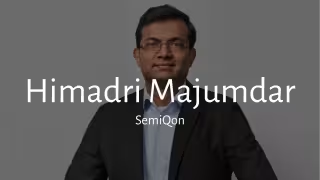
Finland – October 24, 2026 -- SemiQon, a 2023 spinout from Finland's VTT research institute, has shipped its first 4-qubit silicon spin-qubit chips to research collaborators after completing several fab runs. CEO and co-founder Himadri Majumdar says buyers should judge quantum processors on fidelity at scale and other system-level metrics, not on small-device fidelity alone.

Majumdar says 98% fidelity can be offset by qubit volume

Majumdar argues that some players over-optimize fidelity on small qubit counts. In his view, a sufficiently large number of physical qubits makes six nines of fidelity unnecessary. He puts the industry's physical-to-logical qubit ratio at about 100 to 1, down from 1,000 to 1, while some players promise 12 to 1.

Harvard Controls 3,000+ Qubits as Kiutra Raises €13M for Cooling

Image
Harvard Controls 3,000+ Qubits as Kiutra Raises €13M for Cooling

Cambridge, Massachusetts – October 24, 2026 -- Harvard University researchers reported control of more than 3,000 neutral atom qubits, one of the largest experimental quantum systems to date, in a paper published in Physical Review Letters.

The work demonstrates long-coherence control and advances the pursuit of fault-tolerant quantum architectures.

Kiutra closes €13 million Series A to remove helium-3 from quantum cooling

Garching-based Kiutra closed a €13 million Series A round on September 30. The startup builds cryogenic cooling systems for quantum computers that operate without helium-3, which the source describes as one of the most critical bottlenecks in scaling quantum hardware.

DoD Taps GLOBALFOUNDRIES Fab 8 for Secure Military Chip Supply

Image
DoD Taps GLOBALFOUNDRIES Fab 8 for Secure Military Chip Supply

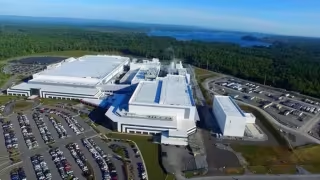
Malta, New York – October 24, 2026 -- The U.S. Department of Defense has partnered with GLOBALFOUNDRIES to secure a supply of semiconductors manufactured at Fab 8 in Malta, New York, a facility the chipmaker has reportedly backed with more than $13 billion in investment.

GLOBALFOUNDRIES holds ITAR and EAR compliance at its most advanced fab

In May 2020, GLOBALFOUNDRIES announced export control security measures bringing it into compliance with both the International Traffic in Arms Regulations (ITAR) and the Export Administration Regulations (EAR). The source describes it as the most advanced ITAR foundry in the United States. The certification allows the company to manufacture chips for sensitive military and aerospace applications.

GlobalFoundries Names Vermont GaN Hub in $16B US Expansion

Image
GlobalFoundries Names Vermont GaN Hub in $16B US Expansion

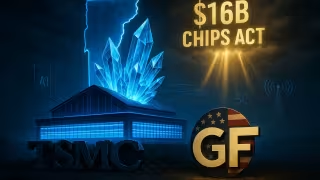
New York – October 24, 2026 -- GlobalFoundries (GF) has committed $16 billion to expand manufacturing and advanced packaging in New York and Vermont, and has designated its Vermont site as the core hub for gallium nitride (GaN) technology development. The June 4, 2025 announcement is backed by Apple, SpaceX, AMD, Qualcomm, NXP and General Motors.

The plan also covers silicon photonics for data centers and FDX processes for edge AI. One month after the announcement, TSMC confirmed it will exit the GaN foundry business by 2027, which leaves a gap in the market for a domestic alternative.

ARM Readies First In-House Chip as Intel Strategy Faces Doubt

Image
ARM Readies First In-House Chip as Intel Strategy Faces Doubt

Global – October 24, 2026 -- ARM is set to debut its first in-house chip by summer, moving beyond its traditional role as an IP provider into chip design, while Intel's strategy as an integrated device manufacturer (IDM) faces questions after CEO Pat Gelsinger departed in December 2024.

ARM and Intel shifts reshape a value chain split into eight segments

The semiconductor value chain spans IP design, electronic design automation (EDA), fabless design, foundries and outsourced assembly and test (OSAT), IDMs, chemical and wafer suppliers, equipment makers, and the manufacturers that integrate chips into end products. No single country or company controls every stage. Emerging players backed by substantial government funding are working to close the technology gap, and startups are investing in specialized areas that could disrupt the industry's traditional dynamics.