Global – October 27, 2026 -- An OPC UA NodeId tells a client which node to read, but not which pump, line or measurement that node represents in the plant. Reliable mapping therefore keeps source identity, browse path, equipment identity and user-facing label connected but stored as separate fields.
Namespace indexes can change between sessions, so URIs must be stored
A NodeId such as ns=4;s=Pump01.DischargePressure uses 4 as an index into the session's NamespaceArray. The OPC UA specification allows that index to change in a later session. A stored ns=4 string without its namespace URI can point to the wrong namespace after the server's table changes. Mappings should retain the endpoint, namespace URI, identifier type and identifier, and resolve the current index at connection time.
Plant-controlled asset keys replace raw NodeIds as equipment names
BrowseNames are not unique across a server, and DisplayNames are localized and may repeat. Neither can serve as sole identity. A string such as Pump01.Temp does not prove the plant, area, equipment type or meaning of Temp. Each source point should map to an internal equipment key, such as a controlled equipment number, and to a defined attribute. Pumps P-102 and P-103 can share one attribute template while binding to their own source nodes.
Server changes require classified, reviewed remapping
Before a server or controller change, teams should export the point inventory and mapping, then compare namespace URIs, NodeIds, browse paths, data types and engineering units afterward. Points should be classed as unchanged, moved, replaced, added or removed. Name similarity alone should not trigger automatic remapping, because two pumps can expose identical BrowseNames under different parent objects. Ambiguous matches need an equipment key, an approved path rule or a reviewed exception.
At scale, mappings should be versioned, each exception should have an owner, and a representative set of equipment classes should be tested before bulk rollout. Validation should confirm that each required attribute resolves to one expected source and that retired nodes are not still collecting under old names.
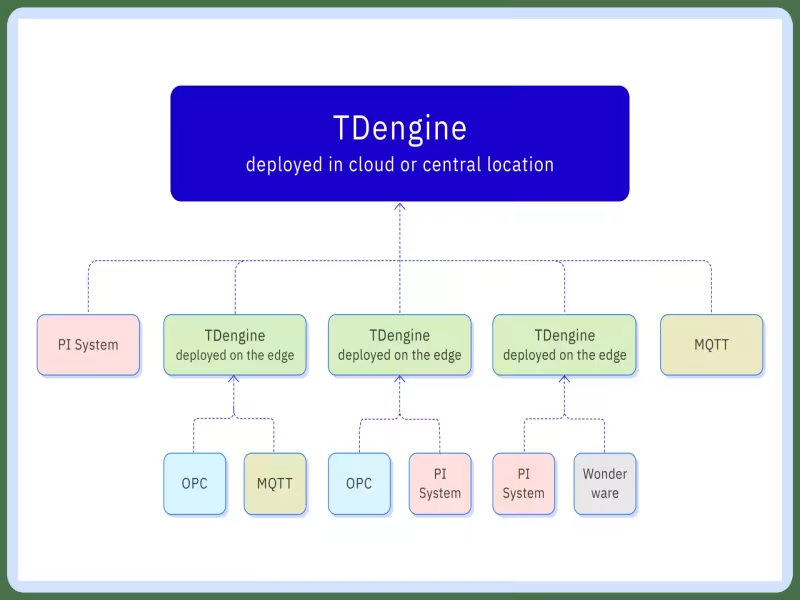
TDengine IDMP imports OPC structures but does not validate the business hierarchy
TDengine's OPC UA ingestion can write each point_id to TDengine TSDB and keep BrowseName, DisplayName, Description and Path as tags. The IDMP Import from OPC workflow uses a selected path tag, data column, optional quality column and path level to build the model. Imported structures still need review, parent-level selection and reconciliation of source paths with equipment keys before users rely on them.