IT, AI & Telecommunications

CrowdStrike Named Leader in 2026 IDC MarketScape for Endpoint Security

Image
CrowdStrike Named Leader in 2026 IDC MarketScape for Endpoint Security

Global – October 12, 2026 -- CrowdStrike has been named a Leader in the 2026 IDC MarketScape for Worldwide Modern Endpoint Security for Enterprises Vendor Assessment, and is using the recognition to push its Falcon platform into protection for AI agents on the endpoint.

CrowdStrike frames AI agents as a new source of endpoint activity

The company says humans, applications, and AI agents now work side by side on endpoints, executing commands, accessing data, using identities, working through browsers, invoking tools, and introducing software. CrowdStrike calls this the "agentic endpoint," where humans, AI agents, and AI-enabled adversaries converge.
CrowdStrike Joins Anthropic's Critical Infrastructure Defense Program

Image
CrowdStrike Joins Anthropic's Critical Infrastructure Defense Program

Global – October 12, 2026 -- CrowdStrike has joined Anthropic's Critical Infrastructure Defense Program, gaining access to Anthropic's technical guidance and frontier cybersecurity research to defend energy, water, manufacturing and transportation networks against AI-accelerated attacks.

Program links security vendors and Anthropic's research

The program brings cybersecurity and critical infrastructure leaders together with Anthropic's technical guidance and frontier research. It also serves as a forum for sharing defensive practices and informing research. CrowdStrike says adversaries are using AI to operate faster and at greater scale, which shortens defenders' response windows.

Shared Signals Framework Brings Near Real-Time Access to Zero Trust

Image
Shared Signals Framework Brings Near Real-Time Access to Zero Trust

Global – October 12, 2026 -- Re-validating an access token at every request would multiply the load on an identity provider (IdP) by roughly 1,000x, assuming a 24-hour token is used 1,000 times. That figure is why the OpenID Foundation's Shared Signals Framework (SSF) is gaining traction as the mechanism for keeping Zero Trust access decisions current.

Short-lived tokens cut IdP load to about 24x but degrade user experience

Shortening a token's life from 24 hours to one hour raises IdP burden by only about 24x. Users, however, face repeated redirects to the IdP and back, which degrades the experience. Neither approach lets an organization instantly revoke access after a termination or rogue agent activity, or react when device or task conditions change while a token is still valid.

SWI Group Raises €800M at €6.1B Valuation for AI Compute Push

Image
SWI Group Raises €800M at €6.1B Valuation for AI Compute Push

Amsterdam – October 12, 2026 -- Euronext Amsterdam-listed SWI Group (SWICH) has raised €800 million from institutional investors at a final valuation of €6.1 billion, lifting total equity raised since March 2026 to more than €1 billion.

New share series lift capital base to 558,399,385 ordinary shares

SWICH is issuing the new ordinary shares in several series. The total share capital rises to 558,399,385 ordinary shares after the transaction.

Proceeds fund data center and AI compute build-out in Europe and the US

The company will use the proceeds to develop and scale its data center and AI compute capacity. Spending covers power infrastructure, compute deployments and its development pipeline on both sides of the Atlantic. SWI describes the raise as a step in consolidating its transatlantic digital infrastructure and AI compute platform.

Clever Adds 150,000 Transactions, 500+ Projects to Its Database

Image
Clever Adds 150,000 Transactions, 500+ Projects to Its Database

Global – October 12, 2026 -- Clever has added more than 150,000 transactions and over 500 projects to its database over the past year, and says it is working toward a completed Enterprise Module in 2026.

Customer requests drive new filters and cost links

The platform now offers cleaner organization data, hyperlinked cost information, and new filters for accreditations and SDG goals. Clever says each refinement addresses a specific pain point raised by new and existing customers. The company says converting user feedback directly into features has sped up its product development.

Navigation and data quality get an overhaul

Clever has streamlined platform navigation, improved data quality, and automated backend processes. The automation is intended to support further capabilities ahead of the 2026 Enterprise Module, though the source gives no details on what those capabilities will include.

CIQ's RLC Pro AI Adds Kernel 6.18, 10-Minute Local AI Stack

Image
CIQ's RLC Pro AI Adds Kernel 6.18, 10-Minute Local AI Stack

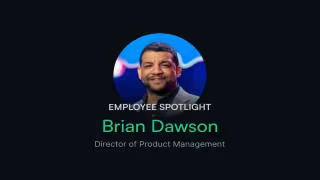
Global – October 12, 2026 -- CIQ's latest RLC Pro AI release lets a developer stand up a working local AI stack in about 10 minutes and adds CIQ Linux Kernel 6.18 for large production environments, according to Brian Dawson, the company's Director of Product Management.

CIQ targets the operating system as the overlooked layer of AI stacks

Dawson argues that organizations pour capital into GPUs, models, frameworks and applications while treating the operating system as an afterthought. "We've moved so fast with AI that the OS has become the forgotten layer," he said.

CIQ Maps Migration Paths to RLC Pro With Five FIPS 140-3 Certificates

Image
CIQ Maps Migration Paths to RLC Pro With Five FIPS 140-3 Certificates

Global – October 12, 2026 -- CIQ's RLC Pro LTS bundles five active FIPS 140-3 CMVP certificates, validated per minor version on x86_64, as a standard feature rather than a paid upgrade, as the company lays out documented migration paths for RHEL, Oracle Linux, SUSE, Amazon Linux 2 and unsupported Linux users.

RHEL, Oracle Linux and CentOS users skip recertification

RLC Pro shares its Enterprise Linux foundation with RHEL, Oracle Linux and CentOS. Applications compiled against that base carry over with little to no change. Because the migration preserves the foundation, it also preserves the certification, which removes the recertification step platform teams usually budget for a full platform change.

CIQ's migrate2rlc script automates the conversion. It checks the current version, third-party repositories and FIPS requirements, then runs the migration and validates the result.

CIQ: Linux 6.18 Loads AI Model Weights 33.8% Faster

Image
CIQ: Linux 6.18 Loads AI Model Weights 33.8% Faster

Santa Clara – October 12, 2026 -- CIQ says model loading ran 33.8 percent faster on Linux 6.18 than on a kernel frozen at general availability, based on its own benchmarks of the same workload. The company is pitching the result for RLC Pro AI, its Enterprise Linux distribution for GPU infrastructure.

CIQ's argument is that AI hardware and frameworks move faster than the operating system beneath them. NVIDIA advances the hardware, CUDA the toolkit and PyTorch the framework. An enterprise kernel, by design, trails by an average of twelve to eighteen months. RLC Pro AI ships Linux 6.18, the latest production and long-term GPU drivers, and the CUDA toolkit together, validated as one stack.

CIQ ELM Checks Patch Conflicts Before Rollout to Linux Fleets

Image
CIQ ELM Checks Patch Conflicts Before Rollout to Linux Fleets

Global – October 12, 2026 -- CIQ Enterprise Linux Manager (ELM), the fleet lifecycle tool bundled with RLC Pro, runs a forward-only dependency check on draft content views so incompatible libraries surface before a patch reaches any production host.

CIQ frames the problem around operators who say the patch, not the CVE, took production down. An update can pull in an incompatible library or bump a version another component depends on. The conflict information exists before deployment, but teams often see it only after the change is live.

ELM flags dependency conflicts on unshipped drafts

Hosts install from content views, which are named, versioned snapshots of the packages and versions that ship together. When an administrator forks a new view to bring in an update, ELM maps the change forward through it. Conflicts appear on the draft without a full re-walk of the dependency tree.

CIQ Fuzzball 4.2 Lets AI Agents Run HPC Workflows Under Admin Control

Image
CIQ Fuzzball 4.2 Lets AI Agents Run HPC Workflows Under Admin Control

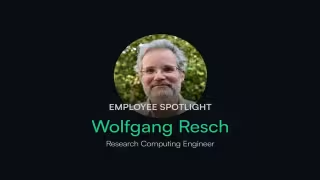
United States – October 12, 2026 -- CIQ's Fuzzball 4.2 allows AI agents to interact with the HPC platform within permissions set by the customer organization, and lets workflows submit and manage other workflows. Research Computing Engineer Wolfgang Resch, who spent roughly a decade supporting researchers at the NIH High Performance Computing facility, says the agent access will lower the barrier to entry for new users and speed development of Fuzzball workflows.

Fuzzball 4.2 adds agent access and workflow-to-workflow submission

Resch sees opportunities to fold Fuzzball into existing agentic workflows and to help administrators investigate cluster issues. Workflows that launch other workflows enable more complex applications and simplify integration with workflow engines such as Nextflow.