Xerox Named Leader in Quocirca Print Security Landscape 2026
Image
Xerox Named Leader in Quocirca Print Security Landscape 2026

Norwalk, Conn. – October 27, 2026 -- Xerox has been named a Leader in Quocirca's Print Security Landscape 2026, an independent assessment of how leading print manufacturers help organizations counter cybersecurity risks across print and document environments.

Quocirca credits Xerox for integrated security, AI capabilities and post-quantum readiness

The assessment cites Xerox strengths in integrated security, security services, content protection, AI-driven capabilities and post-quantum cryptography readiness. Quocirca recognizes Xerox for securing information across its lifecycle rather than focusing only on endpoint protection.

Quocirca CEO Louella Fernandes said print environments have become part of the wider cybersecurity ecosystem and that organizations can no longer treat printers as isolated devices. She pointed to Xerox strengths across device, fleet, user and content security, backed by assessment-led services and security analytics.

Xerox Gathers 500+ Channel Partners From 70 Countries in Nashville

Image
Xerox Gathers 500+ Channel Partners From 70 Countries in Nashville

Nashville – October 27, 2026 -- Xerox Holdings Corporation (NASDAQ: XRX) opened its 2026 Global Partner Summit with more than 500 channel partners from over 70 countries, pitching an expanded portfolio as a route to new buyers and profitable growth.

Xerox ties partner growth to its broader portfolio and global reach

Chief Revenue Officer Jacques-Edouard Gueden said the company's recent steps to strengthen its business now need to be put to work with partners. He said the summit is meant to give them "more ways to compete and win."

Xerox is presenting its portfolio, service and technology capabilities, global reach and go-to-market resources as tools for partners to deepen existing client relationships and pursue new business. The program includes executive discussions, product demonstrations, networking and partner-led sessions on growth and market expansion. Ovette Sampson, founder of Right AI, delivers a keynote.

Pulse Funds Eight Calgary Community Groups in 2021, Ties ESG to Strategy

Image
Pulse Funds Eight Calgary Community Groups in 2021, Ties ESG to Strategy

Calgary – October 27, 2026 -- Pulse financially supported eight community organizations in 2021, including the Calgary Food Bank and the Canadian Cancer Society, as the company links corporate citizenship to its sustainability strategy.

Pulse backs eight organizations with 2021 financial support

The recipients also include the Canadian Mental Health Association, Discovery House Family Violence Prevention Society, Distress Centre, Inn from the Cold Society, Urban Society for Aboriginal Youth, and YouthLink Calgary – Calgary Police Interpretive Centre. The source does not disclose contribution amounts.

Pulse employees also volunteer their time for community causes of their choosing, according to the company.

Snowflake Adds Low-Latency Decision Model With Sub-300 ms Responses

Image
Snowflake Adds Low-Latency Decision Model With Sub-300 ms Responses

Global – October 27, 2026 -- Snowflake has released snowflake-decision-fast in private preview, a lower-latency decision model whose endpoint round trips consistently complete in under 300 ms, according to the company. The release comes two weeks after Snowflake introduced the original Snowflake Decision in Cortex AI Functions.

Snowflake targets latency-sensitive workflows with three new capabilities

Customers asked for faster responses in live routing steps, real-time fraud checks and an agent's first triage hop, Snowflake said. The preview adds snowflake-decision-fast, REST API access through Cortex AI Gateway, and native availability of the new model through AI_COMPLETE in SQL. All three run under the existing governance, access-control and audit policies.

Snowflake Online Feature Store goes GA for sub-10ms fraud detection

Image
Snowflake Online Feature Store goes GA for sub-10ms fraud detection

Brazil – October 27, 2026 -- Snowflake has made its Online Feature Store generally available, serving machine learning features in under 10 ms for real-time fraud detection. Two financial-sector customers, Neon and VALID Systems, report lower latency and lower fraud losses after moving to the platform.

Neon halves P99 feature latency to 72 ms after vendor discontinuation

Neon, a Brazilian digital financial institution with over 27 million customers, routes every login, card payment, transfer and loan request through Viper, its in-house fraud engine. Its previous feature store vendor, Tecton, was being discontinued, which set a hard deadline.

In three months, Neon's team rebuilt almost 300 features across eight fraud workflows on Snowflake Feature Store. P99 feature latency fell from 140 ms to 72 ms, almost twice as fast. Viper's service availability rose from 99.7% to 99.9%.

Five-Boundary Trace Pinpoints Missing MQTT Historian Data

Image
Five-Boundary Trace Pinpoints Missing MQTT Historian Data

Global – October 27, 2026 -- Industrial teams can locate missing historian records by tracing one test message across five boundaries: broker receipt, subscriber receipt, parsing, database write and query. The approach comes from troubleshooting guidance on TDengine's MQTT ingestion, which warns that a live broker feed or a connected publisher proves only part of the chain.

One tagged test message anchors the diagnosis

Engineers should publish a single message for one equipment tag through the approved production path, such as plant/line2/pump07/pressure. They should log the exact topic, payload bytes, broker timestamp, publisher identity, destination table and intended source timestamp. Each test needs a fresh timestamp, because identical timestamps can make a successful write indistinguishable from an earlier one.

MQTT Brokers Cannot Replace Historians in Industrial Pipelines

Image
MQTT Brokers Cannot Replace Historians in Industrial Pipelines

Global – October 27, 2026 -- Even QoS 2's exactly-once delivery covers only one MQTT sender-receiver flow, not the subscriber's database transaction, so an MQTT broker cannot serve as an industrial historian. A broker moves messages between publishers and subscribers. A historian keeps time-indexed records that engineers can query, trend and aggregate later.

Broker retention mechanisms fall short of historical storage

A retained message is only the current message for a topic, and a new one normally replaces the prior state. A persistent session preserves subscriptions and eligible queued messages for an offline client. Session expiry, broker capacity, message expiry and administrative policy can all limit what remains.

Broker persistence protects broker state across restarts. It does not define table schemas, engineering timestamps, multi-year retention, SQL queries, aggregates or audit-ready change history.

TDengine MQTT Ingestion Needs a Schema Contract Before Mapping

Image
TDengine MQTT Ingestion Needs a Schema Contract Before Mapping

Global – October 27, 2026 -- An MQTT message is only a topic plus a payload, so a usable historian record needs four additions: stable equipment identity, typed measurements, a trustworthy timestamp and a schema that survives device and site growth. Engineers should settle these before configuring ingestion into TDengine TSDB Enterprise. Skipping that step can produce technically successful writes that create tables that are hard to query, compare or maintain.

TDengine Defines Industrial AI as Human-Reviewed Decision Support

Image
TDengine Defines Industrial AI as Human-Reviewed Decision Support

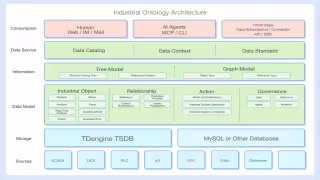
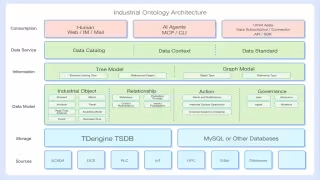
Global – October 27, 2026 -- TDengine is framing Industrial AI as decision support built on three layers (data, context and analysis) rather than as autonomous plant control, with accountability remaining with engineers and operators.

Industrial AI applies standard methods to physical operations

The approach uses machine learning, computer vision and generative AI on data from equipment, sensors, control systems, operational records and engineering documents. What makes an application industrial is the work it supports: pumps, compressors, production lines, energy systems and material flows. Enterprise AI, by contrast, mostly handles digital workflows such as drafting documents or summarizing meetings.

TDengine Guide: Historian Data Needs Context Before AI Training

Image
TDengine Guide: Historian Data Needs Context Before AI Training

Global – October 27, 2026 -- A historian export of tags and timestamps is rarely a training-ready dataset for Industrial AI, according to TDengine guidance that tells engineers to establish what each measurement means, when it happened, which asset produced it and whether it is reliable before data reaches an external model-training workflow.

Engineers define the pump decision before selecting data

For a centrifugal pump, the guiding question is whether a reliability engineer should review the pump given its recent operating signals. That differs from asking a model to declare the cause of a failure. Records created after a maintenance decision must not become inputs, because they would not exist when the model makes its prediction.