Massivit Books 15 Printer Orders Worth $3M at drupa

Image
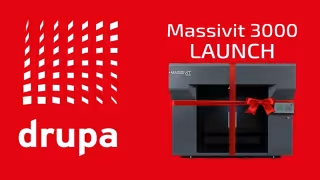
Massivit Books 15 Printer Orders Worth $3M at drupa

Lod – October 26, 2026 -- Massivit 3D Printing Technologies (TASE: MSVT) signed 15 purchase orders worth $3 million for its newly launched Massivit 3000 large-format printer, all received during the drupa printing exhibition in Germany from May 28 to June 7. The company will deliver the printers by the end of 2024.

Massivit 3000 launch opens advertising and marketing buyers at drupa

The Massivit 3000 is the latest model in the company's Gel Dispensing Printing line, built for high-speed production of large parts at what Massivit calls a competitive penetration price. Target applications include point-of-purchase displays, window displays and billboards.


Finance Chiefs Own Both AI Cost and AI Trust, Deloitte Survey Finds

Image
Finance Chiefs Own Both AI Cost and AI Trust, Deloitte Survey Finds

NORTH AMERICA – October 27, 2026 -- Finance leaders now answer for both AI trust and AI spending. In Deloitte's Finance Trends 2027 survey of more than 1,400 finance leaders, 48% oversee AI trust, covering the reliability, accuracy and explainability of AI output, and 48% manage AI spending and cost controls. More than two-thirds of the leaders holding these responsibilities took them on within the past three years.

Most organizations split the two duties by default. Cost went to a workstream built on usage dashboards and approval gates, and trust went to another built on governance frameworks and model policies. Alteryx argues that this split is the costly mistake.

McKinsey: Only 14% of AI Adopters Cut Staff as Finance Roles Hold

Image
McKinsey: Only 14% of AI Adopters Cut Staff as Finance Roles Hold

United States – October 27, 2026 -- Only 14% of organizations using AI say it reduced their total workforce in the past year, down from the 32% that expected cuts a year earlier, according to McKinsey's State of AI 2026. Two-thirds report little or no AI-related change in employment.

Inside finance, Deloitte found that 84% of finance organizations have yet to redesign jobs or the nature of work around AI. AI is therefore landing on finance teams that look much like they did before.

US labor data projects 5% growth for accountants and auditors through 2035

The US Bureau of Labor Statistics projects employment of accountants and auditors to grow 5% from 2025 to 2035. It expects about 115,300 openings a year, many of them replacing experienced people who move on or retire.

Alteryx, NextWave Cut LLM Token Use 95% in Reconciliation Test

Image
Alteryx, NextWave Cut LLM Token Use 95% in Reconciliation Test

Global – October 27, 2026 -- Routing deterministic reconciliation work to an Alteryx One workflow cut token consumption by up to 95%, a 20x reduction, in a benchmark run by financial services consultancy NextWave, an Alteryx partner.

NextWave tested a 120-trade Product Control reconciliation two ways

The workload was a daily front-office-to-back-office reconciliation. It validated open trades, valuations, risk and cash balances across 120 trades, then explained differences and proposed next steps.

In the first run, an LLM received the front-office and back-office files directly and compared them unaided. In the second, the LLM called the Front Office Back Office Data Reconciliation workflow on Alteryx One through the Model Context Protocol (MCP). Alteryx executed the comparison logic, and the LLM interpreted the output and recommended next steps.

Spreadsheet Errors Cost Firms $12.9M a Year, Gartner Estimates

Image
Spreadsheet Errors Cost Firms $12.9M a Year, Gartner Estimates

Global – October 27, 2026 -- Poor data quality costs organizations an average of $12.9 million a year, according to Gartner estimates cited in an Alteryx analysis that frames recurring, multi-source reporting as the point where Excel stops being the right tool.

Repeatability, not row capacity, is where Excel breaks

Excel holds more than a million rows per sheet and rarely reaches that limit. The failure comes when source data changes shape, such as a renamed column, a new region added mid-quarter or an extra week in a date range. The manual process then gets rebuilt from memory instead of re-run.

Industry studies cited in the analysis found that 90% of spreadsheets with more than 150 rows contain at least one major mistake. The analysis attributes this to the format, which has no built-in error control, rather than to analyst skill.

Identical +15 eNPS Scores Can Hide Very Different Workforces

Image
Identical +15 eNPS Scores Can Hide Very Different Workforces

Global – October 27, 2026 -- An Employee Net Promoter Score (eNPS) of +15 can conceal a shrinking pool of promoters, a growing block of detractors and a falling response rate, according to an Alteryx guide on employee engagement reporting for HR and employee experience (EX) teams.

Different workforces produce the same +15 score

eNPS subtracts the detractor share (scores 0–6) from the promoter share (scores 9–10). A group with 45 promoters and 30 detractors scores +15. So does a group with 30 promoters and 15 detractors, which has far more passive employees. The guide recommends reporting the full promoter, passive and detractor distribution with the score. It also recommends reporting the response rate, because a high score drawn from 20% participation is a red flag rather than a mandate.

Alteryx Pitches Business Logic Layer for AI on Snowflake Data

Image
Alteryx Pitches Business Logic Layer for AI on Snowflake Data

Global – October 27, 2026 -- Alteryx is marketing its platform as the governed business-logic layer on top of Snowflake's AI Data Cloud. It cites a 90% time saving in campaign development at Telenet and a 25% subscriber increase at BODi as proof points.

Alteryx pushes transformation logic into Snowflake while business users own the rules

Alteryx pushes transformation logic down into Snowflake for performance. It gives business users a no-code way to build and govern the rules that turn raw data into decisions. The company's argument is that Snowflake stores and scales data, but a warehouse does not know definitions such as a "qualified pipeline" or an "at-risk account." Without those rules made explicit, an LLM or AI agent querying the data is left to guess, producing inconsistent answers and hallucinations.

Five use cases span finance, procurement, customer success and inventory

Alteryx names five patterns:

Alteryx Pitches Embedded Text Mining for Unstructured Data Backlogs

Image
Alteryx Pitches Embedded Text Mining for Unstructured Data Backlogs

Global – October 27, 2026 -- Unstructured text makes up an estimated 70% to 90% of organizational data, according to Gartner analysts speaking at the Data & Analytics Summit in London this year, and Alteryx is pitching workflow-embedded text mining as the way to put it to use.

Three paths compete for the same text-analysis budget

Enterprises can write custom code, license a dedicated text-analytics tool, or run text mining inside the workflow platform that already handles blending, joins, and reporting. Alteryx argues the deciding factor is which approach keeps running unsupervised after its creator moves on.

76% of Analysts Still Prep Data by Hand, Alteryx Survey Finds

Image
76% of Analysts Still Prep Data by Hand, Alteryx Survey Finds

Global – October 27, 2026 -- 76% of data analysts still rely on manual, spreadsheet-based work for data preparation, despite near-universal adoption of AI tools, according to the 2025 State of Data Analysts survey published by Alteryx.

Buyers and daily users apply different criteria to integration platforms

IT teams judge integration platforms on throughput, scalability and fit with existing architecture. Analysts ask whether they can connect the systems they already use, blend the data and trust the result without waiting in a ticket queue. Gartner describes analytics as moving from "the domain of the few, to ubiquity."

McKinsey finds 88% use AI, but nearly two-thirds have not scaled it

McKinsey's 2025 State of AI survey reports that 88% of organizations use AI regularly in at least one business function. Nearly two-thirds have not scaled it enterprise-wide. The gap sits in data foundations and workflow design, not model capability.

Auto Co-op Programs Offset Dealer Ad Costs via Three Funding Models

Image
Auto Co-op Programs Offset Dealer Ad Costs via Three Funding Models

United States – October 27, 2026 -- Auto manufacturers fund dealer advertising through three co-op structures: fixed funding, percentage-based reimbursement and match programs. Under a match program, a dealer that spends $1,000 on a digital ad campaign has that investment matched by the manufacturer, according to a dealer guide from COOPABLE.

Three program formats tie manufacturer funds to sales or ad spend

Under fixed funding programs, manufacturers allocate a set amount of marketing money. Dealers claim a percentage of it, typically determined by units sold or a sales target.

Percentage-based programs reimburse dealers according to a percentage of their sales, so higher vehicle volume unlocks more claimable funds. Match programs cap manufacturer contributions at a set limit.