O.C. Tanner Culture Report Surveys 26,000 Staff in 23 Countries

Image
O.C. Tanner Culture Report Surveys 26,000 Staff in 23 Countries

Southern Utah – October 17, 2026 -- O.C. Tanner's Institute released its 2027 Global Culture Report at the company's Influence Greatness 2026 conference. The report draws on nearly 26,000 employee perspectives across 23 countries and covers four areas: organizational compassion, growth cultures, active trust and innovation. The event took place at Black Desert Resort, and a Brandon Hall Group analyst attended as an invited guest hosted by O.C. Tanner.
SAP Plans TechWolf Buy to Power Joule AI Agents With Skills Data

Image
SAP Plans TechWolf Buy to Power Joule AI Agents With Skills Data

Paris – October 17, 2026 -- SAP intends to acquire TechWolf, a skills-intelligence vendor that Brandon Hall Group says surfaces in nearly every in-depth enterprise skills discussion it holds with clients.

TechWolf's context graph is meant to ground SAP's Joule agents

SAP says TechWolf's context graph can serve as a grounding layer for agent queries. According to SAP, that foundation can make token usage more efficient and make Joule more intelligent in skills-based hiring, workforce planning and role redesign.

Brandon Hall Group Chief Strategy Officer commentary frames the deal as broader than skills. TechWolf increasingly pairs Skills Intelligence, Work Intelligence and Market Intelligence. That model links individual tasks, the skills employees apply and conditions in the external labor market.

Commentary: AI Expands Talent Management Rather Than Ending It

Image
Commentary: AI Expands Talent Management Rather Than Ending It

Global – October 17, 2026 -- Talent management is not disappearing under AI pressure. According to a new commentary, it is shifting from administering separate HR processes to managing the capabilities a business needs, with human and AI capabilities now handled side by side.

Separate talent processes are giving way to capability management

The author argues that talent management was long built around independent processes: performance management, succession, learning and workforce planning. Technology mirrored that structure, and organizations bought systems and modules to automate each activity.

The business, however, does not experience talent that way. A capability gap may call for training, but it may equally call for a hire, an internal move, a redesigned job or longer-term development. The commentary adds a fifth option: some of the work may be better performed or augmented by AI.

Brandon Hall Group Defines Workforce Intelligence as New HCM Category

Image
Brandon Hall Group Defines Workforce Intelligence as New HCM Category

Global – October 17, 2026 -- Brandon Hall Group began tracking Workforce Intelligence as a distinct HCM technology category in 2025, arguing that vendors using the term are often describing different capabilities.

Brandon Hall Group defines Workforce Intelligence as continuous, connected understanding of workforce and work

The analyst firm defines the category as the continuous understanding of the workforce, the work being performed, available skills and the external talent market, using connected data to improve workforce and business decisions. Workforce movement is central to that definition: hires, exits, internal moves, and shifts in turnover, attendance, scheduling, compensation and employee sentiment.

UKG Opens Workforce Platform to Anthropic, Gemini, OpenAI Assistants

Image
UKG Opens Workforce Platform to Anthropic, Gemini, OpenAI Assistants

Global – October 17, 2026 -- UKG has announced a headless AI vision that lets employees, managers and leaders start workforce activities from AI experiences including Anthropic, Google Gemini, OpenAI and consumer voice assistants, while its Workforce Operating Platform keeps control of execution.

UKG separates the AI interface from the execution layer

Under the headless approach, the experience where a request begins is decoupled from the platform that carries it out. Through Model Context Protocol tools, pre-built connectors and related technologies, approved AI experiences can reach selected UKG capabilities and trigger workforce workflows.

The UKG platform continues to enforce permissions, policies, approvals and business logic. Customers can build on existing technology investments rather than adopt another standalone application.

Brandon Hall Review: Coaching Cuts Early Attrition to as Low as 16%

Image
Brandon Hall Review: Coaching Cuts Early Attrition to as Low as 16%

Chicago – October 17, 2026 -- Early-tenure attrition at key Advocate Health sites fell from more than 70% to as low as 16% after the system added coaching for new hires. The result is one of several outcomes in a Brandon Hall Group review of 27 HCM Excellence Awards Excellence in Practice blueprints from 11 patient-care organizations. The firm presented the review at the WMHH Summit in Chicago.

Ascension and Acibadem tie human skills to observable behaviors

Ascension's Elevated Service Actions initiative translated service commitments into six observable behaviors. Leaders reinforced one behavior per month through huddles, staff meetings and coaching. The case reported a 13-point improvement in care team responsiveness and nearly five points in clinician interaction scores.

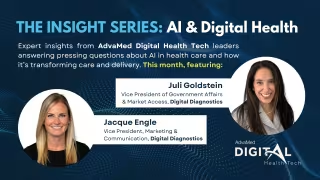
Digital Diagnostics: Autonomous AI Avoided 91% of Needless Referrals

Image
Digital Diagnostics: Autonomous AI Avoided 91% of Needless Referrals

United States – October 17, 2026 -- Digital Diagnostics says its LumineticsCore system avoided 91% of unnecessary specialty visits in a pivotal clinical trial and cut time-to-follow-up for positive patients from 60 days to 5 days. The company made the claims in AdvaMed's "The Insight Series: AI & Digital Health," speaking through Jacque Engle, Vice President of Marketing & Communication, and Juli Goldstein, Vice President of Government Affairs & Market Access.

Memory Chip Shortage Hits 75% of Medtech Firms, AdvaMed Survey Finds

Image
Memory Chip Shortage Hits 75% of Medtech Firms, AdvaMed Survey Finds

United States – October 17, 2026 -- Three-quarters of medical technology companies surveyed by AdvaMed report memory chip constraints, and 88 percent have seen price increases, as data-center demand squeezes supply of components used in 75 percent to 80 percent of medtech products (excluding personal protective equipment and consumables).

Survey shows allocation limits and procurement uncertainty across medtech

Beyond the 75 percent and 88 percent figures, 63 percent of respondents reported supplier allocation challenges or limited availability of specific components. Another 63 percent are uncertain they can procure enough memory chips, or products containing them, to avoid supply chain disruptions. Fifty-six percent said they are very concerned about overall memory chip supply chain stability.

MedTech Conference Sets Oct. 18–21 Boston Dates, Names CEO Keynote

Image
MedTech Conference Sets Oct. 18–21 Boston Dates, Names CEO Keynote

Boston – October 17, 2026 -- AdvaMed will host The MedTech Conference October 18–21 in Boston, with programming across more than seven stages and over 20 focus areas and a keynote panel of three medtech chief executives.

Three medtech CEOs headline the featured keynote discussion

The featured session, "Pulse of Medtech: Where the Industry Is Going Next," brings together Mick Farrell of Resmed, Mike Mahoney of Boston Scientific and Ashley McEvoy of Insulet. John Babitt of EY will moderate.

Attendee list preview shows registrants across the value chain

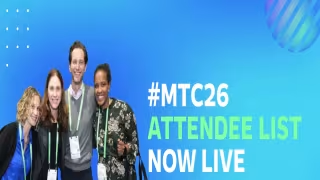
AdvaMed has published the first 2026 Attendee List Preview. It includes CEOs, senior executives and professionals in business development, strategy, regulatory affairs, policy, investment and innovation. Registrants span leading global companies, emerging innovators, investors, service providers and other medtech ecosystem organizations.

Elucid CEO: AI Must Change Cardiac Decisions, Not Just Speed Them

Image
Elucid CEO: AI Must Change Cardiac Decisions, Not Just Speed Them

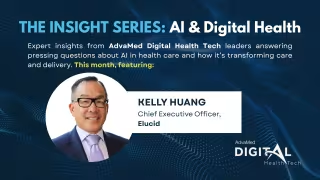
United States – October 17, 2026 -- Nearly half of all heart attacks occur in patients classified as low risk under traditional factors such as age, cholesterol and family history, Elucid CEO Kelly Huang said in AdvaMed's "Insight Series: AI & Digital Health," arguing that AI must change clinical decisions rather than accelerate existing ones.

Elucid extracts plaque biology and blood-flow data from a single CT scan

Elucid's Plaque-IQ software analyzes an existing coronary CT angiogram to quantify plaque type and amount in coronary and carotid vessels. Its BioIntegrated FFR-CT predicts fractional flow reserve values along each vessel, using invasive FFR as ground truth. Plaque algorithms are validated against histology.

Huang said two patients can show identical plaque volume and similar stenosis yet carry different risk: one has lipid-rich, unstable plaque, the other calcified, stable plaque.