Identity Security

Soprano Launches Entra MFA Tool Ahead of Microsoft's 2027 SMS Cutoff

SYDNEY – November 10, 2026 -- Microsoft will stop delivering SMS and Voice multi-factor authentication (MFA) through Microsoft Entra ID from 1 February 2027. Australian communications company Soprano Design has launched a replacement delivery route for customers that still depend on both methods.

Microsoft shifts Entra customers to their own telephony providers

Microsoft is retiring telephony-based authentication delivery as it moves towards passkeys as the default authentication experience. Organisations that need to retain SMS or Voice MFA must select and manage their own telephony provider.

Soprano Connect for Microsoft Entra goes on sale via the Microsoft Security Store

The product carries per-user and per-transaction pricing options. It targets organisations with a business, regulatory, technical or operational requirement to keep SMS or Voice MFA beyond 1 February 2027.
Keeper Security Rebuilds iOS Vault With Liquid Glass, iPhone Duo Support

Image
Keeper Security Rebuilds iOS Vault With Liquid Glass, iPhone Duo Support

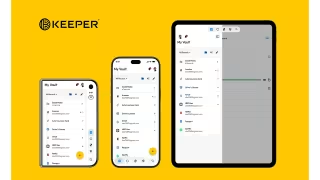
CHICAGO – October 29, 2026 -- Keeper Security released version 18.1 of its iOS app, rebuilding the vault interface on Apple's Liquid Glass design system and adding support for Apple's dual-screen iPhone Duo.

The company calls the update one of the most significant UI overhauls in its history. "Friction is the enemy of enterprise security," said Craig Lurey, CTO and co-founder, who added that the redesign keeps zero-knowledge encryption intact.

iPhone Duo support opens the vault into a side-by-side view

When the device is open, the vault expands so users can navigate folders and view detailed record entries at the same time. The app returns to a single-screen layout when the device is closed.

Liquid Glass redesign moves search, Security Audit and two-factor codes to a bottom toolbar

Account settings now sit in a central avatar menu. A new floating action button and a swipeable product tour are also included.

Stolen Session Tokens Let Attackers Bypass MFA for Weeks

Image
Stolen Session Tokens Let Attackers Bypass MFA for Weeks

Global – October 29, 2026 -- Security provider Wirespeed says reviews of new customers' previous 90 days of detections routinely uncover suspicious logins on MFA-enforced accounts that existing tools never surfaced, some dating back weeks.

The sessions go unflagged because the authentication evidence looks clean: valid credentials, a satisfied MFA prompt and a valid issued session. A stolen session token carries the authentication context that created it, so the assertion of strong authentication travels with the attacker.

Risk prompts can mark stolen sessions as resolved

When Entra ID Protection detects an unfamiliar location, new ASN or odd device, it emits a risk signal that triggers an MFA prompt. Once the prompt is satisfied, the sign-in risk is marked resolved, depending on configuration. An analyst scrolling a queue sees a challenge that passed, not a hijacked session.

Real-Time MFA Phishing Turns One Click Into Org-Wide Breach

Global – October 21, 2026 -- Attackers are now capturing valid multi-factor authentication (MFA) codes in real time, so a single phishing click can give them full account access and a path into an entire organization, according to Chris Bentkowski, Service Engineer at CloudFit.

Fake login pages harvest passwords and live MFA codes

The typical attack starts when a user clicks a malicious link and lands on a fake login page that mimics a trusted application. The user enters a username and password, then a valid code from an authentication app. The attacker can then complete authentication, capture session details and potentially reconfigure or take control of MFA mechanisms. Bentkowski calls the technique MFA phishing, or token/session capture.

Keeper Security Links Tenable Cloud Findings to Instant Remediation

Image
Keeper Security Links Tenable Cloud Findings to Instant Remediation

Chicago – October 16, 2026 -- Keeper Security has launched native integrations with Tenable that let cloud security teams remediate findings in seconds rather than the days or weeks manual workflows typically take, and that move static scan credentials out of Tenable policies into Keeper.

The integrations are available now to Keeper customers with active KeeperPAM licenses.

Tenable findings feed directly into Keeper's remediation engine

Cloud findings from Tenable now go straight into Keeper's remediation engine. Security teams can rotate credentials, enforce Just-In-Time (JIT) access and remove standing privileges without leaving the Keeper platform. Once remediation is complete, Keeper notifies Tenable and moves the finding to resolved status, with no manual follow-up or ticket management.

Ontinue: 30% of Firms Hit by Fake IT Support Teams Attacks

Image
Ontinue: 30% of Firms Hit by Fake IT Support Teams Attacks

Zurich – October 13, 2026 -- Approximately 30% of monitored organizations experienced at least one fake IT support impersonation attempt through Microsoft Teams in the first half of 2026, according to Ontinue's 1H 2026 Threat Intelligence Report. The managed detection and response (MXDR) provider says attackers are gaining scale by exploiting trusted identities, collaboration platforms, software supply chains and routine business workflows rather than by building more sophisticated malware.

The findings draw on incident investigations, threat intelligence research and telemetry from Ontinue's Advanced Threat Operations team.

Shared Signals Framework Brings Near Real-Time Access to Zero Trust

Image
Shared Signals Framework Brings Near Real-Time Access to Zero Trust

Global – October 12, 2026 -- Re-validating an access token at every request would multiply the load on an identity provider (IdP) by roughly 1,000x, assuming a 24-hour token is used 1,000 times. That figure is why the OpenID Foundation's Shared Signals Framework (SSF) is gaining traction as the mechanism for keeping Zero Trust access decisions current.

Short-lived tokens cut IdP load to about 24x but degrade user experience

Shortening a token's life from 24 hours to one hour raises IdP burden by only about 24x. Users, however, face repeated redirects to the IdP and back, which degrades the experience. Neither approach lets an organization instantly revoke access after a termination or rogue agent activity, or react when device or task conditions change while a token is still valid.

Netwrix: 31% of Healthcare Orgs Hit by Unauthorized Identity Access

Image
Netwrix: 31% of Healthcare Orgs Hit by Unauthorized Identity Access

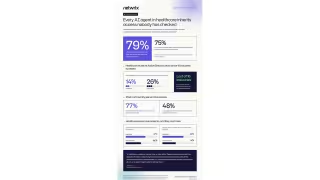
Frisco, Texas – September 30, 2026 -- Thirty-one percent of healthcare organizations experienced unauthorized identities accessing sensitive data in the past year, compared with 24% across other industries, according to new healthcare findings from Netwrix's 2026 Data and Identity Security Report. Among healthcare organizations that suffered an incident, 33% reported costs exceeding $250,000, versus 21% in other sectors.

Healthcare ranks last among 16 industries on Active Directory confidence

Only 14% of healthcare organizations said they are fully confident their Active Directory environments are free of privilege escalation risks, compared with 26% across all industries surveyed. Eighty-six percent lack full confidence in their AD security, the lowest ranking among the 16 industries with sufficient survey representation for comparison.