Data Quality

Historians Dropping OPC UA StatusCodes Risk Skewed Process Data
Image
Historians Dropping OPC UA StatusCodes Risk Skewed Process Data

Global – October 29, 2026 -- Industrial historians that store an OPC UA value and timestamp without the accompanying 32-bit StatusCode can pass stale, substituted, or Bad readings into averages, alarm reviews, and production calculations as ordinary process measurements.

StatusCode carries more than a Good, Bad, or Uncertain label

Every OPC UA DataValue can contain a value, timestamps, and a StatusCode. The severity class is Good, Uncertain, or Bad. The remaining bits can carry a specific subcode and information bits, such as monitored-item queue overflow, limit state, or changed semantics.

The SemanticsChanged bit can indicate that metadata such as engineering units changed and should be re-read before processing. A value of 100 is not comparable with the previous day's 100 if the unit or scale changed in between.
TDengine Guide: Historian Data Needs Context Before AI Training

Image
TDengine Guide: Historian Data Needs Context Before AI Training

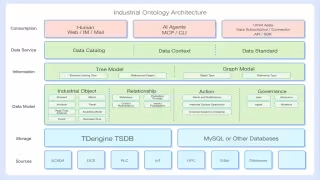
Global – October 27, 2026 -- A historian export of tags and timestamps is rarely a training-ready dataset for Industrial AI, according to TDengine guidance that tells engineers to establish what each measurement means, when it happened, which asset produced it and whether it is reliable before data reaches an external model-training workflow.

Engineers define the pump decision before selecting data

For a centrifugal pump, the guiding question is whether a reliability engineer should review the pump given its recent operating signals. That differs from asking a model to declare the cause of a failure. Records created after a maintenance decision must not become inputs, because they would not exist when the model makes its prediction.

Slowest OPC UA Rate That Preserves Process Behavior Is Right

Image
Slowest OPC UA Rate That Preserves Process Behavior Is Right

Global – October 27, 2026 -- The right OPC UA collection rate is the slowest configuration that still preserves the process behavior needed for operations and historical analysis, and it is set across five separate stages rather than one "scan rate." Device updates, server sampling, subscription publishing, filtering and historian storage each have their own timing. Treating them as one setting can add load without adding information, or hide a pressure transient the historian was expected to explain.

Server sampling cannot beat the source update rate

A PLC may update a temperature every 500 milliseconds while the OPC UA server refreshes its internal value once per second. A client request to sample every 100 milliseconds then re-reads the same value or detects changes no sooner than the server exposes them.

Clever Adds 150,000 Transactions, 500+ Projects to Its Database

Image
Clever Adds 150,000 Transactions, 500+ Projects to Its Database

Global – October 12, 2026 -- Clever has added more than 150,000 transactions and over 500 projects to its database over the past year, and says it is working toward a completed Enterprise Module in 2026.

Customer requests drive new filters and cost links

The platform now offers cleaner organization data, hyperlinked cost information, and new filters for accreditations and SDG goals. Clever says each refinement addresses a specific pain point raised by new and existing customers. The company says converting user feedback directly into features has sped up its product development.

Navigation and data quality get an overhaul

Clever has streamlined platform navigation, improved data quality, and automated backend processes. The automation is intended to support further capabilities ahead of the 2026 Enterprise Module, though the source gives no details on what those capabilities will include.