TDengine IDMP

Industrial AI Data Platforms Should Be Judged by One Decision
Image
Industrial AI Data Platforms Should Be Judged by One Decision

Global – October 29, 2026 -- Plants selecting an industrial data platform for AI should start with a single operational decision, such as whether a reliability engineer must review a compressed-air pressure drop within an hour, rather than with a list of AI features. That decision defines the required sources, history, context, access controls and response time.

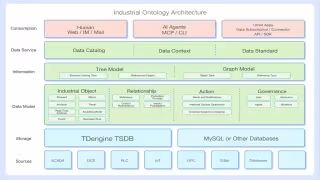
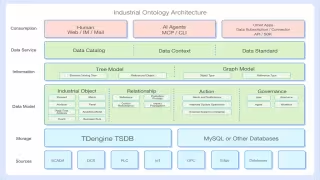
Four data sources feed the compressed-air pilot

The example pilot investigates periods when header pressure falls while compressor energy use rises. It needs PLC compressor state and control values, historian pressure, flow and power trends, IoT vibration readings, and maintenance records. None of these sources has to be replaced; the test is whether the evidence can be found, understood, governed and accessed together at the necessary time scale.
Knowledge Graphs give Industrial AI traceable plant context

Image
Knowledge Graphs give Industrial AI traceable plant context

Global – October 29, 2026 -- An Industrial Knowledge Graph links assets, measurements, events, documents and procedures as connected entities. This gives Industrial AI more relevant context than raw document search, according to a TDengine explainer for OT architects.

Graph links symptoms to causes, checks and approved actions

Nodes cover equipment concepts, fault conditions, maintenance procedures, rules, documents and events. Links express relations such as causes, applies to, requires or precedes. A compressor alarm, for example, can be tied to its troubleshooting procedure, operating conditions and earlier investigation records.

Roller press case shows reuse of a hydraulic pressure investigation

A roller press shut down after hydraulic pressure fluctuated. The maintenance record captured the observed condition, a possible cause, the handling sequence, the pressure limit and required spare parts.

OPC UA Mapping: Keep NodeId, Asset Key and Display Name Separate

Image
OPC UA Mapping: Keep NodeId, Asset Key and Display Name Separate

Global – October 27, 2026 -- An OPC UA NodeId tells a client which node to read, but not which pump, line or measurement that node represents in the plant. Reliable mapping therefore keeps source identity, browse path, equipment identity and user-facing label connected but stored as separate fields.

Namespace indexes can change between sessions, so URIs must be stored

A NodeId such as ns=4;s=Pump01.DischargePressure uses 4 as an index into the session's NamespaceArray. The OPC UA specification allows that index to change in a later session. A stored ns=4 string without its namespace URI can point to the wrong namespace after the server's table changes. Mappings should retain the endpoint, namespace URI, identifier type and identifier, and resolve the current index at connection time.