Dallas – September 21, 2026 -- The U.S. Army has awarded Lockheed Martin (NYSE:LMT) an indefinite delivery, indefinite quantity contract worth up to $1.2 billion to produce Increment 2 of the Precision Strike Missile (PrSM), following a second flight test that demonstrated the missile's ability to engage moving maritime targets.
Contract moves PrSM Increment 2 from testing into full production
The IDIQ covers initial procurement, future orders, follow-on production and continued development of PrSM Increment 2. Work will be performed at Lockheed Martin facilities and across the company's U.S. industrial base.
Second flight test in August validated moving-target engagement capability
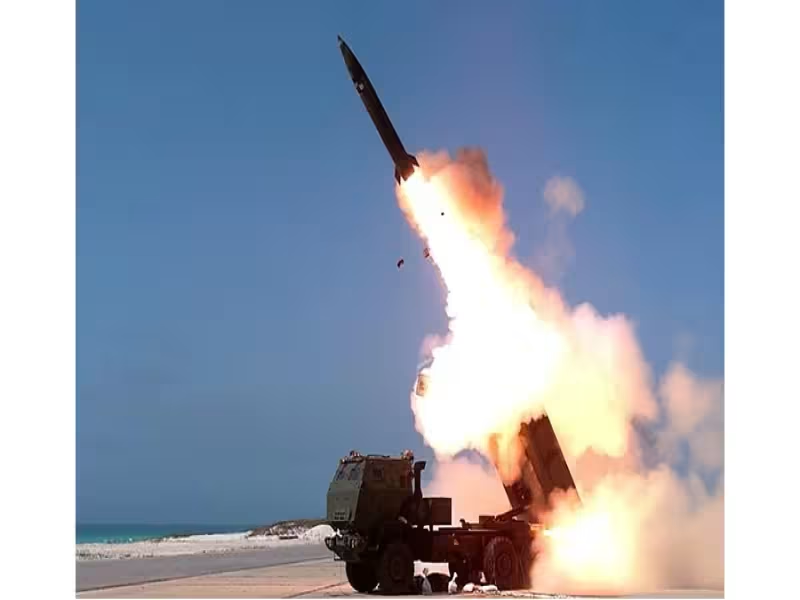
PrSM Increment 2 completed its first flight test in March and a second in August, gathering flight data, launching from a HIMARS platform, deploying protective covers and engaging the intended target. Technologies from Lockheed Martin's Strigo family of solutions informed the missile's guidance package. Additional flight tests are scheduled for 2027.
Increment 2 adds multimode seeker for land and maritime strikes
The upgraded missile is designed to engage moving land and maritime targets, expanding the Army's long-range precision fires options beyond the baseline PrSM configuration.
Lockheed Martin plans to quadruple PrSM production capacity
The award builds on the Department of War's broader investment in the PrSM program. Lockheed Martin is expanding manufacturing capacity to quadruple PrSM output while continuing development of additional missile increments.
Dave Griser, vice president of Precision Fires Launchers and Missile at Lockheed Martin, said the award marks a step toward delivering the capability to the warfighter, with the company ready to shift from flight testing into production.
Company to begin initial production while testing continues
Lockheed Martin will start producing the initial batch of Increment 2 missiles while ongoing flight testing and system maturation proceed in parallel. The company said it is positioned to scale production as the Army moves toward larger Increment 2 procurements.