Arlington, Va. – September 09, 2026 -- Routine IT operations and maintenance now consume 82.6% of IT spend and 66% of IT teams' time and effort, according to new benchmarking data from Info-Tech Research Group, leaving only a fraction of capacity for innovation and transformation work.
Info-Tech publishes blueprint targeting AI-driven reduction of KTLO burden
Info-Tech Research Group has released a new blueprint, "Harness AI to Reduce the Cost and Effort of KTLO in IT Operations," designed to help CIOs identify AI-enabled opportunities to cut the cost and effort of keeping the lights on (KTLO). The resource guides organizations through quantifying potential value, assessing readiness and risk, and building a portfolio of AI initiatives for launch.
Common cost-cutting tactics risk deepening the KTLO problem, firm warns
Info-Tech cautions that running hardware and software beyond end of life can raise technical debt and security risk. Using outsourcing purely as a cost-reduction lever can overlook its value in reclaiming capacity and specialized expertise, while cutting growth or transformation initiatives can starve the business of future value.
Five AI tactics identified for cutting KTLO cost and effort
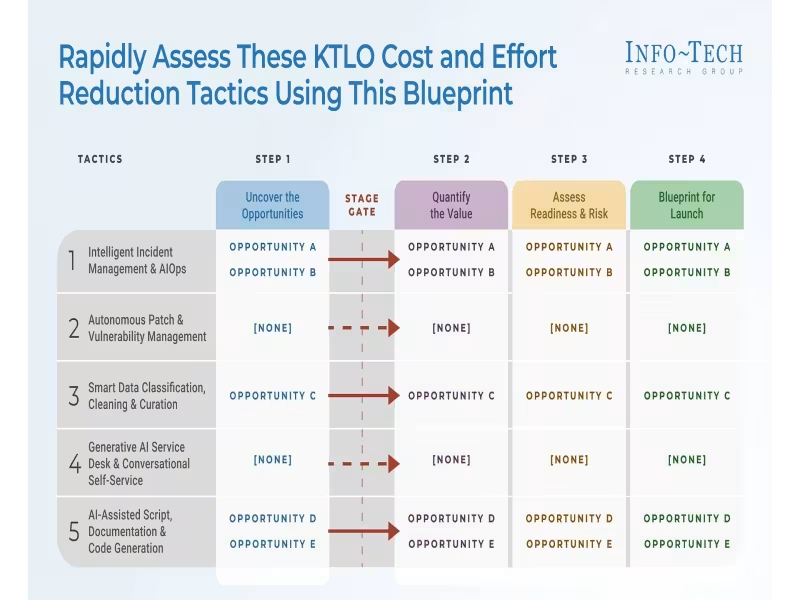
The research outlines five AI-enabled tactics for IT leaders to evaluate against operational priorities and readiness: intelligent incident management and AIOps for anomaly detection and predictive maintenance; autonomous patch and vulnerability management to automate prioritization and deployment; smart data classification and curation to reduce storage bloat and strengthen governed data foundations; generative AI service desk tools to deflect routine Tier 1 requests; and AI-assisted script, documentation, and code generation to preserve legacy system knowledge.
Four-step framework moves opportunities from assessment to executive investment proposals
The blueprint applies a four-step process across all five tactics: uncovering manual, repetitive KTLO activities; quantifying labor costs and potential reductions; assessing organizational readiness, data quality, and implementation risk; and consolidating viable initiatives into a Quantified KTLO Reduction Initiative Portfolio with accountable teams and milestones.
"KTLO has always been treated as an unavoidable tax on IT, but that mindset is outdated," said Fred Chagnon, principal research director at Info-Tech Research Group. Targeted AI investments can reduce low-value manual work and reclaim budget and staff time for reinvestment in innovation, according to Chagnon.
Firm positions KTLO reduction as a workforce development pathway for AI skills
Applying AIOps, automation, and generative AI to familiar, measurable KTLO processes gives IT teams controlled, practical experience with AI tools. Info-Tech frames this hands-on exposure as preparation for staff to lead broader AI initiatives across their organizations.