IT, AI & Telecommunications

Chainguard Launches Workspaces Beta to Isolate Coding Agents in microVMs
Image
Chainguard Launches Workspaces Beta to Isolate Coding Agents in microVMs

Seattle – October 14, 2026 -- Chainguard has launched Chainguard Workspaces in Beta, giving every developer and coding agent its own hardened microVM with no access to sensitive credentials and optional egress policies that block any connection a team has not approved.

Chainguard moves agent protection from the agent to its environment

The company argues that most coding agents today hold the same access as the developer who launched them, sitting next to credentials, cloud keys and production systems. Controls such as permission prompts and allowlists depend on the agent following the rules. Many developers now run a dozen agents or more at once, forcing teams to choose between granting broad access and approving prompts all day.

Chainguard CEO and Co-founder Dan Lorenc said teams are choosing between letting agents run next to production keys and babysitting them, and that "neither one scales."
Chainguard Adds Go, .NET Coverage and Zero-Day Patching to Libraries

Image
Chainguard Adds Go, .NET Coverage and Zero-Day Patching to Libraries

Seattle – October 14, 2026 -- Chainguard has extended its Libraries product to Go and .NET, added CVE remediation for JavaScript and Go, and begun delivering fixes for zero-day vulnerabilities on the day they are made public.

Chainguard Libraries for Go and .NET are available in Early Access. They give engineering teams and AI agents a managed endpoint for pulling dependencies without exposure to malicious packages.

Chainguard cites 76% AI-attack exposure among security leaders

Chainguard's AI Exploit Gap report found that 76% of cybersecurity leaders say their organization has experienced, or suspects it has experienced, an AI-driven attack in the last 12 months. Attackers publish malicious packages, hijack trusted ones, and register names of packages that do not yet exist, counting on developers and AI agents to install them unchecked. AI also lets anyone build and publish malicious packages or exploit CVEs and fresh zero-days.

Semperis: AI Used in 87% of Ransomware Attacks, Staff Threats Rise

Image
Semperis: AI Used in 87% of Ransomware Attacks, Staff Threats Rise

Hoboken – October 14, 2026 -- Threat actors weaponized artificial intelligence in 87% of ransomware attacks, and 40% of attacks involved psychological or physical threats against staff, according to the 2026 Ransomware Risk Report published by identity-focused cyber resilience company Semperis. The study surveyed only organizations that were hit by ransomware gangs in the past 12 months.

Attackers followed through on 53% of threats against employees

Bad actors used psychological intimidation in nearly 25% of all attacks across the U.S., UK, France, Germany, Italy, Spain, Singapore, Canada and Australia. In 53% of cases, victims reported that the hackers carried out their threats.

The personal toll was measurable: 23% of victims or family members were swatted, 25% of victims sought psychological and medical treatment, and 24% of victims or families hired personal security.

Armor CEO Tells GovWare CISOs: Govern AI, Don't Ban It

Image
Armor CEO Tells GovWare CISOs: Govern AI, Don't Ban It

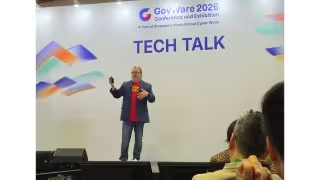
Singapore – October 14, 2026 -- Protiviti's February 2026 AI Pulse Survey found that 47% of large organizations have incomplete visibility into employees' use of AI tools, a gap Armor Founder and CEO Chris Drake cited at GovWare 2026 while arguing that CISOs should set conditions for AI adoption rather than ban it.

Drake said banning AI does not work and that ignoring it "is how the breach report gets written." In his Tech Talk Spotlights session, he said AI is already arriving through employees' browsers, productivity tools and machines, often without a separate security decision.

WEMIX Relaunches CertiK Bug Bounty With Payouts Up to $10,000

Image
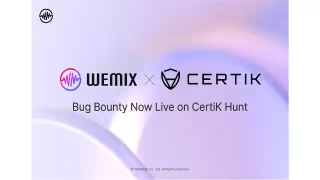
WEMIX Relaunches CertiK Bug Bounty With Payouts Up to $10,000

Singapore – October 14, 2026 -- WEMIX has relaunched its joint bug bounty program with blockchain security firm CertiK, offering payouts of up to $10,000 per finding for vulnerabilities in its WEMIX3.0 Layer-1 blockchain. The program runs on CertiK's CertiK Hunt platform, and rewards scale with the severity of each finding.

Program targets WEMIX3.0 blockchain and governance smart contracts

Reports will focus on core ecosystem components: the WEMIX3.0 blockchain (DLT) and its Governance Smart Contracts. Rewards are denominated in USD and paid in Tether (USDT) on the Ethereum network.

Findings classed as "Critical" cover major risks such as total network outages or direct financial loss.

DOCOMO, Abside Networks Sign MOU on AI-Driven HAPS Networks

Image
DOCOMO, Abside Networks Sign MOU on AI-Driven HAPS Networks

Tokyo – October 14, 2026 -- NTT DOCOMO, INC. and Boston-based Abside Networks, Inc. signed a memorandum of understanding on October 14, 2026, to jointly study high-altitude platform station (HAPS) communications and AI-driven network control for next-generation infrastructure.

Joint studies target wide-area, high-capacity HAPS connectivity

The two companies will examine wide-area, high-capacity and massive-connectivity communications via HAPS, along with network control and data utilization. The MOU covers joint technical study toward future collaboration. It does not specify financial terms, deployment timelines or commercial commitments.

Compal Shows Blackwell Ultra, Rubin Servers at OCP Summit 2026

Image
Compal Shows Blackwell Ultra, Rubin Servers at OCP Summit 2026

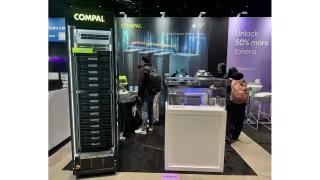
San Jose – October 14, 2026 -- Compal Electronics (TWSE: 2324) will show an eight-GPU, liquid-cooled NVIDIA Blackwell Ultra server alongside Rubin-based and Vera CPU systems at OCP Global Summit 2026. The company is pitching shorter time-to-AI to cloud service providers, enterprises and AI infrastructure operators.

Compal's 4U OG430-2-L1 server packs eight Blackwell Ultra GPUs

The OG430-2-L1 is a 4U direct liquid-cooled server built on the NVIDIA HGX B300 platform with eight NVIDIA Blackwell Ultra GPUs. It targets AI training, reasoning, inference and HPC workloads. Compal bundles platform engineering, liquid cooling, system validation, rack integration and manufacturing readiness to cut the engineering effort between buying new accelerators and running them in production.

Wecom Fiber Completes $45M Fiber Build Across Parker, Arizona

Image
Wecom Fiber Completes $45M Fiber Build Across Parker, Arizona

Parker – October 14, 2026 -- Wecom Fiber has completed a $45 million fiber network across the Town of Parker, Arizona, connecting 15,000 homes and businesses and 124 Community Anchor Institutions.

Network serves residents, carriers and government entities

The network will deliver high-speed internet to residents, businesses, carriers and government entities. The 124 Community Anchor Institutions include libraries, schools and public safety facilities.

Wecom Fiber funds $35M of $45M project alongside $10M state grant

Governor Hobbs and local leaders broke ground on the project in November 2023. It is backed by a $10 million Arizona Broadband Development Grant and spans Mohave and La Paz counties. Wecom Fiber invested $35 million, bringing total project investment to $45 million, so the company supplied roughly 78% of the capital.

Optro Launches Partner Growth Funding, Adds Two Partner Tracks

Image
Optro Launches Partner Growth Funding, Adds Two Partner Tracks

San Diego – October 14, 2026 -- Optro is co-investing capital directly into partner-led marketing, enablement and practice-building through a new Partner Growth Funding (PGF) program, part of an expansion of its Optro Partner Connect program that also adds two partner tracks and annual awards starting in 2027. The company announced the changes at its Partner Forum at CRX, its annual user conference, held this year in San Diego.

Technology and Distributor tracks widen Partner Connect

The Technology Partner Track has two tiers and targets independent software vendors and developers. Participants receive API tools, sandbox access and dedicated support to co-develop integrated workflows with Optro that automate data movement.

Microsoft October Release: Exploited Shell Zero-Day, 20 Critical Office Flaws

Image
Microsoft October Release: Exploited Shell Zero-Day, 20 Critical Office Flaws

Global – October 14, 2026 -- Microsoft's October 2026 security release includes an actively exploited Windows Shell zero-day (CVE-2026-96951, CVSS 8.8), 20 Critical remote code execution flaws in Office applications and five CVSS 9.8 vulnerabilities in Outlook. Several of the flaws can be triggered by viewing a file or email in a preview pane, which removes the click-to-compromise barrier many enterprises rely on.

Windows Shell zero-day strips Mark of the Web protections in live attacks

CVE-2026-96951 is an Important security feature bypass that Microsoft confirms is being exploited in the wild. It lets an attacker evade Mark of the Web (MOTW), the trust tag that triggers Protected View in Office and SmartScreen warnings for downloaded executables. Once the tag is stripped, SmartScreen, Office Protected View and Application Guard no longer apply.