Moth Tessa encodes 1,568 values across 120 qubits, 12x prior mark
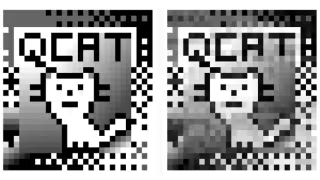
LONDON -- November 24, 2026 -- Moth, a London quantum software company, says its Tessa method encoded 1,568 numbers across all 120 qubits of an IBM Quantum Nighthawk r2 processor and read them back, about 12 times the previous largest comparable experiment. By Moth's account, that earlier experiment recovered 128 values, so 1,568 is 12.25 times as many by our calculation.
The 1,568 numbers were enough to represent a small colour picture, which Moth recovered from the chip. The load works out to roughly 13 values per qubit (1,568 divided by 120).
Moth says encoding is a bottleneck for quantum machine learning
Quantum computers have no equivalent of classical memory, Moth says. Data must be written into qubit states through a sequence of operations, and each operation adds noise and lowers fidelity. On IBM-type processors each qubit is wired only to its nearest neighbours, which the company says makes encoding slow.