Berlin – November 06, 2026 -- Almost 2 billion cigarettes a year in Germany are counterfeit or smuggled, and 24.6% of cigarettes smoked in the country are not taxed there, according to British American Tobacco (BAT). The company is pressing for tougher enforcement and a legal framework for nicotine pouches as the recently adopted tobacco tax increase approaches.
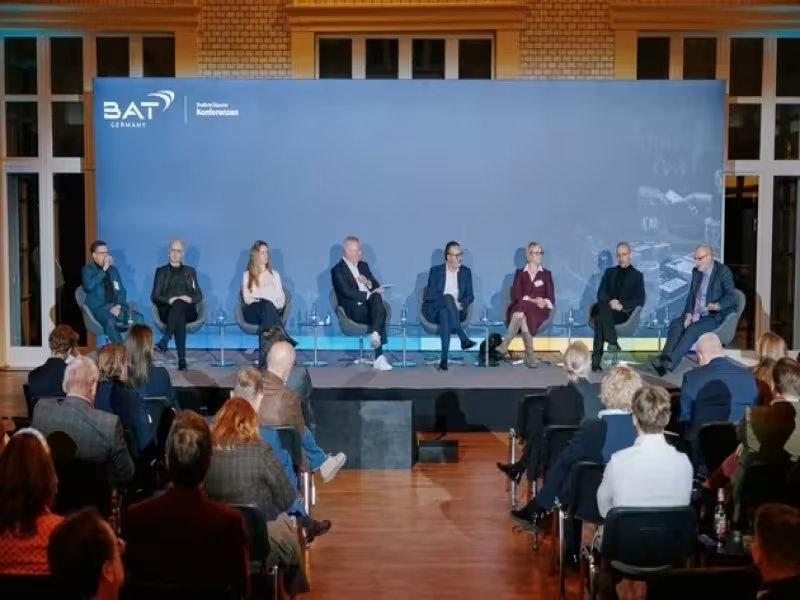
BAT presented the figures at the F.A.Z. Panel Talk in Berlin, where participants from politics, academia, law enforcement and industry discussed how to push back illegal markets. Jorge Araya Remagni, Area Director Central Europe and General Manager BAT Germany, cited both numbers in his opening address.
Enforcement gaps make illegal cigarettes a low-risk, high-margin business
Frank Buckenhofer, head of the customs district group at the police union Gewerkschaft der Polizei, described illegal cigarettes as carrying low detection risk, little prosecutorial pressure and weak penalties, while delivering high returns.
Arndt Sinn, a criminal law professor at the University of Osnabrück, said stronger controls at EU external borders are pushing organized crime to move production inside the EU.
BAT's Germany head Blagoje Jovanovic said everything consumed in Germany must be taxed there. He argued this does not happen today and will work even less after the tax-driven price rise. If the state expects higher revenue, he said, it must create the conditions to collect it, and BAT is ready to contribute.
About 1.5 million Germans use nicotine pouches without a legal framework
According to the Federal Institute for Risk Assessment (BfR), about 1.5 million people in Germany already use tobacco-free nicotine pouches. Germany has no product standards, age controls, taxation or official enforcement for them.
Available estimates put untapped tax potential at about EUR 500 million in 2027, rising to more than EUR 800 million by 2029.
Maike Roth of Johannes Gutenberg University Mainz reported that users of new nicotine products access the black market considerably more often than cigarette smokers do.
Anja Karliczek, a member of the Bundestag finance committee and chair of its tourism committee, said the current situation brings no gain in health, youth or consumer protection while strengthening illegal structures. In her view, products that are already widely available should be taxed.
BAT calls for a standalone pouch regime with risk-based taxation
BAT wants binding product standards, effective age checks, responsible marketing rules, risk-based taxation and consistent action against illegal suppliers. Jovanovic said such rules would channel existing demand into controlled outlets, improve consumer protection and generate additional state revenue.
The panel also included Christian Traxler of the Hertie School and Mohammad Reza Amiri, managing director of Intrade Concepts GmbH. F.A.Z.'s Archibald Preuschat moderated.