Clinical Decision Support

Elucid CEO: AI Must Change Cardiac Decisions, Not Just Speed Them
Image
Elucid CEO: AI Must Change Cardiac Decisions, Not Just Speed Them

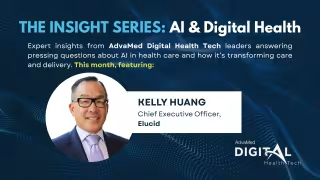
United States – October 17, 2026 -- Nearly half of all heart attacks occur in patients classified as low risk under traditional factors such as age, cholesterol and family history, Elucid CEO Kelly Huang said in AdvaMed's "Insight Series: AI & Digital Health," arguing that AI must change clinical decisions rather than accelerate existing ones.

Elucid extracts plaque biology and blood-flow data from a single CT scan

Elucid's Plaque-IQ software analyzes an existing coronary CT angiogram to quantify plaque type and amount in coronary and carotid vessels. Its BioIntegrated FFR-CT predicts fractional flow reserve values along each vessel, using invasive FFR as ground truth. Plaque algorithms are validated against histology.

Huang said two patients can show identical plaque volume and similar stenosis yet carry different risk: one has lipid-rich, unstable plaque, the other calcified, stable plaque.
FARE Launches Anatool, First Point-of-Care Digital Guide for Anaphylaxis

Image
FARE Launches Anatool, First Point-of-Care Digital Guide for Anaphylaxis

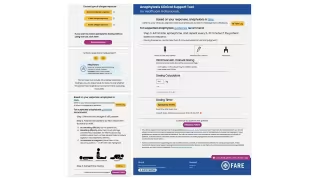
Cincinnati – September 16, 2026 -- Food Allergy Research & Education (FARE) has launched Anatool, a digital clinical support tool designed to standardize anaphylaxis recognition and treatment at the point of care for emergency physicians, paramedics, nurses and allergists.

Tool translates international consensus report into bedside guidance

Developed with Tim Dribin, MD, of the Division of Emergency Medicine at Cincinnati Children's, Anatool is built on recommendations from a landmark international consensus report on anaphylaxis published in The Journal of Allergy and Clinical Immunology. Dribin co-chaired that report with Hugh Sampson, MD, of the Icahn School of Medicine at Mount Sinai, and Antonella Muraro, PhD, of the University of Padua.