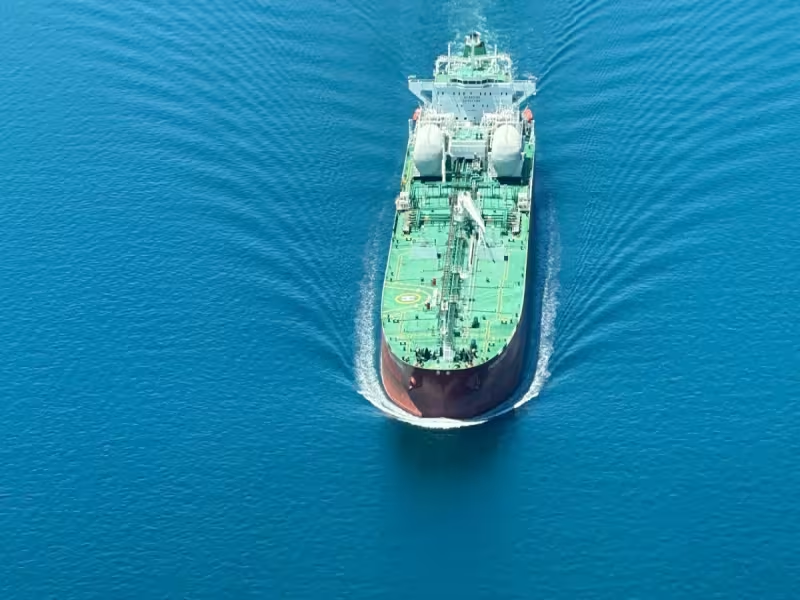
STRAIT OF HORMUZ -- November 25, 2026 -- Suezmax and Aframax tankers shipped 2 million barrels per day (bpd) of crude out of the Strait of Hormuz in October, the highest daily volume since the war began in February, according to Vortexa data cited by Bloomberg. At that rate, the smaller vessels moved about 62 million barrels over October's 31 days, by our calculation.
These ships carry less than half the volume of a supertanker. By our calculation, replacing a single supertanker cargo therefore takes more than two Suezmax or Aframax cargoes. The shipments are mostly ship-to-ship transfers in the Gulf of Oman. They began to pick up materially in September, the same month in which estimates put overall crude flows through the strait close to pre-war levels.
Attacks on supertankers and record rates push buyers to smaller ships
Supertanker rates hit record highs in September and early October. Attacks on very large crude carriers (VLCCs) rose to a wartime high. Sellers, traders, shippers and buyers have since leaned more on smaller vessels to move crude out of the Persian Gulf, according to the report.
Traders and shipbrokers told Bloomberg that Suezmaxes and Aframaxes are mostly used for cargoes from Kuwait, Iraq and Qatar. Those three suppliers are the ones most exposed to the shift in vessel size.
The reports do not give total Strait of Hormuz flows in barrels per day, so the smaller tankers' share of exports cannot be calculated.
Iran reports near-daily mine strikes and rules out a return to pre-war navigation
Incidents involving naval mines and unknown projectiles hit a wartime high in October. For days, Iran has reported nearly daily incidents of tankers hitting naval mines in corridors it has designated "unauthorized".
Mohammad Bagher Ghalibaf, Iran's top negotiator and Parliament Speaker, told Al Jazeera that navigation in the strait would never return to pre-war conditions. He said there are no "free waters" there and that the 1982 UN Convention on the Law of the Sea does not apply. In his account, the strait is governed by the laws of the two littoral states that border it.