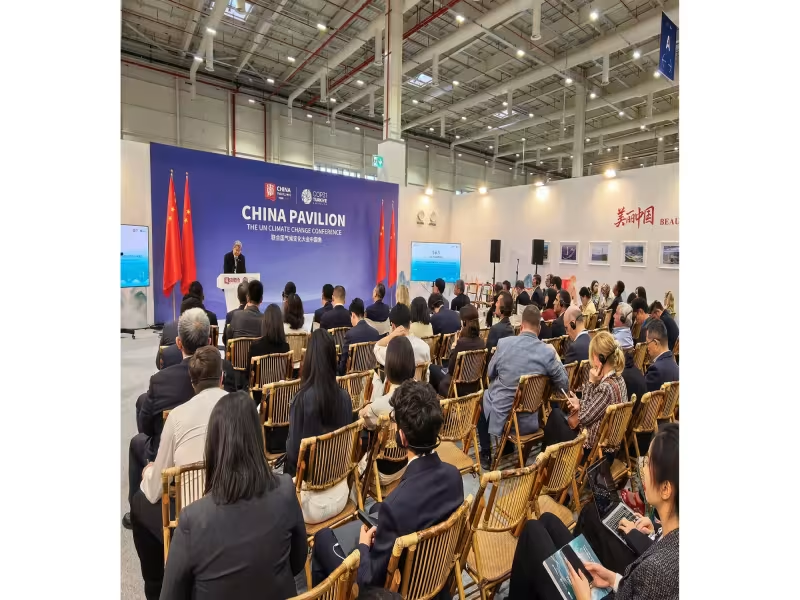
ANTALYA -- November 25, 2026 -- Sinopec projects that global energy-related carbon emissions will peak around 2030, in its World and China Energy Outlook 2060, which it presented on Nov. 16 at the China Pavilion of COP31. The same report puts the peak in global primary energy consumption around 2040, so by our calculation the company expects emissions to top out about 10 years before energy use does.
China Petroleum & Chemical Corporation (HKG: 0386) released a second study, the Green Fuel Technology Outlook, at the side event. The Sinopec Economics and Development Research Institute wrote the first report. The Sinopec Research Institute of Petroleum Processing wrote the second.
Sinopec expects China's energy demand to peak around 2035, five years before the global peak
The energy outlook says growth in China's primary energy demand will slow, with demand peaking around 2035. That is about nine years from now and five years ahead of the global date the company gives.
The report expects wind and solar to meet about 60% of China's incremental electricity demand over the next five years. By 2060 it projects combined installed capacity of 7.4 terawatts and annual generation above 12 trillion kilowatt-hours. By our calculation, 12 trillion kWh from 7.4 TW works out to a capacity factor of at least about 18.5%, based on 8,760 hours a year. Sinopec says wind and solar will be China's main electricity sources by then.
Over the next five years, the report expects non-fossil sources to move from mainly meeting new demand to increasingly replacing fossil fuels already in use.
Green fuel study reviews four production routes under development in China
The Green Fuel Technology Outlook says green liquid fuels will matter most in aviation and shipping, where the report says full electrification remains difficult. It reviews four pathways:
- HEFA: hydrogen converts oils and fats into jet fuel.
- AtJ: alcohol is converted into jet fuel.
- G+FT: gasified feedstocks become liquid fuels through Fischer-Tropsch synthesis.
- PtL: electricity is used to make liquid fuels.
According to the report, the oils-and-fats route can reach a jet fuel yield of up to 72%. It expects advances in producing green fuels from non-food feedstocks around 2035, with some technologies moving from demonstration to commercial production as costs fall and efficiency improves. It expects power-to-fuel and near-zero-emissions technologies to mature by 2050.
Sinopec lists a 20,000-tonne hydrogen project and a 100,000-tonne biofuel plant
Sinopec says it has built 153 hydrogen refueling stations linked into nine hydrogen corridors, an average of 17 stations per corridor by our calculation. In Kuqa, Xinjiang, it commissioned a solar-powered green hydrogen demonstration project with a designed annual capacity of 20,000 metric tons. It is building a project in Ordos, Inner Mongolia, to use green hydrogen to cut emissions from coal-to-chemical production. It has also started a wind and solar hydrogen project in Ulanqab, Inner Mongolia.
At its Zhenhai refinery, Sinopec says it built China's first commercial-scale facility designed to produce 100,000 metric tons of aviation biofuel a year. It has also set up a supply chain to store and transport green methanol and supply it to ships at port. The company did not disclose investment amounts for any of these projects.
The side event drew more than 100 attendees. Speakers came from the International Air Transport Association, GenZero and the Environmental Defense Fund. Discussions covered biomass, green hydrogen and sustainable aviation fuel, and how policy, standards and technology could support wider use of green fuels.