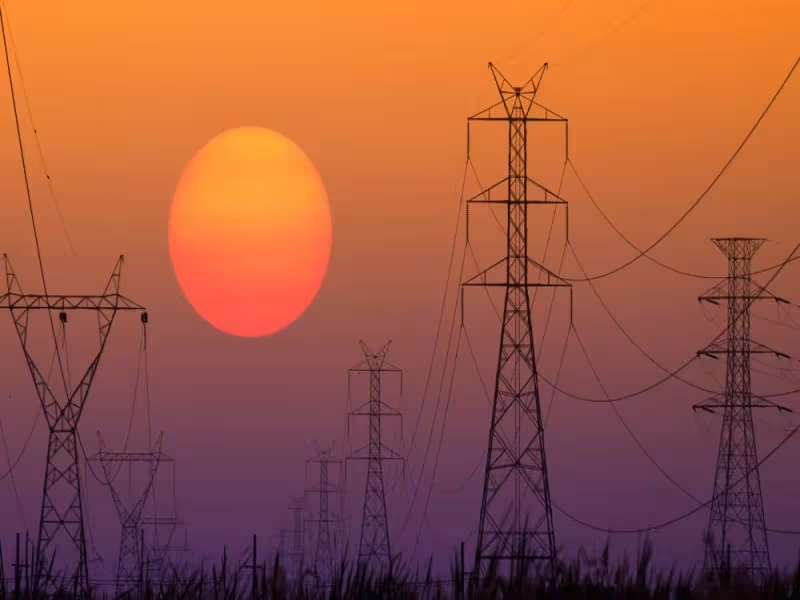
LUBMIN -- November 19, 2026 -- Germany's state-owned SEFE is dismantling the Greifswald industrial power plant at the Nord Stream landfall in Lubmin and donating it to Ukraine, with a Naftogaz team managing the transfer, SEFE spokesperson Adrianne Montgobert told RFE/RL. SEFE, the majority owner, expects to finish the transfer in the first quarter of 2027, close to four years after the plant stopped operating in April 2023.
Donation followed failed sales efforts. Montgobert said SEFE explored all reuse and sale options, including actual sales negotiations, but "no commercially viable solution emerged." She described the donation as the best alternative to scrapping the plant.
Plant stopped about seven months after the Nord Stream blasts
The facility heated gas arriving through Nord Stream 1 and fed electricity into Germany's grid. Explosions ruptured three of the four undersea Nord Stream pipelines in September 2022. The plant ceased operation in April 2023, about seven months later by our calculation. The pipelines are no longer operational.
Montgobert said the workers who ran the plant met the decision with understanding. She said dismantling has proceeded smoothly, with no reported concerns from long-time employees or managers.
Opposition party failed to block the transfer in May
The Alternative for Germany (AfD), the main opposition party, filed a motion in May to halt the transfer. It was unsuccessful. The party argued that removing the plant would impair future energy policy options. The AfD has supported ending military aid to Ukraine and lifting sanctions on Russia.
Gerold Juergens, president of the Western Pomerania Business Association, appeared to refer to allegations that Ukraine was behind the pipeline attacks. He told a German media outlet that many people see it as a case of the pipeline being blown up and then the power plant being taken away, and that this cannot be explained to anyone.
A Ukrainian special forces officer accused of leading a team that sabotaged the pipelines is on trial in Hamburg. Kyiv has denied involvement.
Vilnius plant went to Ukraine in 149 shipments weighing 2,399 tons
Lubmin is part of an EU-led initiative to move components of energy facilities, and in some cases entire decommissioned plants, to Ukraine. In December 2025 the EU completed the dismantling and relocation of the Vilnius Combined Heat and Power Plant, a gas-fired plant in Lithuania. It was delivered in 149 shipments with a total weight of 2,399 tons, or about 16 tons per shipment by our calculation. It was not rebuilt as a unit but used for parts at Ukrainian energy facilities.
An EU spokesperson told RFE/RL that more than €4 billion ($4.42 billion) of energy security aid has been supplied to Ukraine since Russia's 2022 invasion. The spokesperson said the aid could generate power capable of supporting up to approximately 9.6 million people. At the €4 billion floor, that works out to about €417 per person. The spokesperson declined to say how much of the donated infrastructure Russian strikes have destroyed.
Riga CHP-2 is next in line, with two German coal plants under review
In September, Lithuania pledged to donate hundreds of tons of hardware from the Ignalina Nuclear Power Plant, decommissioned in 2009. In a July statement, Ukraine's energy ministry said it had inspected decommissioned facilities in Latvia, Lithuania, Slovakia, Austria, Croatia and the Netherlands for possible transfer.
The Riga CHP-2 power plant in Latvia is the next facility in line for transfer. A source in Brussels told RFE/RL on November 11 that two decommissioned coal-fired plants in Germany are being looked at for likely transfer. The source declined to name them, citing sabotage concerns.