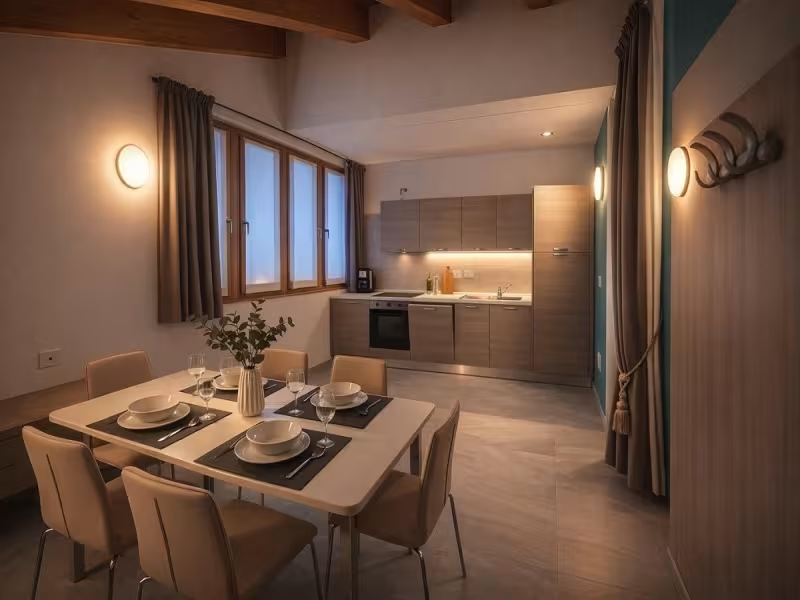
SHERIDAN, WYOMING - February 26, 2026 - The Saviola Group is contributing to Milano-Cortina 2026 by furnishing reception areas for guesthouses in Alta Valtellina that will host healthcare personnel across multiple locations in the Province of Sondrio. The initiative is positioned around circular design: interiors built using an ecological panel made from 100% recycled wood and produced entirely in Italy, with solutions intended to be reusable after the Games. For facility operators and procurement teams, the project highlights how temporary mega-event fit-outs can be designed for longer asset life, reduced waste, and more efficient resource use, rather than one-off installations that become disposal liabilities.
Circular design priorities for Olympic-linked facilities
According to the source, the interiors follow sustainable architecture principles and explicitly prioritize solutions that can be reused after the event. This approach is presented as a way to extend building lifecycles, reduce waste, and optimize resource use.
In practical terms for operators, the key implication is planning interiors as movable, durable, and repurposable assets-supporting a post-event transition strategy rather than treating fit-out as a sunk, single-use cost.
Scope: reception areas across Alta Valtellina locations
The Saviola Group's contribution is described as furnishing reception areas in Bormio, Livigno, San Rocco, and Trepalle, supporting guesthouses used by healthcare staff in connection with the Milano-Cortina 2026 Winter Olympics.
This multi-site footprint is relevant because it typically requires standardized specifications, coordinated logistics, and consistent quality across locations-especially when facilities are used by staff populations with operational needs and high turnover.
Materials: recycled-wood panel made in Italy
The source states that the project uses an ecological panel made from 100% recycled wood and fully manufactured in Italy. This material choice is framed as the foundation for sustainable architecture objectives and a circular approach aligned with the company's philosophy.
For B2B audiences, this signals two operational considerations: supply assurance tied to domestic manufacturing, and material selection designed to support reuse and long-term durability rather than short-term appearance.
A collaborative supply chain from design to manufacturing
The project is described as a collaboration across multiple partners. Missaglia Srl, based in Lissone (MB), was responsible for development, design, and furnishing of the spaces, while S75 Spa manufactured the furniture using decorative materials supplied by Saviola.
From a delivery standpoint, this structure reflects a segmented but coordinated value chain, where design ownership and manufacturing execution are separated-often a model used to manage timelines and maintain specification control in multi-stakeholder projects.
Operational outcome: functional spaces with an "Italian living" positioning
The interiors are described as welcoming and functional, with attention to detail and a recognizable Italian residential feel. The source also highlights the use of finishes inspired by highland woods to achieve a modern, natural, warm aesthetic.
For operators of hospitality-style staff accommodation, this points to a fit-out strategy that balances durability and maintainability with an experience layer-important when spaces must serve practical use while representing the host region.
Sustainability claim and measurable output cited in the project
The source includes a quantified environmental outcome tied to the use of Saviola reclaimed wood: 103 trees saved. It positions this as a concrete result supporting the company's environmental commitment.
In procurement and ESG terms, quantified outputs-when linked to specific material choices-can be easier to communicate internally and externally, and can support post-project reporting on waste reduction and circularity objectives.