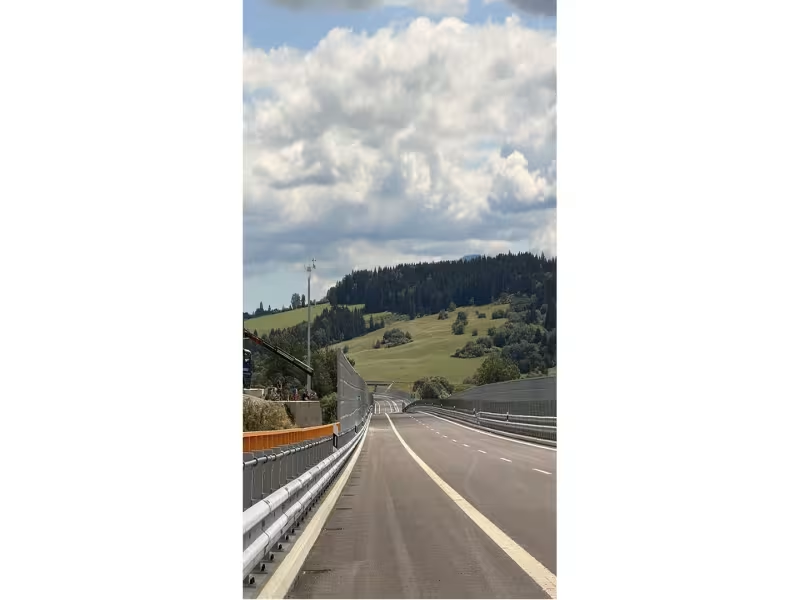
Orlando – October 09, 2026 -- Civil engineers on Slovakia's 14.9-km D1 Hubová–Ivachnová motorway section specified the Penetron System of crystalline concrete waterproofing for exposed bridge curbs, targeting damage from water, freeze-thaw cycles and de-icing salts, according to Penetron Group.
D1 section adds a northern bypass of Ružomberok across mountainous terrain
The section forms part of Slovakia's principal east–west motorway corridor. It creates a northern bypass of Ružomberok, a center of the country's paper industry and a tourist destination, diverting transit traffic from the urban area.
The project comprises 19 bridge structures, three interchanges and the roughly 3.6-km twin-tube Čebrať Tunnel. The route crosses complex geology and faces severe seasonal exposure, which raises the requirements for concrete durability, waterproofing and corrosion protection.
Bridge curbs face chloride attack that accelerates reinforcing-steel corrosion
Bridge curbs are routinely exposed to water infiltration, freeze-thaw cycles and chlorides from de-icing salts. Each of these can speed up concrete degradation and corrosion of reinforcing steel.
"Concrete elements must withstand repeated moisture exposure, freeze-thaw cycling, and de-icing chemicals," said Evgeniy Artukh, Director of Penetron Slovakia.
Topical crystalline treatment forms insoluble crystals inside concrete pores
The system is applied directly to prepared concrete surfaces as a topical treatment. The active crystalline technology penetrates the concrete and reacts with moisture and components of the concrete matrix. It forms insoluble crystals in pores, capillaries and microcracks, which reduces permeability and restricts the ingress of water and aggressive chemicals.
Penetron says the approach supports a longer service life with reduced maintenance requirements.