New York – October 31, 2026 -- Orbis International is committing an estimated US$32 million in financial and technical contributions from 2027 through 2030 to strengthen eye health systems, targeting better outcomes for more than 18 million people and professional development for more than 250,000 eye health professionals.
The pledge was announced in connection with the first Global Summit for Eye Health, hosted by the Government of Antigua and Barbuda in technical collaboration with the World Health Organization (WHO). The summit targets the 1 billion people living with avoidable vision loss. Orbis has endorsed the St. John's Global Compact for Eye Health, and its commitments run from January 2027 through December 2030. They cover cataract, diabetic retinopathy, childhood eye health and refractive error.
Orbis allocates $15 million to free Cybersight access through 2030
Orbis will keep Cybersight, its digital platform for learning, mentorship, AI and clinical support, free through 2030. It values the contribution at an estimated US$15 million over four years. The platform's capabilities will also support learning, training and development initiatives at the International Agency for the Prevention of Blindness (IAPB).
Orbis Chief Medical Officer Hunter Cherwek described the lack of a trained workforce as a global crisis, with demand rising as more people develop sight-threatening conditions.
Orbis invests $17 million in cataract surgery capacity with Alcon
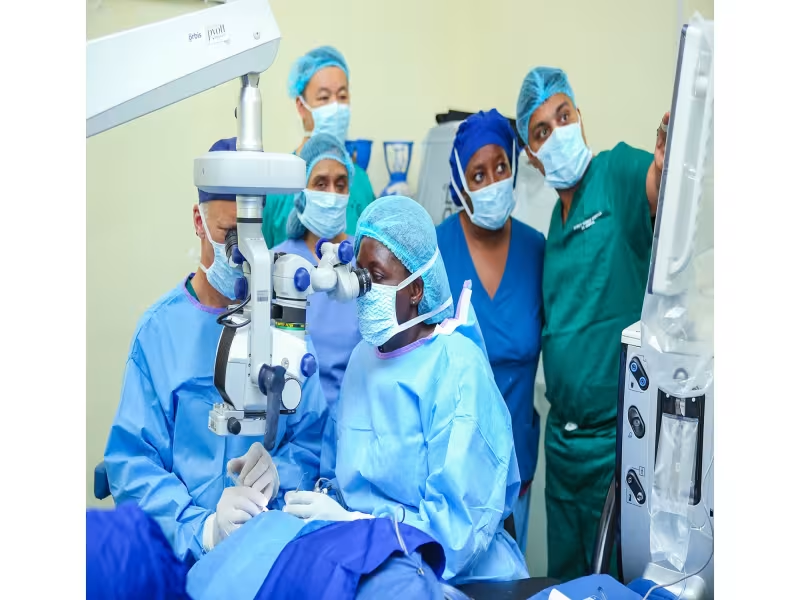
Orbis will invest the equivalent of US$17 million between 2027 and 2030 to strengthen the workforce, improve surgical quality, build institutional capacity and expand access to cataract services. Cataract is the leading cause of blindness globally. The work is aimed at WHO's 2030 cataract targets and the SEE 2045 global initiative.
Orbis will work with governments and partners, including Alcon, on training that combines hands-on clinical experience, digital learning, mentorship and simulation. Alcon CEO David J. Endicott said closing the gap between what modern eye care can achieve and what patients can access will require collaboration, investment and a shared commitment to workforce and capacity.
Antigua and Barbuda targets 80% diabetic retinopathy screening coverage by 2030
From 2027, Orbis will partner with the Government of Antigua and Barbuda to integrate AI-assisted diabetic retinopathy screening into routine diabetes care, supporting the Prime Minister's Vision Initiative. The partners are working toward at least 80% screening coverage among people receiving diabetes care by 2030. Referral, diagnosis, treatment and follow-up pathways will be built for patients who need further care.
Walton Webson, Antigua and Barbuda's Permanent Representative to the United Nations, said the model could be adapted across the Caribbean and other Small Island Developing States. Orbis will also generate evidence and share lessons to inform possible scale-up in other countries.
Orbis backs government systems in 16 countries and reaches 200+ via Cybersight
Orbis will provide direct support to government-led systems and institutions in 16 countries. Cybersight will offer learning, mentorship and clinical support across more than 200 countries and territories. Orbis says it will pay particular attention to women, girls and underserved communities, and will work with ministries of health, WHO, IAPB, civil society, professional associations and private-sector partners.
Orbis CEO Kathleen Sherwin said the summit is a chance to "turn shared ambition into practical action."