Sacramento – November 10, 2026 -- NSF International has registered Infinium EDGE ETV100 Immersion Fluid in Category HT1 for heat transfer applications with possible incidental food contact, and certified it PFAS-Free under NSF Certification Guideline 537, Infinium announced.
NSF applies food-plant heat transfer standards to a data center fluid
ETV100 now meets the same NSF requirements applied to heat transfer fluids used in food and beverage processing plants. To earn HT1 status, NSF reviews a fluid's formulation and labeling against U.S. FDA regulations (21 CFR).
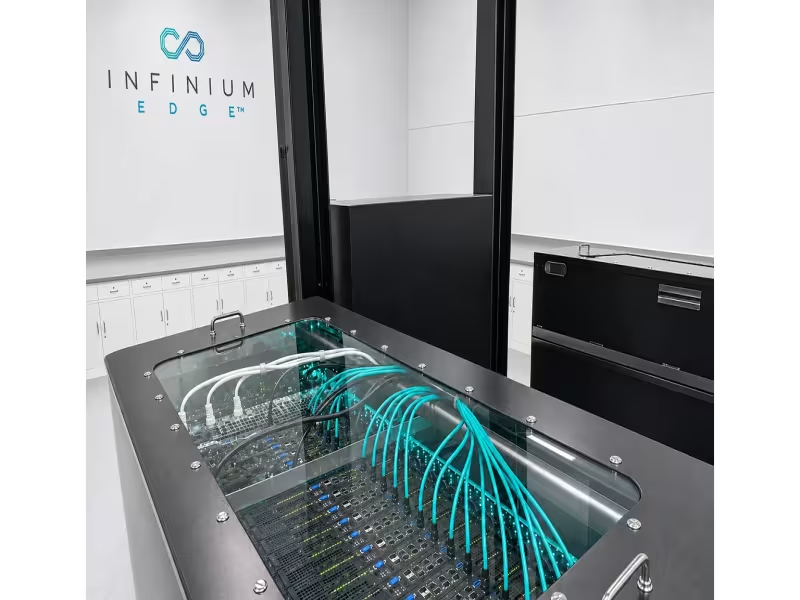
ETV100 runs Infinium Edge's single-phase immersion cooling systems, including Vector ONE modules deployed through the EdgeSites program. EdgeSites converts existing powered commercial and industrial buildings into AI data centers that use zero freshwater for cooling.
PFAS-Free certification sets a 50 ppm organic fluorine ceiling
Under the certification, NSF verified that ETV100 contains no more than 50 ppm total organic fluorine. It also verified that the fluid has no intentionally added PFAS, no PFAS additives, no post-consumer recycled content and no PFAS from manufacturing contamination.
ETV100 is a synthetic hydrocarbon fluid made through Infinium's Fischer-Tropsch process, with no fluorinated compounds by design. Infinium contrasts it with some earlier immersion fluids, particularly in two-phase systems, that relied on fluorinated chemistries known as "forever chemicals" for their persistence in the environment.
Documentation targets operator due diligence and host communities
Infinium says the credentials give AI companies and data center operators documentation for fluid selection and environmental due diligence as AI hardware grows denser. Infinium CEO Robert Schuetzle said the verification gives "communities and AI companies evidence they can trust."
Orsi Dezsi, Business Unit Manager for nonfood compounds at NSF International, said registration verifies that the product meets category requirements and is acceptable for use in food processing and food handling facilities. The registration can be checked in the NSF White Book at nsfwhitebook.org.