News

Carahsoft Becomes Hyperproof's Government Aggregator for GRC

Image

Carahsoft Becomes Hyperproof's Government Aggregator for GRC

United States – October 28, 2026 -- Hyperproof has named Carahsoft Technology Corp. its Master Government Aggregator, making its governance, risk and compliance (GRC) platform available to public sector organizations, defense industrial base (DIB) suppliers and government contractors through six procurement contract vehicles.

Carahsoft opens six contract routes to Hyperproof's GRC platform

Hyperproof will be sold through Carahsoft's reseller partners and these contracts: NASA SEWP V (NNG15SC03B and NNG15SC27B), NASPO ValuePoint Master Agreement #AR2472, TIPS Contract #220105, OMNIA Partners Contract #R240303, E&I Contract #EI00063~2021MA and The Quilt Master Service Agreement MSA05012019-F.


Hyperproof, GRC 20/20 Host Nov. 17 Webinar on TPRM Business Exposure

Image
Hyperproof, GRC 20/20 Host Nov. 17 Webinar on TPRM Business Exposure

North America – October 28, 2026 -- Hyperproof and GRC 20/20 Research will host a webinar on November 17 at 12 PM ET / 9 AM PT arguing that third-party risk management (TPRM) programs should be measured by the risk they reduce, not by how many vendor assessments they complete.

Speakers are Michael Rasmussen of GRC 20/20 Research and David Zambrano, Director of GRC at Hyperproof. Rasmussen will present research on why vendor criticality and exposure matter more than assessment volume. Zambrano will explain how GRC teams use AI-powered assessments and a centralized system of record to measure and report vendor risk.

IBM Extends HashiCorp Vault to AI Agents With Real-Time Revocation

Image
IBM Extends HashiCorp Vault to AI Agents With Real-Time Revocation

ATLANTA – October 28, 2026 -- IBM is extending HashiCorp Vault to AI agents, issuing each one a governed identity and short-lived credentials, as Gartner data shows only 13% of organizations believe they have the right agent governance in place. The company announced the capabilities at TechXchange 2026.

Gartner projects that by 2028 the average Fortune 500 enterprise will use more than 150,000 AI agents. IBM cites persistent credentials, unclear ownership and disconnected controls as the main obstacles to governing agents that call tools and act across teams, platforms and clouds.

3TREES Pitches Five Green Coating Lines at Big 5 Construct Kenya

Image
3TREES Pitches Five Green Coating Lines at Big 5 Construct Kenya

PUTIAN – October 28, 2026 -- Chinese coatings maker 3TREES presented five green coating categories at Big 5 Construct Kenya, which opened on October 21, 2026, at the Sarit Expo Centre in Nairobi, as part of its push into East Africa.

3TREES covers wall and floor applications with five product lines at Hall 1, Booth 1J17

The portfolio included stone-effect exterior coatings, inorganic interior coatings, artistic finishes, waterproofing membranes and coatings, and floor coatings. The company markets the range under its "Create Healthy Life" philosophy.

Distributors and contractors from four East African markets visit the booth

Distributors, engineering purchasers, contractors and industry professionals from Kenya, Tanzania, Uganda and Ethiopia, along with other East African markets, met the 3TREES team. Talks covered product performance, application methods, technical standards, local adaptability and distribution cooperation.

IoT Systems Key to Meeting 11-18% Energy Demand Rise by 2050

Image
IoT Systems Key to Meeting 11-18% Energy Demand Rise by 2050

Global – October 28, 2026 -- Global energy demand will grow 11% to 18% by 2050, according to McKinsey's 2024 Global Energy Perspective, and Telit Cinterion says integrated IoT systems are essential for utilities to maximize efficiency and resilience under that load.

LPWAN and NB-IoT carry long-range utility data at minimal power draw

Low-power wide-area network technologies, including narrowband IoT (NB-IoT), enable long-range communication while consuming minimal power. That makes them suited to large-scale utility deployments. Some organizations are also adding high-bandwidth 5G connectivity for more demanding applications.

Telit Cinterion Pitches eSIM Protect to Close IoT Failure Gaps

Image
Telit Cinterion Pitches eSIM Protect to Close IoT Failure Gaps

Global – October 28, 2026 -- Telit Cinterion is promoting eSIM Protect, a service built on independent eSIM profiles linked to separate core networks and partner ecosystems, as a remedy for single points of failure in mission-critical IoT deployments.

Single-operator connectivity fails outside home markets

A deployment that depends on one mobile network operator (MNO) can lose connectivity during a core network outage, and devices may stay offline until the operator recovers. A commercial dispute can also disrupt service if terms change or access is restricted. Carriers in markets with national roaming restrictions may be unable to support redundancy beyond their own networks.

Telit Cinterion Details IoT R&D: 1.8 Prototype Spins Per Project

Image
Telit Cinterion Details IoT R&D: 1.8 Prototype Spins Per Project

TRIESTE – October 28, 2026 -- Telit Cinterion averages 1.8 prototype iterations per IoT project, with most products reaching mass production after one or two spins, the company said in a description of its R&D process. Prototype fabrication can consume half of a project's total timeline, and a single PCB fabrication cycle can take months in the current supply chain environment.

Custom work accounts for up to 60% of R&D projects

About 50% to 60% of projects are custom IoT solutions built for specific deployments. Roughly 80% of customizations are software, and hardware changes make up the other 20%. Larger enterprises typically commission this work, while smaller businesses usually find a standard portfolio product sufficient.

Roughly 90% of solution products include a Telit Cinterion module. About 40% use NExT connectivity services, and another 40% run on the deviceWISE platform.

Telit Cinterion Starts AI Rollout With Validation, Not Coding

Image
Telit Cinterion Starts AI Rollout With Validation, Not Coding

Global – October 28, 2026 -- Telit Cinterion started its AI rollout in IoT product development with validation testing, then extended it to software development and customer support, according to Antonino Sgroi, the company's global head of R&D.

Validation came first to avoid downstream bottlenecks

Telit Cinterion used AI to speed up log analysis and root-cause detection before applying it elsewhere. Sgroi said accelerating development without strengthening validation only moves the bottleneck downstream.

Software and support followed once validation was ready

In software development, AI now generates repetitive code, speeds up reviews, guides debugging and drafts documentation, without lowering the quality bar, Sgroi said. In customer support, AI helps engineers interpret logs faster and surface recurring field issues. Those insights feed back into engineering.

Telit Cinterion Averages Under Two Prototypes per IoT Project

Image
Telit Cinterion Averages Under Two Prototypes per IoT Project

Global – October 28, 2026 -- Telit Cinterion averages fewer than two prototypes per IoT development project, according to Antonino Sgroi, the company's global head of R&D. He outlined how its engineering team takes customer concepts through certification and into mass production.

One team owns the product from feasibility to mass production

The engineers who design a device also support it after launch, Sgroi said. Each customer gets a dedicated contact who provides updates. The work follows a structured four-phase process.

The model targets companies that have a clear product idea and a customer base but lack in-house engineering capacity or the appetite to build the device themselves. Telit Cinterion contributes cellular and connectivity expertise and platforms.

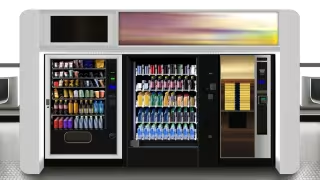
Smart Vending Market Seen Hitting $53B by 2034 on IoT, Cashless Push

Image
Smart Vending Market Seen Hitting $53B by 2034 on IoT, Cashless Push

Global – October 28, 2026 -- The global intelligent vending machine market is projected to grow from $11 billion in 2025 to more than $53 billion by 2034, a compound annual growth rate of 18% from 2026 to 2034, according to Fortune Business Insights. Rising use of cashless payments and wider adoption of IoT and connected technologies drive the expansion.

Smart modules replace multi-vendor hardware integration in vending machine design

Smart modules combine high-performance computing with wireless connectivity in a single unit. Traditional modules require extensive development of external hardware and software, and manufacturers must work with multiple vendors to integrate different technologies. Telit Cinterion, which sells smart modules, says the embedded design reduces physical footprint, shortens development cycles and cuts time to market.