Toronto – November 12, 2026 -- HR research and advisory firm McLean & Company has released a three-part research package that helps HR and learning and development (L&D) leaders decide whether to optimize, augment or replace their learning technology. The firm says only a small share of organizations have formal strategies covering both learning priorities and learning technology.
McLean & Company bundles strategy, selection and market guides in one package
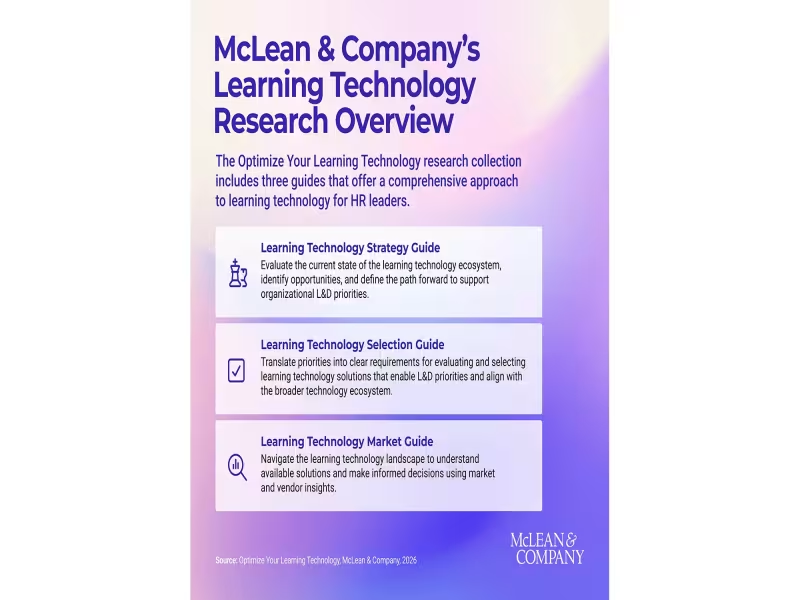
The Optimize Your Learning Technology package contains three standalone resources: the Learning Technology Strategy Guide, the Learning Technology Selection Guide and the Learning Technology Market Guide. Leaders can use them according to their starting point rather than in a required sequence.
- The Strategy Guide covers assessing the current learning technology ecosystem, clarifying scope and identifying strengths and gaps.
- The Selection Guide covers translating priorities into functional, technical, support and user experience requirements. It argues that organizational fit depends on defined requirements, not vendor popularity.
- The Market Guide compares delivery models and capabilities and includes a representative vendor list. McLean & Company states the list is a reference point, not a ranking or recommendation.
McLean & Company ties platform value to learner needs, processes and data
The firm frames technology decisions around the wider learning ecosystem: learner needs, processes, data and the broader technology environment. A platform's capabilities alone do not determine its value, according to the research.
Lisa Highfield, principal director of HR Research & Advisory Services at McLean & Company, said the market is delivering more choice and complexity, but "more technology does not automatically translate into more value." She urged organizations to start with target outcomes and decide where to optimize existing tools, invest in new solutions or adopt emerging technology such as AI.
McLean & Company lists three alternatives to replacing a learning platform
The research identifies improving existing functionality and data quality, filling specific capability gaps and simplifying overlapping tools as options short of replacement. Replacement remains viable when the existing foundation cannot meet organizational needs.