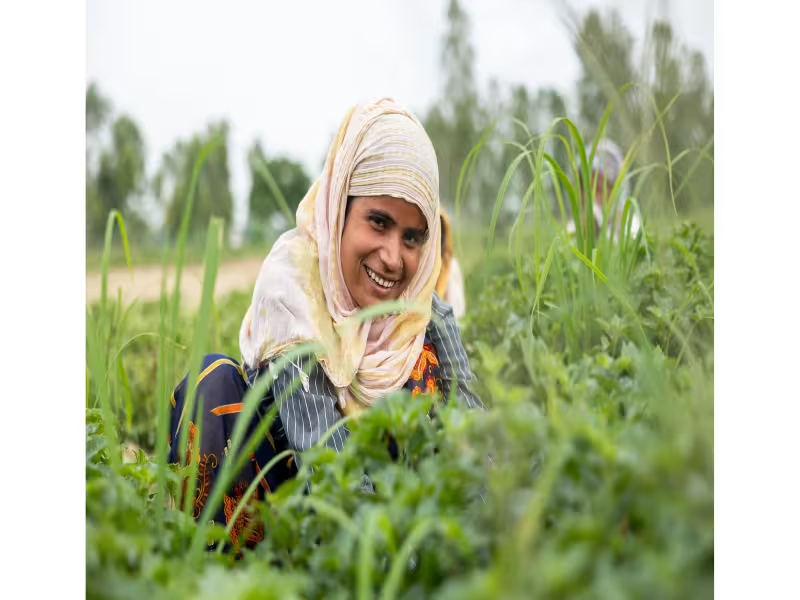
DELHI -- November 24, 2026 -- Mars, Incorporated has launched Shubh Samriddhi, a $22.4 million program that extends its mint sourcing work in Uttar Pradesh to potatoes, mustard and rice, targeting income gains for 26,500 farming families. Mars supplies $18.6 million of the total, about 83% by our calculation, which works out to roughly $845 per family across the full program budget.
Mars funds 83% of the program, with $13 million in core money
The $18.6 million Mars contribution splits into $13 million of core anchor funding, meant to meet program goals and strengthen the mint supply chain, and $5.6 million from the Mars Impact Fund. The Impact Fund money is earmarked for income diversification and community resilience.
The remaining $3.8 million, by our calculation, comes from the German Federal Ministry for Economic Cooperation and Development (BMZ), Callisons and Norex Flavours. BMZ funds its share through the develoPPP programme, implemented by Deutsche Gesellschaft für Internationale Zusammenarbeit (GIZ) GmbH. The company did not disclose the program's duration or how the $3.8 million divides among the three funders.
Mint supplies less than 25% of a typical farmer's household income
Mars says mint is behind 65% of its global gum and mints portfolio. It describes itself as a top-five global buyer of mint. According to Mars, about 80% of the world's natural menthol is linked to mint grown in India, and Uttar Pradesh supplies the vast majority of India's output. Mars uses the menthol in brands including AIRWAVES, ECLIPSE and Orbit.
The predecessor program, Shubh Mint, launched in 2017. Mars says it more than doubled mint incomes and engaged more than 4,500 women in financial literacy and confidence-building through self-help groups. Mars also says mint contributes less than 25% of a typical mint farmer's household income. That means more than 75% of that income comes from other sources, including rotation crops such as potatoes, mustard and rice. Mars says this finding shaped the new full-farm design.
Program targets 400 self-help groups and 100 women-led enterprises
Shubh Samriddhi rests on four pillars:
- Full-farm approach: a path to higher income for 26,500 farming families through better productivity in mint and rotation crops.
- Women's economic empowerment: support for 400 self-help groups toward financial and operational self-sustainability, and for 100 women-led enterprises.
- Sustainable supply chains: farmer capability-building, improved infrastructure and more transparent purchasing.
- Community resilience: early childhood care and learning, child nutrition, safe drinking water and sanitation.
The women's target of 400 groups and 100 enterprises compares with the 4,500 women Shubh Mint engaged. The earlier figure counts individual participants, while the new targets count groups and businesses, so the two are not directly comparable.
Mars announced the program on November 17, ahead of the Living Income Community of Practice (LICOP) 2026 annual regional workshop in New Delhi on November 19 and 20. Program collaborators are the Institute for Development Impact (I4DI), The Centre for Child Rights and Business, Dalberg and Tanager, the implementation partner Mars used to launch Shubh Mint and Shubh Samriddhi.