Cybersecurity

Nozomi Networks' Vantage for Government Wins FedRAMP Moderate

Image
Nozomi Networks' Vantage for Government Wins FedRAMP Moderate

SAN FRANCISCO – November 09, 2026 -- Nozomi Networks' Vantage for Government has achieved Federal Risk and Authorization Management Program (FedRAMP) Moderate certification, giving U.S. federal agencies an AI-powered, cloud-based platform for securing operational technology (OT) and Internet of Things (IoT) environments.

Nozomi describes the product as the only AI-powered cloud platform purpose-built for large-scale government deployments. It centralizes management of OT and IoT security sensors and gives federal security teams a consolidated view of their cyber posture. The company says this speeds response times, strengthens compliance and reduces operational overhead.

Vantage for Government matches the commercial platform feature for feature

The government edition offers full feature parity with Nozomi's commercial platform, adapted to meet FedRAMP Moderate requirements. It has four core capability areas:

Niagara Networks Adds ECH-Aware, Post-Quantum TLS 1.3 Decryption at 90+ Gbps

FREMONT, Calif. – November 09, 2026 -- Niagara Networks has launched TLS 1.3 decryption for its ePacketron platform that delivers more than 90 Gbps of throughput and scales to 1 million concurrent decrypted sessions, according to the company's own performance testing.

The upgrade supports up to 110,000 new decrypted TLS sessions per second. It also adds Encrypted Client Hello (ECH)-aware selective inspection and post-quantum key-exchange support.

ECH adoption erodes hostname-based monitoring

ECH, defined in RFC 9849, protects sensitive TLS handshake information, including the actual destination hostname. That reduces the effectiveness of conventional passive monitoring and hostname-based security policies. Post-quantum cryptography adds new key-exchange mechanisms that security infrastructure must support to keep inspecting traffic.

MIND Launches Autonomous DLP to Secure Data Used by AI Agents

Image
MIND Launches Autonomous DLP to Secure Data Used by AI Agents

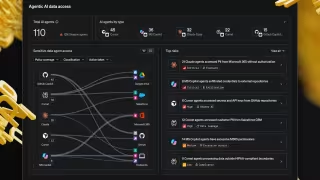
Seattle – November 09, 2026 -- MIND has launched DLP for Agentic AI, a data-centric security product that identifies active AI agents across the enterprise and on endpoints, detects risky data access in real time, and autonomously alerts and remediates issues.

MIND targets data access before AI agents act

Agentic AI can autonomously create, access, transform and share data across SaaS applications, local devices, homegrown systems and third-party tools. MIND says that without clear visibility and controls, the resulting data security gaps can slow AI adoption and put business outcomes at risk.

The company says it secures the data rather than the models or their outputs. Sensitive data is understood, governed and protected before any AI agent can access or act on it.

MIND Launches AI Analyst to Block Endpoint Data Leaks in Real Time

Image
MIND Launches AI Analyst to Block Endpoint Data Leaks in Real Time

Global – November 09, 2026 -- MIND has introduced an autonomous, context-aware data loss prevention (DLP) approach that blocks sensitive data leaks in motion and in use across Windows, Mac and Linux endpoints, replacing the manual, static compliance policies of conventional DLP tools.

MIND targets false positives and slow endpoints in legacy DLP

MIND argues that conventional DLP products block normal business activity, generate false positives and slow down machines, while still failing to stop the leaks that matter. In its view, this undermines executive and user confidence and leaves DLP programs short of their promise.

KnowBe4: Spear-Phishing Jumps 41% as Mass Attacks Decline

Berlin – November 06, 2026 -- Spear-phishing rose 41% as cybercriminals shifted from mass campaigns to targeted attacks, according to Volume 8 of KnowBe4's Phishing Threat Trends Report.

Business email compromise accounts for 79% of attacks in Germany

Dr. Martin J. Krämer, CISO Advisor DACH at KnowBe4, said business email compromise (BEC) dominates phishing in Germany at 79% of all attacks. That concentration crowds out nearly every other attack vector. Classic brand impersonation has fallen to 6% in Germany.

Mobile-focused scams fall 47% as attackers abandon spray-and-pray tactics

Indiscriminate campaigns declined sharply. Mobile-focused scam attempts dropped 47%, advance-fee fraud fell 31% and missed-message lures decreased 11%.

Constructive Releases Safegres to Audit Postgres Security in CI

Image
Constructive Releases Safegres to Audit Postgres Security in CI

San Francisco – November 06, 2026 -- Constructive has released Safegres, an open-source verifier that grades which roles can reach which rows in a live PostgreSQL database, after recent scans found 24,664 of 159,041 Lovable-built projects serving records to anonymous visitors.

Safegres audits row-level security (RLS) policies and grants in read-only mode. It never touches application data or changes anything, so teams can run it against a production copy or automatically on every database change.

Scans found thousands of AI-built apps exposing Postgres data

On Nov. 2, Hamburg security firm Crissy Field and the German newspaper Handelsblatt scanned 159,041 projects built with AI app builder Lovable. They found 24,664 sites whose Postgres databases served records to anonymous visitors, 7,403 of them exposing email addresses.

Cloud Security Offering Spans IaC Code to Runtime Protection

GLOBAL – November 06, 2026 -- A cloud security offering now covers the full path from infrastructure-as-code (IaC) templates to runtime protection of workloads, web applications and APIs, according to the product description.

Shift-left controls scan Terraform, CloudFormation, ARM and Kubernetes templates

The prevention layer identifies and fixes misconfigurations in IaC templates, including Terraform, CloudFormation, ARM and Kubernetes. It also finds exposed secrets across all files in repositories and CI/CD pipelines.

CI/CD pipelines are hardened to reduce the attack surface of the application development environment. Open-source vulnerabilities and license compliance issues are addressed through context-aware prioritization.

Arcjet Launches Three AI Security Models to Stop Agent Hijacking

San Francisco – November 06, 2026 -- Arcjet released Himalia 1, a prompt injection detection model that scored F1 values of 0.964 and 0.971 on two public datasets, and opened early access to two further models built for coding agents and autonomous security agents.

Three models target different agent environments

Himalia 1 is generally available and is a general-purpose detector for chatbots, AI applications and model endpoints. It flags attempts to override application instructions, extract internal information or manipulate agent behavior.

Thebe 1, for coding agents, is designed to separate legitimate development activity from malicious instructions hidden in tool outputs, web pages and repositories. Arcjet says it is built to cut false positives when agents run commands or touch code.

StrongestLayer Launches Intent Workflows to Hold High-Risk Emails

CHICAGO – November 06, 2026 -- StrongestLayer has launched Intent Workflows, a capability that holds high-risk emails before delivery and routes them to a designated person or security team, targeting attacks that carry no malware or suspicious links and pass standard security checks.

Few attacks drive nearly all losses, and most pass authentication

According to StrongestLayer's Q2 2026 Phishing Genome research, 3.6% of attacks accounted for 98% to 99.7% of financial losses. Of those attacks, 94% passed SPF, DKIM and DMARC authentication checks, and every one cleared the victim organization's secure email gateway.

"Some of the most expensive attacks look completely legitimate," said Alan LeFort, CEO and Co-founder of StrongestLayer.

Anecdotes Launches Security KPIs to Automate Board Reporting

Image
Anecdotes Launches Security KPIs to Automate Board Reporting

TEL AVIV – November 06, 2026 -- Anecdotes has launched Security KPIs, an application that replaces reporting cycles of several people working for weeks with automatically generated, board-ready security metrics drawn directly from a company's source systems.

Anecdotes connects source systems in minutes and computes each KPI deterministically

The application sets up data pipelines to a company's systems in minutes. It pulls live data on asset inventory, vulnerabilities, security training completion, access and offboarding, and cloud posture. Each KPI is calculated from every relevant record, with no manual spreadsheet work. The same data always produces the same number, and every figure traces back to its originating system.

KPIs can be scoped three ways: