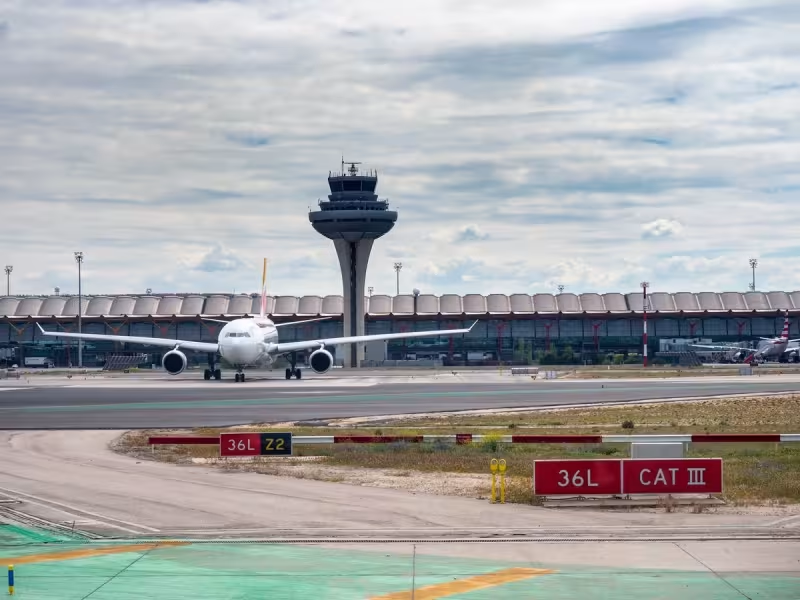
SHERIDAN, WYOMING - March 31, 2026 - Airline cost planning in Spain faces sharper scrutiny in 2026 as a dispute over AENA's proposed airport charge increase puts airport regulation, affordability, and return levels at the center of budgeting and route economics. IATA is pushing back against remarks by AENA Chairman and CEO Maurici Lucena that linked airline calls for lower airport charges with compromised safety and security, arguing instead that the issue is whether charges reflect passenger growth, appropriate investment, and a reasonable rate of return. The trade group says airlines are contending with higher regulatory and environmental costs, supply chain constraints, volatile fuel prices, and rising airport and air traffic control charges even as fares in Spain have become more affordable in real terms.
Why the dispute matters
The disagreement is focused on AENA, which operates the vast majority of airports in Spain, and its request for a 16% increase in airport charges. IATA argues that calls for cost-efficient airport charges are unrelated to any reduction in safety or security standards and says the safety of passengers and aviation employees remains the aviation sector's top priority.
IATA frames the argument around affordability and regulatory discipline. It says inflation-adjusted air fares in Spain have fallen 9% since 2019, and that across the 15 largest Spanish airports, real airfare declines over the last decade have ranged from 6% to 37%. In that context, the association says close examination of airport charges is necessary to keep connectivity affordable for consumers and sustainable for the broader economy.
Financial and regulatory signals
IATA says that across the last two regulatory periods, AENA earned EUR 1.32 billion more in returns than it should have under Spain's economic regulatory decisions. It also points to AENA's 2024 performance in Spain, where regulated and non-regulated activities produced a net profit margin of 36.4%.
For comparison, IATA says the average European airline net margin was 3.5%. That gap is central to the association's case that Spanish airport users need independent, transparent, and consultative airport regulation aligned with ICAO principles. IATA's position is that airport regulation should balance the interests of airports, airlines, passengers, and the broader economy rather than rely on rhetoric around safety to justify higher fees.
Business impact
Procurement leads and network planning teams at airlines serving Spain need to treat airport charges as a live 2026 cost-risk variable in route profitability models, airport selection, and capacity allocation. A proposed 16% charge increase can directly affect station economics, especially when carriers are already managing environmental costs, regulatory expenses, fuel volatility, and supply chain constraints. Finance teams will need to test whether Spanish airport cost assumptions still support fare competitiveness on domestic and international routes.
Operations directors and regulatory affairs teams should also prepare for a more active stance on consultation and oversight. IATA's emphasis on independent, transparent, and consultative regulation signals that airlines may need to devote more resources to regulatory engagement, evidence gathering, and collective advocacy around allowable returns and investment justification. For travel market stakeholders in Spain, the broader consequence is that airport charging decisions are no longer a background infrastructure issue; they are a frontline factor in connectivity, regional development, and the cost base that shapes 2026 service planning.