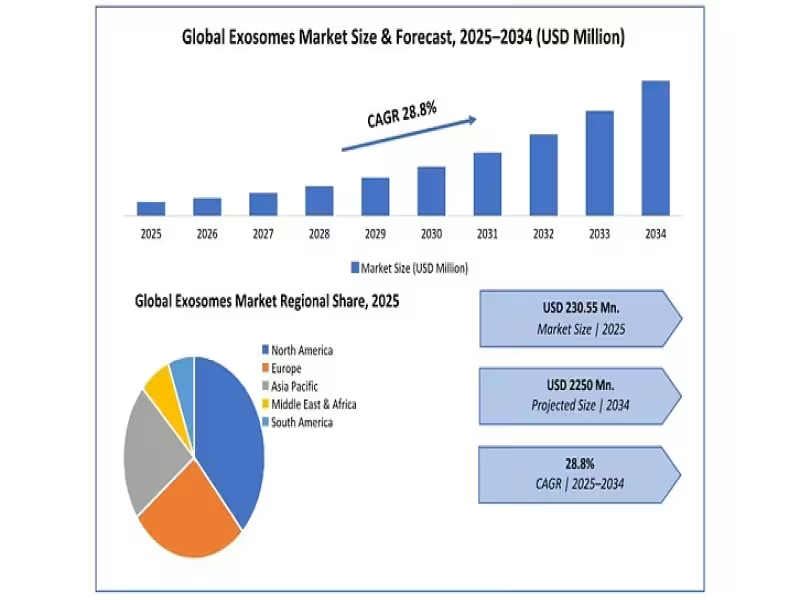
Pune, India – – September 22, 2026 -- The global exosomes market is set to grow nearly tenfold over the next decade, expanding from USD 230.55 million in 2025 to USD 2,250 million by 2034, according to a new analysis from Maximize Market Research. The projected 28.8% compound annual growth rate between 2026 and 2034 places exosome technology among the fastest-expanding segments in biopharmaceutical R&D.
Drug delivery pipelines drive commercial momentum
Pharmaceutical and biotechnology companies are expanding exosome-related pipelines as the nanosized extracellular vesicles gain traction as targeted carriers for drugs, proteins, and RNA. Rising investment in biotechnology and advances in isolation, characterization, and engineering technologies are pushing exosomes beyond research settings into drug development and regenerative medicine applications.
Diagnostics and liquid biopsy applications widen the addressable market
Beyond therapeutics, exosomes are gaining ground in diagnostics and biomarker research, with companies and research institutions exploring their use in disease detection, monitoring, and personalized medicine. Growth in liquid biopsy applications is broadening the market's reach into oncology and precision diagnostics, according to the report.
North America leads while Asia-Pacific emerges as the fastest-growing region
North America currently holds the largest share of the market, underpinned by advanced biotechnology infrastructure and strong pharmaceutical R&D, with the United States driving activity in drug delivery, biomarker discovery, and personalized medicine. Europe follows, with Germany, the UK, France, Italy, and Spain advancing extracellular vesicle technologies through research funding and established healthcare infrastructure. Asia-Pacific is flagged as the highest-growth region, with China, Japan, India, South Korea, and Australia expanding biotechnology investment and healthcare expenditure tied to exosome-based therapeutics and diagnostics.
Manufacturing complexity and lack of standardization remain key restraints
High R&D costs, complex isolation and purification processes, and limited standardization across characterization methods are cited as barriers to wider commercialization. Variations in exosome quality and inconsistent regulatory requirements are creating challenges for companies scaling exosome-based products, the report notes, with industry players under pressure to develop more reliable, standardized manufacturing technologies.
Established life sciences players anchor a research-driven competitive field
Thermo Fisher Scientific Inc., Danaher Corporation, and Lonza Group Ltd. are among the companies active across exosome isolation, purification, characterization, and bioprocessing solutions, alongside Sartorius AG, System Biosciences, QIAGEN N.V., Bio-Techne Corporation, and NanoView Biosciences. Competition in the space is shaped by R&D investment, technology innovation, clinical research partnerships, and manufacturing capacity rather than pricing, as the market remains dominated by technology and platform differentiation over commoditized products.