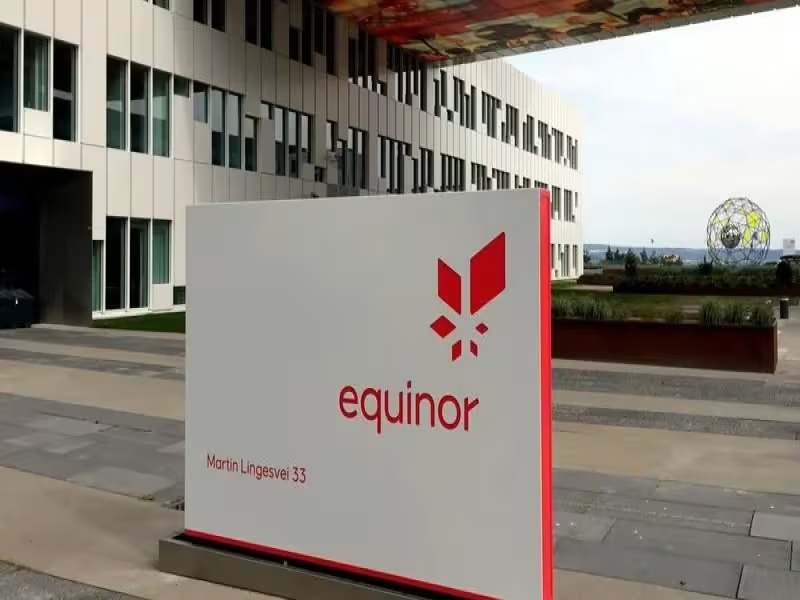
NORWAY -- November 25, 2026 -- Equinor, which Oilprice.com describes as the largest supplier of pipeline gas to Europe, is fighting an ongoing cyberattack on its IT systems. The company says it has found no data theft and no effect on oil and gas output, while European gas prices stay nearly triple the level of a year earlier because of the Hormuz crisis.
Equinor says it knows how the attack happened but has not named who is behind it
Equinor said on Wednesday that it now knows how the attack was carried out and which systems were hit. It says the attack is not a virus and cannot spread. The company says it is too early to say how long restoring its systems will take. It is working with Norway's national security authorities to contain the attack.
Norway's National Security Authority raised its cyber threat level to the second-highest tier in October. Equinor has not named the source of the attack.
Hackers have already moved from office networks to physical energy controls
Pro-Russian hackers took control of a hydropower dam at Lake Risevatnet in western Norway in April 2025 and opened a valve for four hours, according to the head of Norway's domestic intelligence service.
Eight months later, on Dec. 29, 2025, hackers tied to the Russian state attacked more than 30 Polish wind and solar farms and a large combined heat-and-power plant. They damaged remote terminal units, protection relays and communications equipment, and cut operators' remote view and control of the sites. CERT Polska tied the attack to Berserk Bear. ESET and Dragos tied it to Sandworm.
Since April, the FBI, NSA, Energy Department and CISA have warned that Iranian state hackers target internet-connected controllers made by Rockwell, Siemens and Schneider Electric at U.S. water and energy providers. At one provider, the hackers rewrote controller logic to disable shutdown and alarm functions. Sources told The Telegraph that Iran-linked hackers are suspected in a four-day shutdown of a small British power plant in July.
In April, Sector16 member Artem Revenskii agreed to plead guilty in California over attacks on oil and gas infrastructure in the United States, Ukraine, Germany, France and Latvia.
Attack counts and ransomware groups have grown since 2024
Check Point counted nearly 70% more attacks on U.S. utilities in the first eight months of 2024 than in the same period of 2023, or roughly 1.7 times the earlier level. By May 2026, it found U.S. energy and utility companies fielding about 1,755 attacks a week each, which works out to about 250 a day per company.
Dragos tracked 119 ransomware groups targeting industrial companies in 2025, up from 80 the year before. That is 39 more groups, an increase of about 49%.
Iran also works through criminal hackers. Pay2Key, a ransomware operation linked to the Iranian group Pioneer Kitten, raised its affiliates' share of ransoms to 80% from 70% for attacks on the United States and Israel. By our calculation, that is a 10-point rise, or about 14% more per ransom for the affiliate. KELA describes the move as Iran outsourcing geopolitical retribution to the global cybercrime talent pool.
Access to energy companies sells at a premium. TrendAI researchers found a German renewable energy firm's internal database listed for 12 bitcoin, about $748,000, which implies roughly $62,300 per bitcoin. The Qilin group claimed nearly a terabyte of data from Romanian pipeline operator Conpet in February, though Conpet said oil transport was not affected. The Gentlemen group encrypted systems at Oltenia Energy Complex, Romania's largest coal-fired power producer, in December 2025.
AI tools shorten break-in times, yet old weaknesses still open the door
The FBI says state-aligned hackers and criminals are using an AI-powered tool to break into corporate networks in under three hours. It says the tool, ARTEX, has been used since at least August against energy and nine other sectors. This week, Google's threat intelligence group reported that hackers used AI agents to find flaws, write exploits and launch them without a human involved, the first such case it has observed.
In August, U.S. agencies warned that attackers were using AI-generated scripts to build tools that can read and rewrite Siemens controllers used in energy, water and chemical plants. Industrial technology expert Brian Proctor said of those scripts: "the barrier that used to be expertise is now time, and time is getting shorter."
The damage so far has relied on basic gaps. In its 2025 findings at oil and gas companies, Dragos attributed 26% to weak or default passwords, 26% to internet-facing systems and 29% to poor separation between business and control networks. The suspected Iranian attacks on U.S. controllers and gas station tank gauges began with equipment left open to the internet.