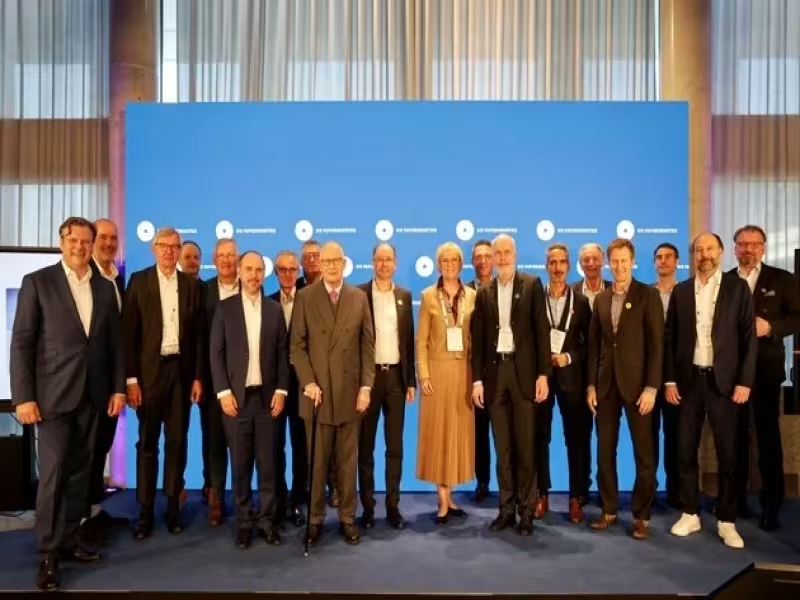
Berlin – November 05, 2026 -- Energy costs are the biggest economic challenge for 95% of German paper producers, according to a member survey presented at the Paper Summit in Berlin. The industry association DIE PAPIERINDUSTRIE used the event, attended by about 190 executives from the sector and its market partners, to demand that energy costs, taxes and levies be aligned with international competitors.
Survey ranks economic outlook and competitiveness second at 84%
Cyclical economic development and Germany's general competitiveness as a production location rank second, cited by 84% of companies. Regulation and bureaucracy follow at 71%, and the transition to climate neutrality at 70%.
The survey also shows that the industry is largely disappointed with the federal coalition's policies so far. Association President Hans-Christoph Gallenkamp, who is also CEO of specialty paper maker Felix Schoeller, said the sector accompanied the new government's first year with confidence and a readiness to cooperate. He now doubts how much binding political support the industry can still expect. Geopolitical trade barriers and fundamental market changes add to the pressure on international competitiveness, he said.
Gallenkamp demands sustainable pension financing without higher non-wage labor costs
Gallenkamp called for a genuine turnaround in social policy. He said merely avoiding a worsening of the system is not enough. He wants pension and social benefits financed sustainably, without rising contributions or non-wage labor costs and without a growing burden on the federal budget.
Industry rejects Commission's ETS reform proposals as counterproductive
The association sharply criticized the European Commission's proposals for reforming the EU Emissions Trading System (ETS). Gallenkamp objected to linking free allocation to what he called uneconomic compulsory investments. He argued this would end carbon leakage protection, the safeguard against shifting production and emissions to countries without comparable CO2 pricing.
In his view, free allocation is not a pot of money for financing investments. Its purpose is to offset part of the ETS costs and preserve the international competitiveness of European industry. Earmarking the same relief as investment funding amounts to spending the same euro twice, he said.
Environment ministry state secretary calls paper highly system-relevant
Bettina Hagedorn, Parliamentary State Secretary at the Federal Ministry for Environment, Climate Action, Nature Conservation and Nuclear Safety, called the paper industry a central basic industry whose contribution is often underestimated. She acknowledged the industry's concerns and said the government aims to reach climate targets and speed up transformation without losing sight of competitiveness.
Hagedorn said the coalition's biggest current task is to implement numerous reform projects while drawing up a constitutionally compliant budget. She said nobody wants industry to leave Germany and expressed optimism that the country will keep a strong paper and pulp industry.