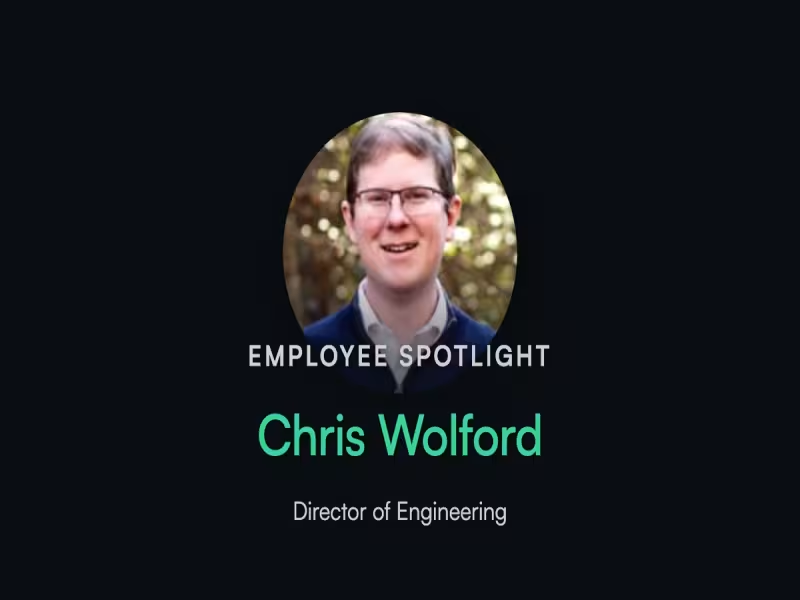
GLOBAL — November 16, 2026 -- CIQ has built its commercial Kubernetes offering, CIQ Stratum Pro, on its open source CIQ Stratum Kubernetes Engine (SKE), adding fleet management, single sign-on and vendor support to the engine. Chris Wolford, CIQ's Director of Engineering, leads the team behind it and says the design goal is a cluster that stays dependable long after installation.
SKE folds about 10 upstream projects into one signed binary
A Kubernetes cluster is assembled from about 10 upstream projects, each with its own releases and requirements. SKE brings the cluster lifecycle into one signed binary, which by our calculation replaces roughly 10 separate release tracks with one. CIQ says every component is built from unmodified upstream source, pinned together and tested as a set.
Wolford lists the defaults: upgrades that check health at each step and stop before causing harm, scheduled snapshots, and certificates that renew before they expire. He also names certificate authority rotation and clean uninstalls as maintenance tasks operators should be able to trust.
Stratum Pro puts GPU clusters and general fleets in one web interface
Stratum Pro shows health, versions and workloads across GPU clusters and the general fleet. Single sign-on connects to the customer's existing identity provider. The product also adds an app catalog, optional CIS hardening with per-control checks, and support from CIQ.
Wolford describes how fleets form: one team stands up a cluster, then another. Each cluster can end up with its own upgrade schedule, access arrangements and dependence on the person who built it. Stratum Pro targets that sprawl. CIQ did not disclose pricing or availability terms.
SKE's built-in MCP server gives AI agents read-only access by default
SKE includes a Model Context Protocol (MCP) server that lets AI agents interact with a cluster. It has three permission levels. By default an agent can inspect cluster status, list nodes, read logs and plan an upgrade. Write tools are not registered until an operator enables them. Destructive operations need a separate switch.
"The agent can't talk its way past a tool that doesn't exist," Wolford says.
Wolford's team runs the stack on three NVIDIA DGX Sparks
Wolford spent nearly 12 years at NASCAR, including work on cloud modernization and Kubernetes adoption, before joining CIQ. His team now builds SKE, Stratum Pro and Fuzzball, CIQ's workflow orchestration platform for AI and HPC. The CIQ stack also includes Rocky Linux, three variants of RLC Pro, Warewulf provisioning and Apptainer containers.
In a recent setup, he provisioned three NVIDIA DGX Sparks through Warewulf from a single RLC Pro AI image, with Fuzzball running on top. He went from hardware to submitting GPU jobs with one physical task at the nodes: plugging them in.