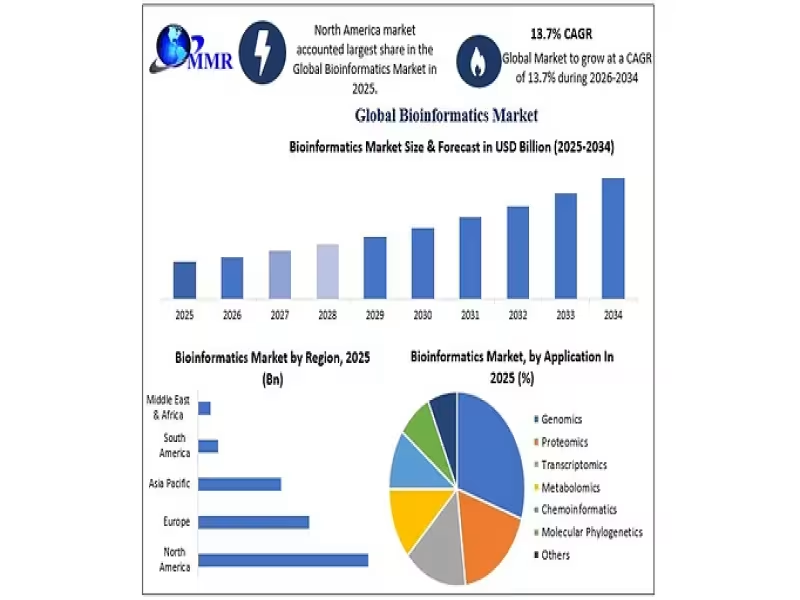
Pune – September 24, 2026 -- The global bioinformatics market is projected to expand from $20.34 billion in 2025 to $64.60 billion by 2034, a 13.7% compound annual growth rate, according to new analysis from Maximize Market Research.
Genomic data volumes and NGS adoption fuel core demand
Rising volumes of genomic and biological data, driven by expanding next-generation sequencing (NGS) adoption, are pushing pharmaceutical and biotechnology companies toward advanced bioinformatics platforms, sequencing data analysis tools, and biological databases. Declining sequencing costs are drawing smaller research institutions into the market, while growing precision medicine applications are increasing demand for pharmacogenomics, biomarker analysis, and genomic diagnostics.
North America dominates, Asia Pacific posts fastest growth
North America held the largest market share in 2025, backed by established biotechnology R&D infrastructure and high NGS adoption in the United States, with Canada and Mexico contributing through expanding genomic research activity. Asia Pacific is identified as the fastest-growing region, propelled by biotechnology and pharmaceutical industry expansion, healthcare digitization, and rising investment in precision medicine and cloud-based computational tools. In Europe, Germany, the United Kingdom, France, Italy, Spain, Sweden and Austria are increasing adoption of bioinformatics software and AI-based research tools tied to genomics and molecular diagnostics.
AI and cloud computing reshape drug discovery workflows
Integration of artificial intelligence, machine learning, and cloud computing is enabling faster processing of biological datasets, automated workflows, and predictive analytics across pharmaceutical, biotechnology, and academic research settings. Cloud-based platforms are reducing dependence on costly on-premise computing infrastructure while supporting genome interpretation, protein analysis, and computational drug discovery at scale.
High infrastructure costs and talent shortages limit adoption
High-performance computing costs, specialized software licensing, data storage requirements, and cybersecurity compliance remain barriers, particularly for smaller research organizations. A shortage of professionals with combined expertise in biology, computer science, statistics, and data science is restricting large-scale deployment of bioinformatics infrastructure, compounded by interoperability challenges across biological databases and platforms.