Paris – September 23, 2026 -- A 200-gram smartphone requires more than 266 kilograms of raw material extraction, part of an annual global total exceeding 319 million tons of upstream materials pulled from the earth to manufacture smartphones alone, according to data cited by refurbished-tech marketplace Back Market.
The company estimates that figure equals the material weight of more than 900 Empire State Buildings extracted every year, driven in large part by a typical 2- to 2.5-year device upgrade cycle. Back Market is now calling for a legally mandated 10-year device standard covering durability, repairability and long-term software support, arguing that extending a smartphone's productive life to a decade instead of 2.5 years could avoid roughly 757 kilograms of raw material extraction per device.
Back Market launches Mine My Phone platform to expose supply-chain data
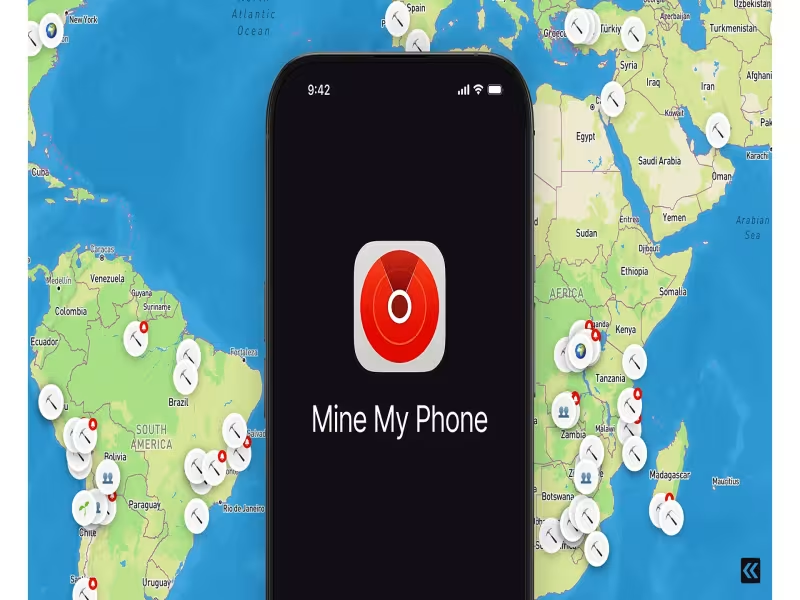
To build public pressure behind the standard, Back Market has launched Mine My Phone (www.minemyphone.com), a platform developed with an international panel of researchers and experts that documents the environmental, human and geopolitical costs tied to critical mineral extraction for consumer devices.
Survey of 6,000 consumers finds most cannot name a single material inside their phone
A companion study, the Smartphone Extraction Gap Report, commissioned by Back Market and conducted by Opinium across France, the UK, Germany, the US, Spain and Japan, found more than half of respondents could not name a single raw material inside their smartphone, and only one in four felt confident they understood what goes into a device. Seven in ten said they had never investigated where those materials originate.
When told that a smartphone's journey involves more than 200 suppliers from extraction to finished product, 38% of respondents reported shock and 26% reported worry. Sixty-six percent said they support legislation requiring devices to remain durable, repairable and software-supported for at least 10 years, while seven in ten said evidence of child labor in a supply chain would affect their purchasing decisions.
Told that a single refurbished phone avoids approximately 243 kilograms of raw material extraction compared with manufacturing a new device, 49% of respondents said they would be more likely to buy refurbished.
Executive says transparency gap blocks informed consumer and regulatory action
"Citizens cannot make informed choices or push for regulation if they lack access to information about what happens before a device reaches their hands,