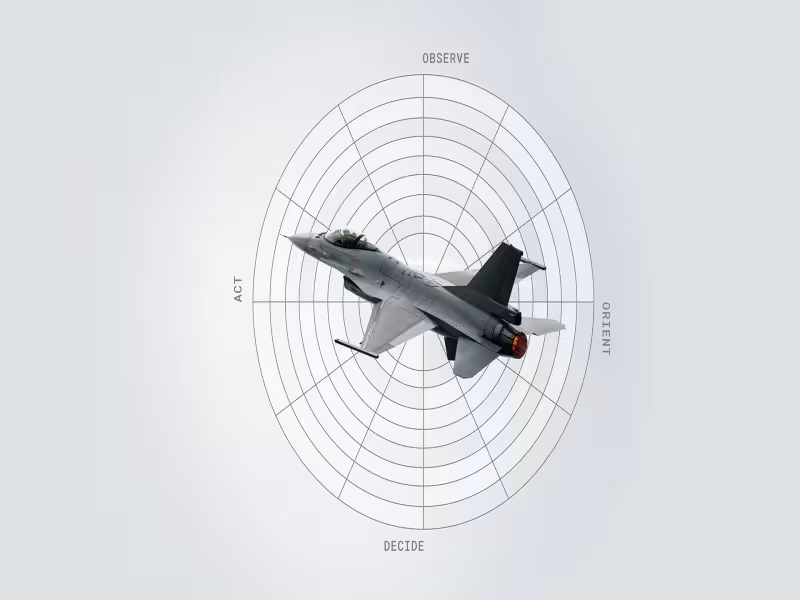
GRAND FORKS -- November 19, 2026 -- AV says its Halo_Shield counter-UAS mission orchestration system handled complex, multi-threat scenarios at the Technology Readiness Experimentation (T-REX) 26-3 exercise in Grand Forks, North Dakota, in late August. The only account so far is a byline article by Mary Clum, AV's President of Space, Cyber and Directed Energy, and it contains no performance numbers.
Clum describes the results as anecdotal. She lists five findings: the fundamentals work, the system copes with added complexity, it moves at speed, AI-enabled decision support simplifies the kill chain, and it handles larger threat loads than traditional counter-UAS approaches. In her words, the system "is not perfect yet."
AV names three metrics that matter and reports none of them
Clum writes that detection range, probability of kill and cost per engagement all matter. The article gives no value for any of them. AV also gives no count of drones, sensors or effectors used in the exercise.
AV describes Halo_Shield as a modular, scalable system that connects distributed sensors and effectors. It is aimed at drone swarms, advanced UAS and subsonic cruise missiles. It works at the tactical level and passes battlefield information to legacy command-and-control systems such as Integrated Battle Command System-Maneuver (IBCS-M). It is therefore pitched as a layer beneath existing C2, not a replacement for it.
The cost argument is central to the pitch. Clum says defenders cannot sustainably answer every inexpensive drone with an interceptor that costs many times more. She says directed energy changes the cost-per-engagement and magazine-depth equation.
For operators, she says the question shifted from whether a threat can be detected to which threat deserves attention first. She says AV keeps humans "on the loop" and does not treat removing them as the default, though she adds that the autonomous phase is "just around the corner."
Clum wrote that official T-REX 26-3 data would be published in late October. That date is now about three weeks past, and the material reviewed contains no results.