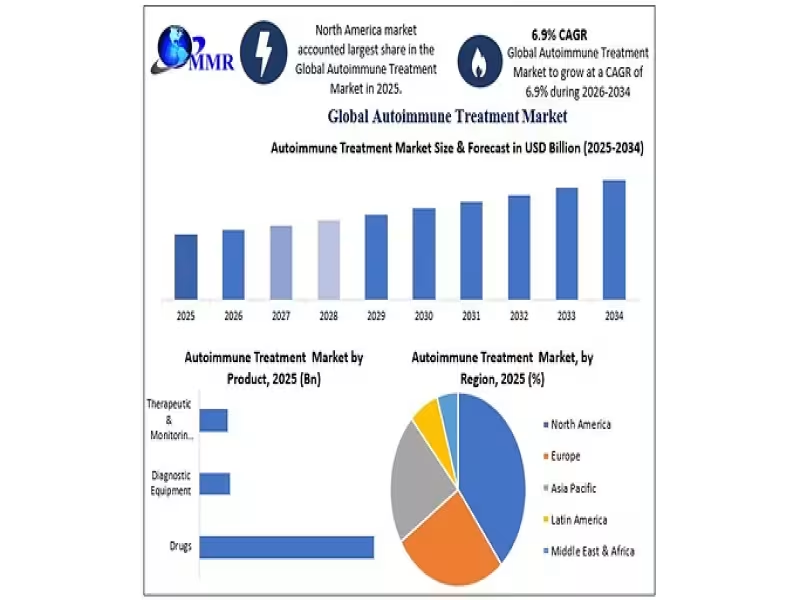
Pune – September 24, 2026 -- The global autoimmune treatment market reached USD 176.6 billion in 2025 and is forecast to expand at a 6.9% CAGR through 2034, hitting USD 321.95 billion, according to a new analysis from Maximize Market Research.
North America dominates the market on strong pharmaceutical R&D infrastructure
North America held the largest share of the market in 2025, driven by high disease prevalence, advanced healthcare infrastructure, established specialist care and elevated healthcare spending. The United States anchors regional growth, backed by leading pharmaceutical and biotechnology firms, advanced diagnostic capacity, and rising adoption of biologics, immunosuppressants, monoclonal antibodies and targeted therapies. Canada and Mexico are contributing through improving healthcare access and disease awareness.
Europe and Asia-Pacific present the next wave of growth opportunities
Germany, the United Kingdom, France, Italy, Spain, Sweden and Switzerland are recording increased uptake of biologics, anti-inflammatory drugs, immunosuppressants and disease-modifying treatments, supported by regulatory backing for innovative therapies. Asia-Pacific is identified as the highest-growth region, with China, Japan, India, South Korea and Australia expanding diagnostic and treatment access alongside rising healthcare expenditure.
Biologics, biosimilars and precision medicine reshape treatment protocols
Adoption of monoclonal antibodies, cytokine inhibitors, JAK inhibitors and biosimilars is accelerating across rheumatoid arthritis, systemic lupus erythematosus, multiple sclerosis, type 1 diabetes, psoriasis and inflammatory bowel disease treatment pathways. Growth in biomarker testing and molecular diagnostics is enabling patient-specific treatment strategies for chronic and complex autoimmune conditions, pushing pharmaceutical and biotechnology companies toward pipeline expansion, licensing deals and acquisitions.
High therapy costs and reimbursement gaps constrain patient access
The expense of biologics, targeted immunotherapies and prolonged disease management continues to restrict affordability, particularly in cost-sensitive and developing markets. Limited access to specialist rheumatology, immunology, endocrinology, gastroenterology and neurology services, combined with disease heterogeneity and delayed diagnosis, adds complexity to treatment selection and long-term management in several regions.