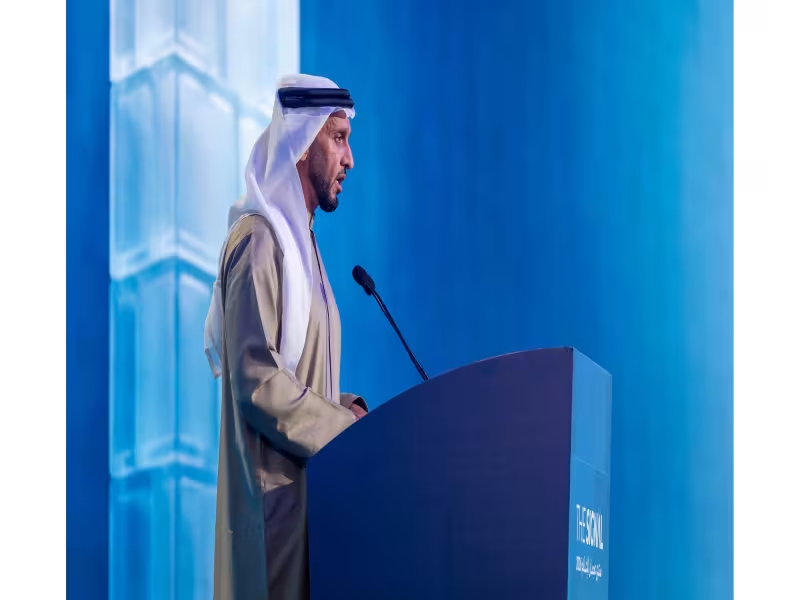
AJMAN -- November 25, 2026 -- Abdulla bin Mohammed bin Butti Al Hamed, Chairman of the UAE's National Media Authority, set out five pillars of media responsibility at the inaugural Ajman Media Forum 2026. He also called for AI tools that can verify Arabic-language content. The Ajman Government Media Office organised the forum, which ran on 18 and 19 November at the Emirates Hospitality Centre in Ajman.
The programme has 23 sessions and 68 speakers from 17 countries, according to the organiser. That works out to about three speakers per session and an average of four speakers per country, by our calculation.
Al Hamed's five pillars cover timeliness, channels, AI, regulation and training
Al Hamed spoke in the keynote session 'Who Owns the Signal?' in the presence of Crown Prince Sheikh Ammar bin Humaid Al Nuaimi. He said institutions earn trust through accurate communication, transparency and prompt error correction. His five pillars were:
- Timely provision of reliable information, with regular updates as events develop.
- Communication through several channels that work under different circumstances: radio, traditional broadcasting, text messages and digital platforms.
- Use of AI to detect fabricated content and verify sources, with human oversight and protection of privacy.
- A stable, attractive environment for the media sector, built on clear legislation and professional standards that he said should attract skilled professionals, specialised companies and investment.
- Investment in people, through continuous training and stronger digital skills.
Al Hamed asks media, technology and university players to build Arabic verification tools
Al Hamed posed three open questions: how to identify the original source of an image, how corrections can reach audiences exposed to misleading information, and how to build verification tools that understand Arabic, including its context and nuances. He called on media organisations, technology companies, universities and research centres to form partnerships to develop them.
He said those spreading false information exploit gaps and delays in official communication during crises. A single fabricated image or anonymous message can influence decisions, he said. Every piece of information an official institution issues carries a responsibility towards the public, he added.
He framed the stakes for ordinary audiences, including business owners waiting for accurate news before a decision, with one question: "what can I believe, and whom can I trust?"
Al Hamed expressed hope that the forum would lead to practical initiatives and collaborations. The release names no funding, timeline or partners for the verification tools.