research_publication

Qedma, Danish Researchers Cut Quantum Chemistry Errors 30-50x

Image
Qedma, Danish Researchers Cut Quantum Chemistry Errors 30-50x

Tel Aviv – September 12, 2026 -- Qedma Quantum Computing and Denmark's HQC2 consortium have achieved a 30 to 50-fold improvement in quantum chemistry accuracy on a live quantum processor, using error mitigation software to tackle one of the field's most persistent barriers to commercial adoption.

Researchers modeled a water molecule's potential energy surface on IBM's Aachen quantum processor

The study applied an orbital-optimized variational ansatz combined with Qedma's QESEM error reduction software, running on IBM's Aachen quantum processor. The work was led by Prof. Stephan P. A. Sauer and postdoctoral researcher Renato Olarte Hernandez at the University of Copenhagen, alongside Prof. Sonia Coriani and postdoctoral researcher Emanuele Rossi at the Technical University of Denmark. The project falls under Q-CHEMION, part of the Eureka open call for applied quantum technologies.
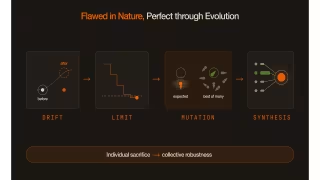

Allora Labs Proves Deliberately 'Flawed' AI Models Outperform Optimized Ones

Image
Allora Labs Proves Deliberately 'Flawed' AI Models Outperform Optimized Ones

New York – September 07, 2026 -- Allora Labs has published mathematical proof that introducing targeted random mutations into a population of AI models allows the group to collectively outperform any single optimized model once operating conditions shift. The paper, authored by Chief Scientist Dr. Diederik Kruijssen and titled "Flawed in Nature, Perfect through Evolution," appears in Volume 3 of the journal Allora Decentralized Intelligence, spanning pages 1-32 and published September 2, 2026.

Validated Scoring System Quantifies Home Accessibility as Care Shifts Home

Image
Validated Scoring System Quantifies Home Accessibility as Care Shifts Home

Salisbury, N.C. – September 05, 2026 -- Fewer than 4 percent of U.S. homes offer basic accessibility features such as a no-step entry, single-floor living, and wide halls and doorways, according to the Harvard Joint Center for Housing Studies, even as clinical care increasingly moves into private residences. Home for Life Design has published research-backed evidence for its Accessibility Ratings, a standardized scoring system designed to measure whether a home supports safe, independent living.

Aging population and fall risk drive demand for home-based care infrastructure

The U.S. Census Bureau projects the population aged 65 and older will reach approximately 73 million by 2030. The CDC reports that one in four adults over 65 falls annually. Hospital-at-home programs, value-based payment models, and Medicaid home- and community-based services are pushing clinical care into living rooms, bathrooms, and kitchens not built or measured for it.