SHERIDAN, WYOMING - May 10, 2026 - Starlinger will present its advanced manufacturing equipment for Flexible Intermediate Bulk Containers (FIBCs) and integrated plastics recycling systems at the interpack 2026 exhibition. The machinery provider is showcasing its automated bag conversion lines and physical load-testing infrastructure to demonstrate how woven polypropylene and PET materials maximize payload capacities while reducing overall packaging weight. By transitioning to welded, adhesive-free bag structures that support high recycled material content, these industrial platforms help bulk goods transporters lower production costs, eliminate moisture contamination, and comply with strict environmental packaging regulations.
Structural Testing for High-Capacity Bulk Containers
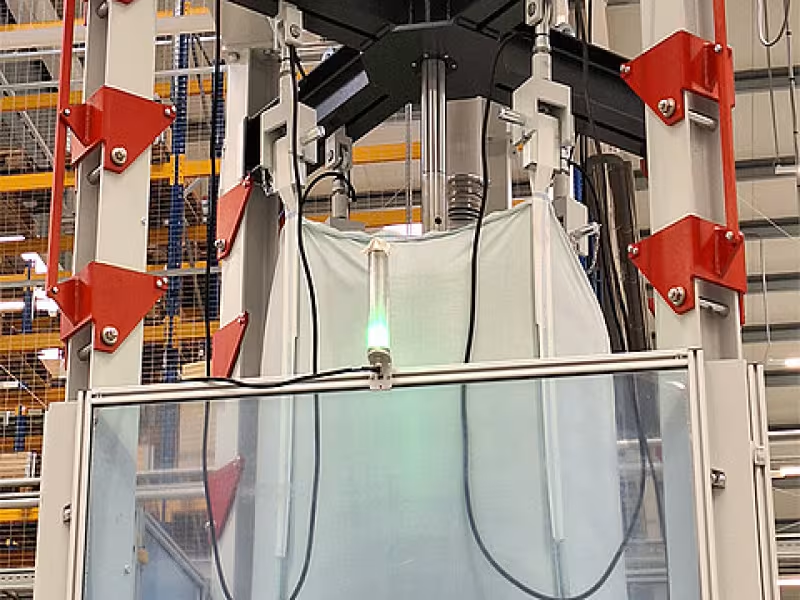
To validate the performance limits of lightweight plastic packaging, the company will operate a live FIBC testing rig directly on the exhibition floor. These specialized big bags possess an exceptionally high product-to-packaging weight ratio, utilizing just two kilograms of woven fabric to safely secure up to two tons of dry bulk material. During the top-lift test, fully loaded bags provided by existing customers are suspended by their carrying loops and subjected to increasing downward pressure until the seams or fabric ultimately fail. This physical validation ensures compliance with the European dangerous goods regulation (ADR), which mandates that single-use bulk containers withstand a minimum of five times their rated Safe Working Load when freely suspended.
Transitioning to Welded Bag Conversion Technology
Beyond heavy-duty bulk containers, Starlinger is detailing its manufacturing lines for smaller-volume woven sacks utilized for cement, chemical powders, and agricultural goods. The company provides specialized machinery that replaces traditional sewing or gluing methods with welded bag bottom technology. This mechanical sealing process actively prevents fine product loss during transit while simultaneously blocking external moisture and contaminants from compromising sensitive bulk inventory.
"The AD*STAR block bottom bags and PP*STAR pinch bottom bags which we have developed work like their paper or plastic film alternatives, but require no adhesive and are more robust and durable," explained Harald Neumüller, CSO of Starlinger.
"The major advantage of plastic tape fabric is its extremely low packaging weight combined with high tear strength and resistance to moisture. Low weight means less raw material usage-with high raw material prices, as we are currently experiencing, woven packaging has the lowest manufacturing costs while offering the best protection for the contents," said Neumüller.
Cost Optimization and Regulatory Compliance
To support operational cost reductions and regulatory alignment, the ad*starKON SE bag conversion line and the viscoSHEET SE PET sheet line are engineered to process high proportions of recycled material. Operators can incorporate significant volumes of post-consumer resin or calcium carbonate during the extrusion phase, effectively lowering raw material expenditures while ensuring compliance with the European Union's Packaging and Packaging Waste Regulation (PPWR). Operating on this infrastructure, the AD*STAR *prime bag can be manufactured in customized volumes ranging from 5 to 118 liters, serving as a highly durable alternative to conventional paper packaging formats.
"AD*STAR bags can be equipped with the same properties and features as other block bottom bags currently available on the market, yet they offer better protection and are more sustainable and cost-effective to manufacture," explained David Grabenweger, AD*STAR Product Manager at Starlinger.
"Compared to paper bags, they have a lower carbon footprint, a significantly lower breakage rate, and provide better protection against water and moisture. Our new AD*STAR *prime bag in particular can be equipped with all the features available on the market and represents-as cement packaging, for example-a viable alternative to paper."
Adhesive-Free Pinch Bottom Architecture
The company is also highlighting its PP*STAR pinch bottom bags, which utilize a polypropylene tape fabric laminated with a reverse-printed BOPP film. Traditionally, pinch bottom formats required industrial adhesives for final closure, but Starlinger's pp*starKON conversion line eliminates this requirement through an integrated welding unit. This engineering update effectively converts the packaging into a pure mono-material solution, vastly simplifying the downstream recycling process while maintaining the structural durability required for heavy logistics.
"For the development of the welding unit on our pp*starKON pinch bottom bag conversion line we drew on the experience from our AD*STAR bag production technology," explained Claudia Hagn, PP*STAR Product Manager at Starlinger.
"This eliminates the need for adhesives to close the pinch bottom, turning the PP*STAR bag into an easy-to-recycle mono-material packaging solution that is not only attractive but also extremely robust and durable despite its low weight."
Certified Post-Consumer Recycling Infrastructure
Supporting the circular economy of these woven products, Starlinger designs and deploys advanced recycling systems capable of refining heavily contaminated post-industrial and post-consumer plastic waste. The manufacturer's portfolio includes the recoSTAR PET art, viscoZERO, and recoSTAR dynamic systems, which are utilized to process PET, polyolefins, polystyrene, and high-density polyethylene into high-quality regranulates. These specific recycling processes have secured formal safety approvals from both the U.S. Food and Drug Administration (FDA) and the European Food Safety Authority (EFSA), allowing multinational beverage brands to utilize the output for 100 percent rPET food-grade applications.
"We want to enable closed-loop systems for plastic packaging that pay off for manufacturers," Neumüller concluded.
"Our aim is to make the woven plastic packaging produced on our machines easy to recycle after use so it can be turned into new woven packaging. And not only that should stay in the loop, but also other used plastic packaging. Starlinger bag production and PET sheet lines process recycled material, while our plastics recycling systems ensure that plastic waste from the industry and consumer sectors remains in the loop and does not end up in the nature or in landfills. For a tomorrow worth living in, so that our children can grow up in a healthy environment."