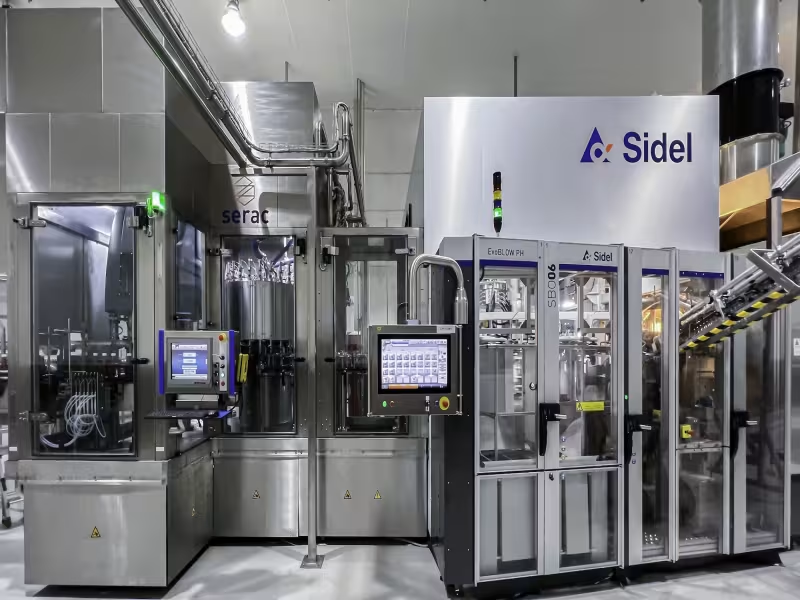
SHERIDAN, WYOMING - April 3, 2026 - Food manufacturers across Europe face tightening regulatory requirements on packaging reuse and climate-adaptive sourcing, pushing procurement and operations teams to evaluate equipment portfolios ahead of the next budget cycle. Sidel's presence at CFIA Rennes 2026 - held March 10-12 in Rennes, France - placed food-grade packaging technology directly in front of buyers navigating these structural shifts.
CFIA Rennes 2026: exhibition context
CFIA Rennes is France's principal trade event for the food processing and ingredients sector, bringing together exhibitors and visitors across three days to examine supply chain, ingredient sourcing, and production technology. The 2026 edition centered on a defining question for the industry: how should food manufacturers rethink their sourcing strategies in response to climate change? That framing shaped the thematic agenda across exhibitor stands, conference sessions, and dedicated zones on the show floor.
A second editorial thread ran throughout the event: biomimicry as a design principle for next-generation food industry solutions - specifically, how patterns and processes found in nature are being translated into engineering logic for packaging, processing, and ingredient development. These themes positioned CFIA 2026 not as a routine product showcase but as a forward-planning platform for decision-makers managing five- to ten-year capital investment cycles.
Sidel's packaging solutions on display
Sidel, a specialist in packaging equipment and complete line solutions for food, beverage, home, and personal care products, exhibited at CFIA 2026 to demonstrate packaging technologies aligned with the show's sustainability and regulatory themes. The event's dedicated Village Réemploi - a zone specifically designed to clarify the regulatory framework around reuse packaging, identify viable solutions, and accelerate adoption - provided direct context for Sidel's product positioning.
The CFIA platform also featured guidance on where and how artificial intelligence integrates concretely into food industry workflows and processes, a topic with direct implications for packaging line automation. Sidel's exhibition at CFIA sits within this broader shift: food manufacturers evaluating new packaging equipment in 2026 must account for software integration, AI-assisted line management, and compliance with emerging EU reuse mandates simultaneously - making the selection of equipment vendors more complex than in previous capital cycles.
Key themes shaping food packaging procurement in 2026
Three converging pressures define the current procurement environment for food packaging equipment in Europe. First, the European Union's regulatory trajectory on single-use packaging continues to advance, with reuse frameworks gaining legal weight in member states including France. The CFIA Village Réemploi zone directly addressed this, offering manufacturers structured guidance on transitioning existing lines toward reuse-compatible formats.
Second, climate-adaptive sourcing - the central question posed by CFIA 2026 - forces upstream rethinking of material inputs and packaging formats. Manufacturers dependent on materials with climate-sensitive supply chains must evaluate whether current packaging equipment can handle alternative substrates or whether capital replacement is required. Third, AI integration into production processes is moving from pilot to operational deployment, with CFIA's dedicated AI programming signaling that the industry now treats intelligent automation as a baseline expectation rather than a premium option.
Business impact
Procurement leads and packaging line managers at food manufacturing facilities must factor reuse compliance into capital equipment decisions before the next EU regulatory implementation deadline. Vendors demonstrating reuse-compatible systems - as showcased at CFIA's Village Réemploi - move into preferred supplier status for facilities that need to retrofit or replace lines within a two-to-three year window. Sidel's CFIA presence gives procurement teams a direct comparison point for evaluating complete line solutions against these compliance requirements.
Operations directors evaluating AI integration roadmaps face a concrete decision: whether to pilot AI-assisted line management on existing equipment or incorporate it as a specification requirement in new capital purchases. CFIA's AI programming in 2026 signals that the technology has crossed from experimental to operationally relevant, which means operations directors who defer AI evaluation risk falling behind peers who are already embedding it into line management workflows. For supply chain officers, the climate-adaptive sourcing theme at CFIA translates into a sourcing audit requirement - identifying which packaging material inputs carry climate exposure and whether current equipment can accommodate substitutes without major reconfiguration costs.