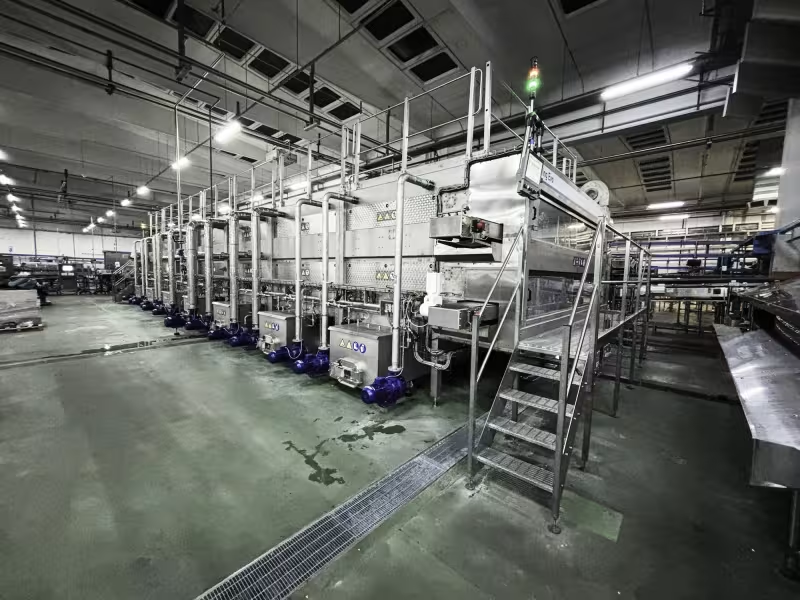
SHERIDAN, WYOMING - April 3, 2026 - Beverage production lines face mounting pressure to cut energy consumption and reduce total cost of ownership while maintaining strict pasteurisation standards - and Sidel's newly introduced SWING® Evo pasteuriser directly addresses that operational challenge by embedding intelligent design principles into a core piece of thermal processing equipment.
What the SWING® Evo delivers
The SWING® Evo is Sidel's latest pasteurisation platform, positioned as a redefined efficiency benchmark for beverage producers handling heat-treated products including beer, juices, teas, and carbonated soft drinks. The system is engineered to optimise energy recovery across the pasteurisation cycle, reducing utility costs that typically rank among the highest operating line items in thermal processing environments.
Central to the design is an intelligent control architecture that continuously monitors and adjusts pasteurisation unit (PU) delivery across the full speed range of the line. This dynamic adjustment capability ensures that neither underpasteurisation nor overpasteurisation occurs during speed transitions - a common source of product loss and quality deviation on conventional tunnel pasteurisers running variable throughput schedules.
Design and engineering principles
Sidel has structured the SWING® Evo around modular construction, enabling configuration to a wide range of container formats and line speeds without requiring full equipment replacement as production demands evolve. The intelligent design approach integrates sensor feedback loops with automated water management, reducing the volume of hot water recirculated through the tunnel and cutting associated heat energy demand per unit of product treated.
The system's footprint and mechanical layout have been reviewed to support faster changeovers between container types, which directly benefits producers running multiple SKUs on shared lines. Reduced downtime during format switches translates into higher effective line utilisation rates, a key performance indicator for plant managers operating in competitive high-volume beverage segments.
Market context and competitive positioning
Tunnel pasteurisation remains the dominant method for in-pack thermal treatment of shelf-stable beverages across European, Latin American, and Asia-Pacific markets. Equipment replacement cycles in this category typically run ten to fifteen years, making the introduction of a next-generation platform a significant moment for procurement decisions currently under evaluation. Sidel competes in this segment against established thermal processing suppliers, and the SWING® Evo is targeted at both greenfield line investments and line upgrade projects where ageing pasteurisers are being replaced.
The beverage industry's broader sustainability commitments are accelerating the retirement of older, less energy-efficient thermal processing equipment. Producers with active ESG reporting obligations are under pressure to demonstrate measurable reductions in thermal energy consumption per hectolitre of output, making energy recovery performance a technical differentiator that now carries board-level visibility in capital equipment decisions.
Business impact
Procurement leads and capital equipment managers at beverage producers evaluating tunnel pasteuriser investments in 2026 must now factor the SWING® Evo's intelligent control and energy recovery capabilities into their vendor comparison frameworks. Competing on total cost of ownership rather than purchase price alone shifts the evaluation criteria toward long-term utility savings, line availability rates, and integration complexity - all areas the SWING® Evo's design specifically targets.
Operations directors managing multi-SKU production schedules gain a direct operational benefit from the system's dynamic PU control, which reduces the manual intervention and quality checks typically required during speed transitions. Sustainability and ESG reporting teams at beverage groups with public carbon reduction targets can cite measurable thermal energy savings from the SWING® Evo's water management system as contributing evidence in annual environmental disclosures. For plant engineering teams planning line investments through 2027, the modular configuration options reduce capital lock-in risk as container mix and volume forecasts remain uncertain across key consumer markets.