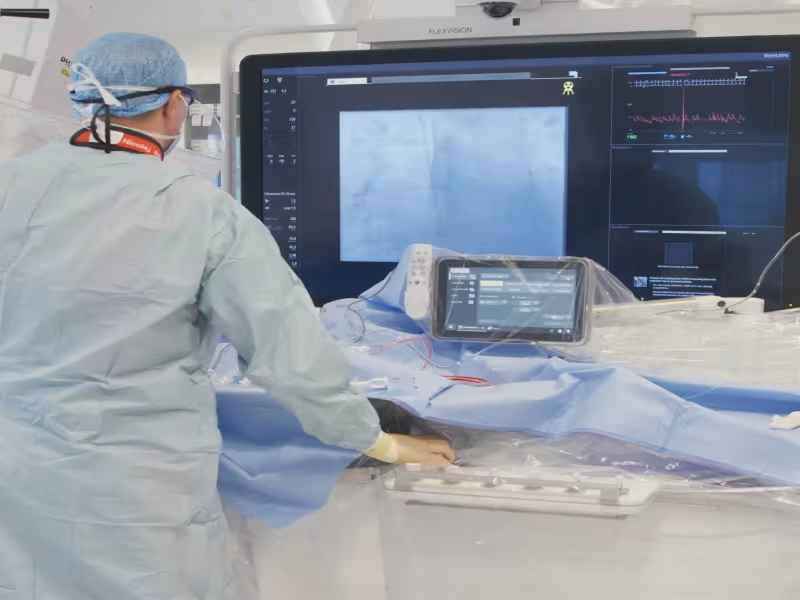
SHERIDAN, WYOMING - May 19, 2026 - Royal Philips has introduced SmartIQ, a new coronary imaging technology integrated into its Azurion image-guided therapy platform, designed to address a long-standing clinical challenge in interventional cardiology: balancing high image quality with reduced radiation exposure. The system was developed with cardiovascular centers and focuses on ultra-low dose imaging protocols that maintain diagnostic clarity while lowering X-ray exposure for patients and clinical staff. Philips is positioning the technology as part of a broader strategy to strengthen workflow consistency, evidence generation, and dose optimization in coronary procedures, with initial clinical validation already underway through published pilot studies and ongoing multicenter research programs.
SmartIQ Targets Core Imaging-Dose Trade-Off in Coronary Procedures
SmartIQ is designed to directly address the operational tension in catheterization labs between achieving high-quality imaging and minimizing radiation exposure. According to Philips, clinicians performing coronary interventions have historically faced a compromise between image clarity and dose levels, particularly during complex procedural workflows requiring continuous fluoroscopic guidance.
The new system introduces an ultra-low dose protocol that aims to reduce X-ray radiation by more than 50% compared with existing low-dose settings. The technology is intended to preserve contrast-rich imaging and reduce background noise, enabling clearer visualization of coronary anatomy during interventions.
Philips describes SmartIQ as a step forward in image-guided therapy, with the goal of enabling clinicians to maintain procedural precision while operating under stricter radiation safety requirements.
Integration Into Azurion Platform Strengthens Workflow Continuity
SmartIQ is deployed within Philips' Azurion image-guided therapy ecosystem, which is widely used in interventional cardiology environments. The integration is designed to ensure that imaging performance improvements align with existing procedural workflows rather than requiring changes in clinical practice.
The company's approach focuses on maintaining consistency across diagnostic imaging, procedural navigation and dose management within a single platform environment. This integration is intended to reduce workflow fragmentation, particularly in procedures where multiple imaging and guidance tools are used simultaneously.
Philips also highlights that SmartIQ builds on its existing ClarityIQ technology base, which has been associated with radiation reductions ranging between 23% and 83%, depending on clinical application. The new system extends this direction by focusing specifically on coronary imaging optimization under ultra-low dose conditions.
Clinical Evidence Strategy and Early Study Results
A key component of the SmartIQ rollout is its clinical validation strategy. Philips reports that a blinded clinical pilot study evaluating the technology has been published in the Journal of the Society for Cardiovascular Angiography & Interventions (JSCAI).
According to the findings referenced by the company, SmartIQ demonstrated higher image quality scores and was preferred in a majority of blinded comparisons, while maintaining or reducing radiation and contrast usage. These results are being used to support early clinical adoption discussions and further evaluation in broader hospital environments.
Philips is also advancing the RADIQAL trial, designed to assess SmartIQ performance against ClarityIQ in terms of radiation dose and procedural outcomes. The study has reached approximately 60% enrollment and has completed European site recruitment, marking a significant milestone in its validation pathway.
Ultra-Low Dose Protocols Designed for Coronary Imaging
SmartIQ introduces a dedicated ultra-low dose protocol intended for coronary procedures, with reported reductions of over 50% in X-ray radiation compared with the lowest dose configurations previously available in ClarityIQ systems.
The system is designed to enable acquisition of coronary cine runs at fluoroscopy-level doses depending on system configuration and clinical conditions. This capability is intended to support routine coronary imaging while reducing cumulative radiation exposure across both patients and clinical staff.
Philips positions this capability as particularly relevant in high-volume cath lab environments where repeated procedures and extended imaging sequences contribute to long-term exposure risks.
Radiation Management as a System-Level Clinical Priority
Radiation dose management remains a central focus in interventional cardiology workflows, particularly as procedural complexity increases and imaging dependency grows. Philips emphasizes that SmartIQ is part of a broader system-level approach to reducing exposure while maintaining procedural performance.
The company references additional technologies such as DoseAware, LumiGuide and EchoNavigator as part of its wider imaging ecosystem aimed at supporting dose reduction strategies. These tools collectively contribute to real-time monitoring, guided navigation and imaging enhancement within the cath lab environment.
This integrated approach reflects a shift toward unified imaging and dose management systems rather than isolated feature improvements, aligning with broader trends in image-guided therapy development.
Positioning Within the Evolution of Image-Guided Therapy
Philips frames SmartIQ as part of a longer-term evolution in image-guided therapy, where imaging quality, physiological guidance and radiation safety are increasingly managed within integrated platforms. The company positions the technology as a step beyond incremental improvements, focusing instead on redefining the relationship between dose reduction and diagnostic performance.
Clinical experts involved in early evaluation report that the system supports high-confidence decision-making even at significantly reduced radiation levels, reinforcing its potential role in complex coronary workflows.
The introduction of SmartIQ reflects ongoing industry efforts to improve safety and efficiency in interventional cardiology while maintaining the precision required for complex PCI procedures.