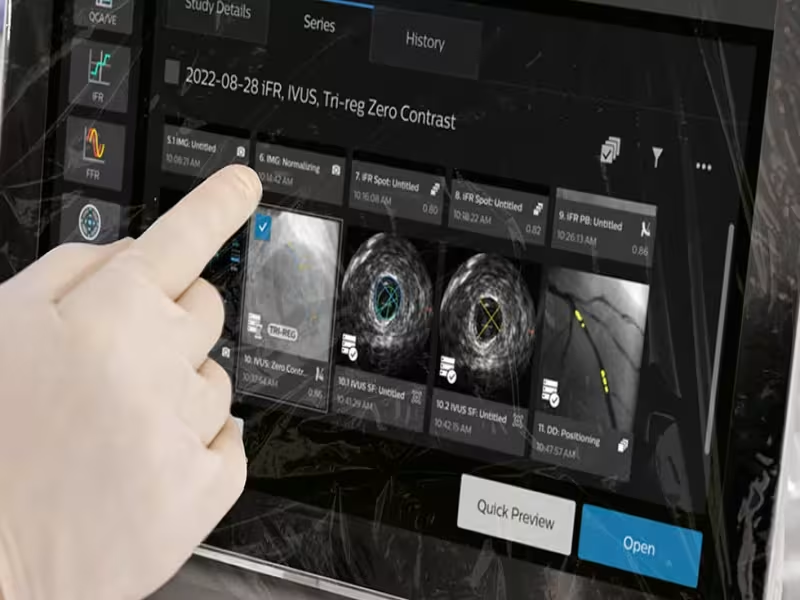
SHERIDAN, WYOMING - May 19, 2026 - Royal Philips is using EuroPCR 2026 in Paris to present an expanded portfolio of imaging, physiology and AI-enabled workflow technologies aimed at supporting increasingly complex percutaneous coronary intervention (PCI) and structural heart procedures. The company's latest developments focus on integrating imaging systems, physiological assessment tools and procedural guidance into a unified interventional cardiology workflow while also addressing radiation exposure concerns in catheterization laboratories. Philips is positioning the strategy around operational efficiency, procedural confidence and lower-dose imaging as healthcare providers manage rising procedural complexity and increased pressure on cath lab performance.
Integrated Workflow Strategy Targets Complex PCI Procedures
Philips' EuroPCR 2026 showcase centers on combining imaging, physiology and procedural guidance technologies into a connected workflow environment for interventional cardiology teams. The company stated that clinicians increasingly depend on multiple imaging modalities and real-time decision-support tools during PCI and structural heart interventions, creating workflow coordination challenges during time-sensitive procedures.
The company's demonstration environment at EuroPCR is designed to simulate real-world clinical decision-making during interventions. Through educational sessions and guided demonstrations, clinicians can evaluate how imaging, AI-enabled guidance and dose management systems interact throughout different stages of a procedure.
Philips stated that the integration strategy is intended to provide a more comprehensive procedural view while reducing operational fragmentation between imaging platforms and treatment-planning tools. The approach also supports workflow standardization during increasingly complex interventions.
SmartIQ and IntraSight Plus Expand Imaging and Guidance Portfolio
Among the technologies being introduced at EuroPCR 2026 is SmartIQ, a coronary imaging technology designed to support ultra-low X-ray dose protocols while maintaining image quality during procedures. According to Philips, the technology enables more than 50% lower X-ray radiation exposure compared with current low-dose settings.
The company is also highlighting IntraSight Plus, a recently launched platform that combines diagnostic and treatment-planning tools intended to support PCI decision-making and procedural execution. Philips positioned the platform as part of its broader effort to unify interventional imaging and physiological assessment workflows within a single operating environment.
Additional technologies featured at the event include:
- DeviceGuide, an AI-enabled visualization solution combining live ultrasound and X-ray imaging into one integrated procedural view
- VeriSight Pro 3D ICE, providing real-time intracardiac imaging during structural heart procedures
- Hemo R2, a hemodynamic interface designed to simplify connectivity with hospital IT systems and provide access to hemodynamic case data
Philips stated that the portfolio also includes interventional devices and imaging systems supporting both coronary and structural heart procedures.
Radiation Reduction Remains Central Operational Priority
Radiation exposure management remains a major operational concern across image-guided therapy environments, particularly as procedure duration and complexity continue to increase. Philips emphasized that its imaging strategy focuses on reducing radiation exposure at the source while maintaining clinical visibility and procedural confidence.
The company stated that technologies such as SmartIQ are part of a longer-term dose management approach that also incorporates physiology-based guidance tools and image fusion technologies. These systems are intended to reduce dependence on continuous fluoroscopy during interventions.
Philips highlighted the operational relevance of radiation reduction for both patients and clinical staff working in cath lab environments where cumulative occupational exposure remains a significant concern. The company positioned integrated imaging and guidance technologies as part of broader efforts to improve long-term workplace safety within interventional cardiology settings.
EuroPCR Education Program Focuses on Advanced Clinical Techniques
In addition to product demonstrations, Philips will participate in educational and scientific programming at EuroPCR 2026 focused on advanced interventional cardiology workflows. The company stated that these sessions are intended to support implementation of imaging and physiology techniques in daily clinical practice.
The PCI-focused symposium "Contemporary Workflow for Class IA PCI" will examine the role of physiology-guided treatment decisions, including Class IA iFR applications. The session will feature clinical experts including Matthias Götberg, Rasha Al-Lamee and Allen Jeremias.
A second symposium, "Seeing differently, treating better," will focus on imaging approaches for structural heart interventions, including the use of 3D intracardiac echocardiography for procedural planning and execution. Philips also plans to operate a training village program with hands-on sessions covering IVUS-guided PCI, co-registration techniques and complex case planning.
AI and Imaging Integration Shape Cath Lab Workflow Development
Philips framed its EuroPCR 2026 strategy around the growing need for integrated technologies capable of supporting procedural efficiency alongside clinical precision. The company stated that interventional cardiology teams face increasing pressure to manage procedural complexity while also prioritizing radiation safety and workflow coordination.
"By combining imaging, physiology and AI-enabled guidance with advanced dose reduction technologies, we aim to support clinicians in delivering efficient, high-quality care while helping protect both patients and staff."
The company's latest portfolio expansion reflects broader healthcare industry interest in consolidating imaging, guidance and physiological assessment technologies into connected procedural ecosystems. For healthcare providers, integrated workflow environments may help streamline decision-making and reduce operational friction during complex interventions.