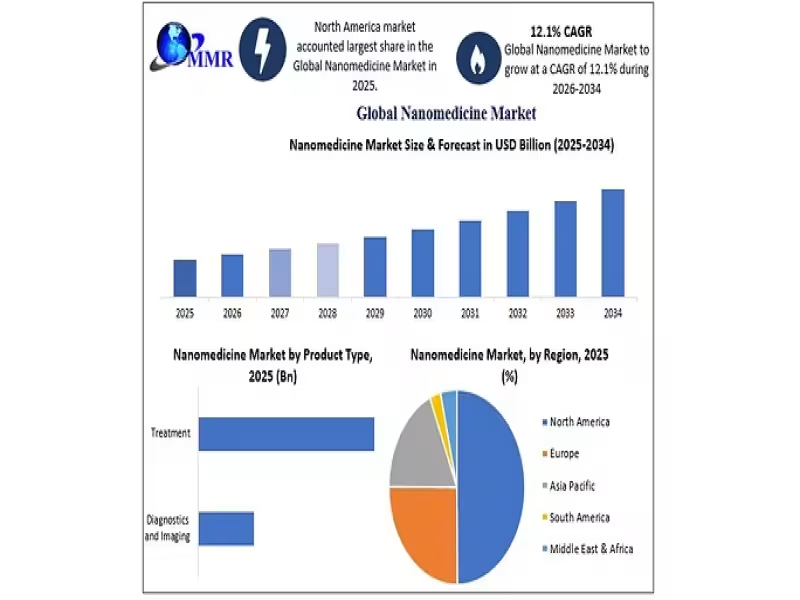
Pune, India – September 24, 2026 -- The global nanomedicine market reached USD 207.91 billion in 2025 and is projected to hit USD 581.2 billion by 2034, expanding at a 12.1% compound annual growth rate, according to a new report from Maximize Market Research.
North America commands the largest share on pharmaceutical R&D strength
North America held the largest share of the market in 2025, driven by advanced healthcare infrastructure, deep pharmaceutical and biotechnology research pipelines, and high healthcare expenditure. The United States anchors regional growth through its established research ecosystem and rising adoption of nanotechnology-based drug delivery, diagnostics and precision medicine platforms. Canada and Mexico are contributing through expanding healthcare capabilities and research initiatives.
Asia-Pacific emerges as the fastest-growing region led by China
China, Japan, India, South Korea and Australia are scaling nanotechnology investments, clinical applications and drug-delivery development, with China positioning itself as a major nanomedicine hub backed by government-supported research initiatives and expanding pharmaceutical activity. Europe follows with Germany, the United Kingdom, France, Italy, Spain, Sweden and Austria increasing adoption across drug delivery, imaging, vaccines and regenerative medicine.
Nanoparticle drug delivery systems drive therapeutic precision
Nanoparticles, lipid nanoparticles, liposomes and other nanocarriers are enabling targeted drug delivery, improved bioavailability and reduced exposure to healthy tissue, expanding applications across oncology, infectious disease, cardiovascular disorders, neurology and ophthalmology. Nano-enabled cancer therapies, molecular diagnostics, biosensors and imaging technologies are advancing early disease detection and targeted intervention.
High production costs and regulatory gaps constrain commercialization
Complex manufacturing processes, specialized quality-control requirements and the absence of standardized regulatory frameworks tailored to nanomedicine are raising development costs relative to conventional pharmaceutical formulations. Limited access to specialized manufacturing facilities, skilled personnel and testing infrastructure in developing markets is restricting broader adoption and commercialization of nanomedicine products.
Precision medicine research opens new avenues for investment
Growing research into personalized therapies, nano-enabled vaccines, regenerative medicine and next-generation treatment platforms spanning oncology, infectious disease, cardiology, neurology, ophthalmology and orthopedics is prompting pharmaceutical and biotechnology companies to increase investment in nanoscale therapeutic and diagnostic platforms. The Middle East & Africa region, including GCC countries, South Africa, Egypt and Nigeria, is gradually building specialized medical infrastructure to support future adoption.