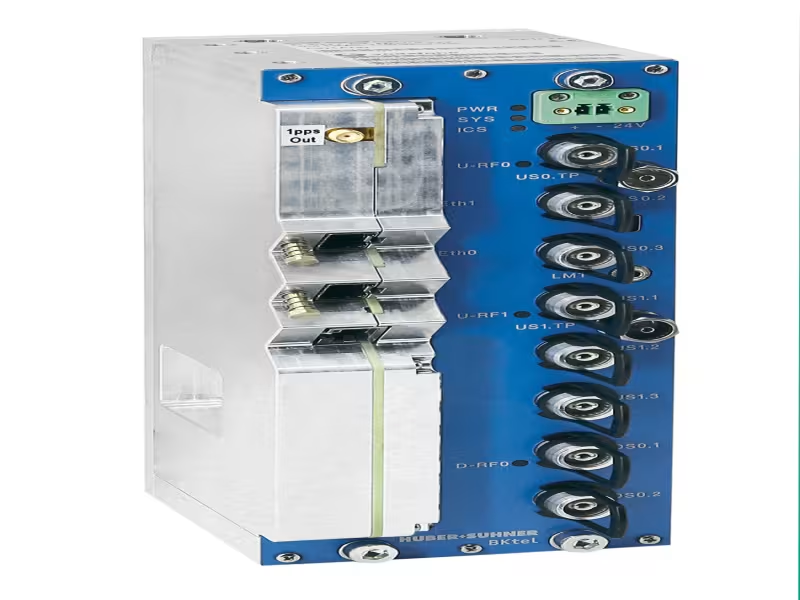
SHERIDAN, WYOMING - May 16, 2026 - HUBER+SUHNER and Aurora Networks are supporting Vodafone Germany in the development of a next-generation cable network architecture built around Distributed Access Architecture (DAA), Remote PHY systems, and virtual Cable Modem Termination System (vCMTS) technology. The collaboration is designed to support Vodafone's rollout of enhanced MultiGigabit services while improving scalability, operational flexibility, and long-term network modernization. The initiative combines HUBER+SUHNER's Remote PHY infrastructure with Aurora Networks' vCCAP Evo platform and centralized DAA integration capabilities to support a more efficient and future-ready Hybrid Fiber-Coax network environment.
Vodafone advances DAA and virtualized cable infrastructure strategy
Vodafone Germany is using the collaboration to expand deployment of DAA and vCMTS technologies across its cable infrastructure. The approach modernizes existing Hybrid Fiber-Coax (HFC) networks by shifting portions of packet processing closer to end users, supporting improved internet speed, lower latency, and greater network reliability.
The deployment also establishes a migration path intended to simplify future scaling and upgrades while reducing operational complexity. According to the companies, the architecture is designed to support more seamless connectivity for subscribers as network demand continues to evolve.
Michael Rabes, Director of Fixed Access Engineering at Vodafone Germany, said the collaboration is intended as a long-term initiative supporting future development projects within Vodafone's cable network operations.
"The collaboration with Aurora Networks and HUBER+SUHNER is designed for the long term and promotes future collaborations. The DAA and vCMTS technologies are being used in the live network. Thanks to our joint efforts, Vodafone can offer its customers a reliable and high-quality user experience today and in the future."
Aurora Networks contributes vCCAP Evo and DAA integration expertise
Aurora Networks, a business division of Vistance Networks, is contributing its vCCAP Evo virtual CMTS platform and QAM video solutions to the project. The company is also acting as the end-to-end DAA systems integrator for the deployment.
The vCCAP Evo platform is intended to provide Vodafone with a software-based approach for introducing new network services while supporting higher density and capacity compared with hardware-based alternatives. The platform also centralizes provisioning, configuration, and monitoring functions for DAA devices throughout the network.
The deployment model uses commercial off-the-shelf servers for the vCCAP Evo and QAM video solutions. According to the companies, this enables reduced space requirements in headend facilities alongside energy and operational cost reductions.
Guy Sucharczuk, SVP and President Access Network Solutions at Aurora Networks, said Vodafone joins a broader group of operators using the vCCAP Evo platform to modernize cable infrastructure and expand network performance capabilities.
"vCCAP Evo will enable Vodafone to significantly optimize network performance, deliver Multi-Gigabit services for subscribers and realize significant energy and cost savings at headends. By choosing Aurora Networks as an end-to-end DAA solution provider, Vodafone will benefit from the extensive and diverse expertise of our Professional Services team, which has been helping network operators design, deploy, expand and evolve their networks for more than two decades."
Remote PHY deployment supports Vodafone network scalability
HUBER+SUHNER is providing Vodafone with next-generation Remote PHY systems intended to support software-based interoperability and network scalability requirements. The systems are positioned as part of Vodafone's continued transition toward a more advanced HFC network architecture.
The company stated that the infrastructure is designed to support modernization while maintaining compatibility across evolving network environments. This interoperability is intended to support deployment flexibility and long-term expansion planning.
Jürgen Walter, COO Segment Communication at HUBER+SUHNER, said the agreement extends the company's long-standing role within Vodafone's cable network infrastructure ecosystem.
"This partnership is an important continuation of our role as a cable network solutions provider at Vodafone. Over the past decades, numerous analog optical and radio frequency technology solutions from HUBER+SUHNER have supported the further development of Vodafone's cable network. We look forward to contributing our deep and established expertise to further enhance the quality and performance of the cable network for Vodafone customers in Germany."
Operational impact focuses on efficiency and network evolution
The partnership highlights the growing operational focus on virtualized cable network management, distributed architecture, and scalable service delivery within broadband infrastructure operations. By combining DAA deployment with centralized orchestration and Remote PHY integration, Vodafone is positioning its cable environment for ongoing service expansion and performance optimization.
The deployment also reflects broader industry movement toward software-driven cable infrastructure models that reduce hardware dependency within headend operations. The use of standardized server infrastructure and centralized management tools can support operational simplification while enabling faster introduction of network services.
For operators managing large-scale HFC environments, the combination of virtualization and distributed access technologies can support both customer experience improvements and infrastructure efficiency goals.
Long-term infrastructure collaboration supports future cable services
The collaboration between Vodafone Germany, HUBER+SUHNER, and Aurora Networks is structured around long-term network evolution rather than a single deployment milestone. The companies emphasized interoperability, scalability, and operational continuity as core objectives of the project.
The deployment model also combines infrastructure hardware, virtualization software, and systems integration expertise into a unified operational framework. This approach is intended to help Vodafone continue evolving its cable services while maintaining network performance and service reliability.
The companies indicated that the technologies are already operating within Vodafone's live network environment, supporting both current customer services and future network development initiatives.