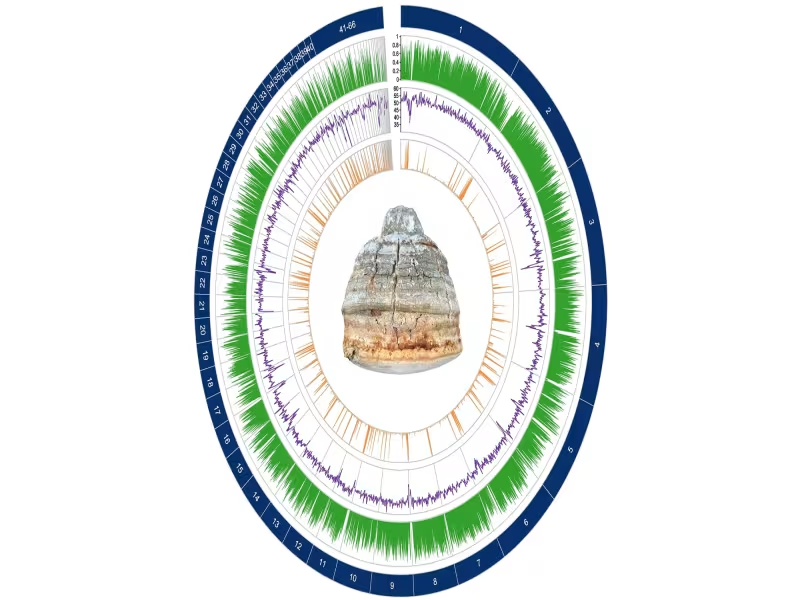
Olympia – October 13, 2026 -- Fungi Perfecti, LLC has published the first complete genome of the endangered Agarikon fungus, a 28.76-megabase nuclear assembly estimated to be 99.4% complete, in the peer-reviewed journal G3: Genes, Genomes, Genetics.
The study, led by mycologist Paul Stamets and company scientists, is titled "Genomic characterization of the endangered medicinal polypore agarikon (Laricifomes officinalis syn. Fomitopsis officinalis)." Until now, Agarikon lacked a comprehensive genomic reference for genetic investigation.
Researchers annotate 8,717 predicted genes in the Agarikon nuclear genome
Fungi Perfecti researchers assembled and annotated both the nuclear and mitochondrial genomes. Of the 8,717 predicted genes, 8,604 are protein-coding.
The team also identified 287 genes across 27 candidate biosynthetic gene clusters, including genes associated with pathways that produce specialized metabolites.
Genome supports study of diversity, evolution, reproduction and biosynthesis
The reference is intended to support future work on Agarikon's genetic diversity, evolutionary history, reproduction and biosynthesis. It also gives researchers a shared tool to identify the species and compare populations over time.
Chase Beathard, PhD, Director of Research & Development at Fungi Perfecti, said the company is contributing a foundational resource to accelerate careful, responsible research.
Agarikon carries an IUCN "Endangered" listing, and Fungi Perfecti holds more than 120 specimens
The International Union for Conservation of Nature (IUCN) Red List classifies Agarikon as "Endangered." Fruiting bodies are typically found in old-growth forests and can take many years to develop, which limits responsible harvesting and complicates large-scale study. Some specimens live for upwards of a century.
Fungi Perfecti maintains what it describes as the world's largest Agarikon culture library, assembled over decades. Its strain library now includes cultures representing more than 120 Agarikon specimens. Cultivated mycelium offers researchers an alternative that reduces reliance on harvesting wild fruiting bodies.
Genome follows Frontiers in Immunology paper on Agarikon mycelium
The genome paper follows another peer-reviewed Fungi Perfecti article in Frontiers in Immunology. That study examined how Agarikon mycelium affects immune signaling in human immune cells under basal and LPS-stimulated conditions in preclinical evaluations.