Institute for Advanced Laser Dentistry

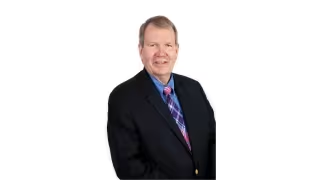
Millennium Dental, IALD Mourn LANAP Research Pioneer Raymond Yukna
Image
Millennium Dental, IALD Mourn LANAP Research Pioneer Raymond Yukna

Cerritos, Calif. – October 31, 2026 -- Millennium Dental Technologies and the Institute for Advanced Laser Dentistry (IALD) announced the death of Professor Raymond A. Yukna, DMD, MS (1942-2026). His 2007 human histology study gave the LANAP protocol, a minimally invasive laser treatment for moderate to severe periodontal disease, some of its earliest and most influential scientific validation.

Yukna's 2007 study documented new connective tissue attachment in humans

Yukna's research began with an International Association for Dental Research (IADR) abstract in 2003. He submitted his landmark study to the International Journal of Periodontics and Restorative Dentistry in 2006, and it was published in 2007. The work demonstrated cementum-mediated new connective tissue attachment in humans and gave the periodontal community evidence of the protocol's regenerative potential.

49% of Active U.S. AAP Members Now Trained in LANAP Laser Protocol

Image
49% of Active U.S. AAP Members Now Trained in LANAP Laser Protocol

Seattle – October 30, 2026 -- Millennium Dental Technologies, Inc. said 49% of active U.S. members of the American Academy of Periodontology (AAP) are now trained in its LANAP protocol, a laser-based alternative to traditional osseous surgery for moderate to severe periodontitis. The company announced the figure at the AAP Annual Meeting in Seattle.

Adoption reaches roughly half of active U.S. periodontists in the AAP

The company, which developed LANAP and manufactures the PerioLase MVP-7 variable-pulsed Nd:YAG dental laser, said both periodontists and general dentists are adopting the protocol. LANAP is available only with the PerioLase MVP-7, which ties each new trained clinician to the company's hardware platform.

Founder, President and Chairman Robert H. Gregg II, DDS, said the milestone matters because "patients have greater access to care they can feel comfortable accepting."